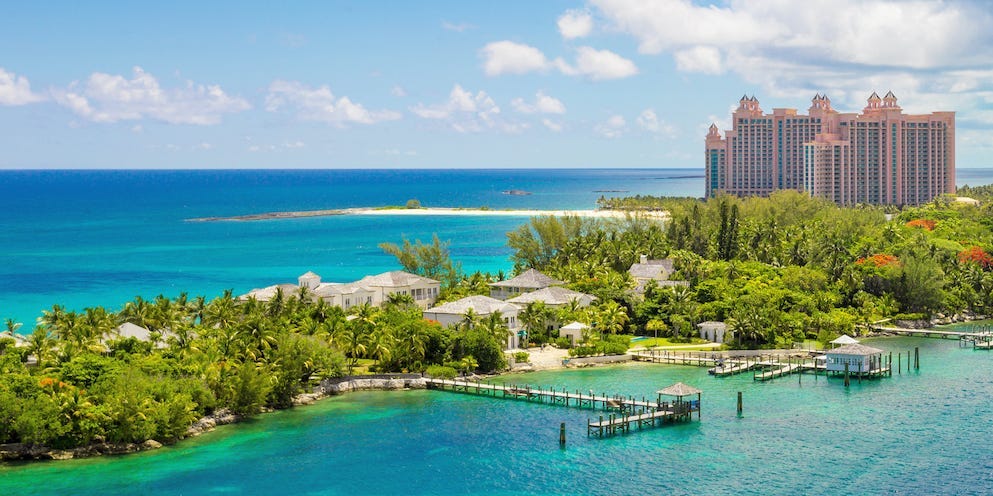
The Bahamas draws more than seven million visitors a year. The overwhelming majority never leave the strip between Nassau and Paradise Island. That geographic concentration is a long-standing vulnerability for the country's tourism-dependent economy, and recent data confirms the risks are growing.
Tourism accounts for roughly 45% of the Bahamas' GDP and employs about half the workforce, according to the Inter-American Development Bank. The sector's heavy reliance on two hubs – the capital and the Atlantis resort – means any disruption to those areas hits the national accounts directly. Hurricanes, cruise cancellations, or shifts in visitor preferences away from large resorts can compress tax revenue and foreign exchange flows faster than other Caribbean peers with more distributed tourism.
The lesson for investors tracking Caribbean economies or hospitality REITs with Bahamas exposure is straightforward. A destination that funnels most of its visitors through a single airport and a handful of mega-resorts has limited buffer when conditions change. The government's recent push to develop the Family Islands – Out Islands like Exuma, Abaco, and Eleuthera – is an attempt to spread the load. Infrastructure constraints and limited direct flights keep most travelers in the Nassau corridor.
The concentration risk also affects consumer-facing businesses. Suppliers, transportation operators, and smaller hotel owners outside the main zone see much lower utilization rates, which margin-compresses smaller operators. The country recorded moderate GDP growth last year. Much of that gain came from high-end property sales and second-home construction rather than broad-based tourism expansion.
For investors tracking sovereign credit or companies with Bahamas-linked revenue, the key metric is not visitor arrivals alone but the geographic spread of those arrivals. The Bahamas has long been a stable destination. Stability built on a narrow base can shift quickly when external shocks hit. A wider distribution of tourism activity would reduce that vulnerability. Building that infrastructure takes years of capital spending that the government's current budget can barely support.