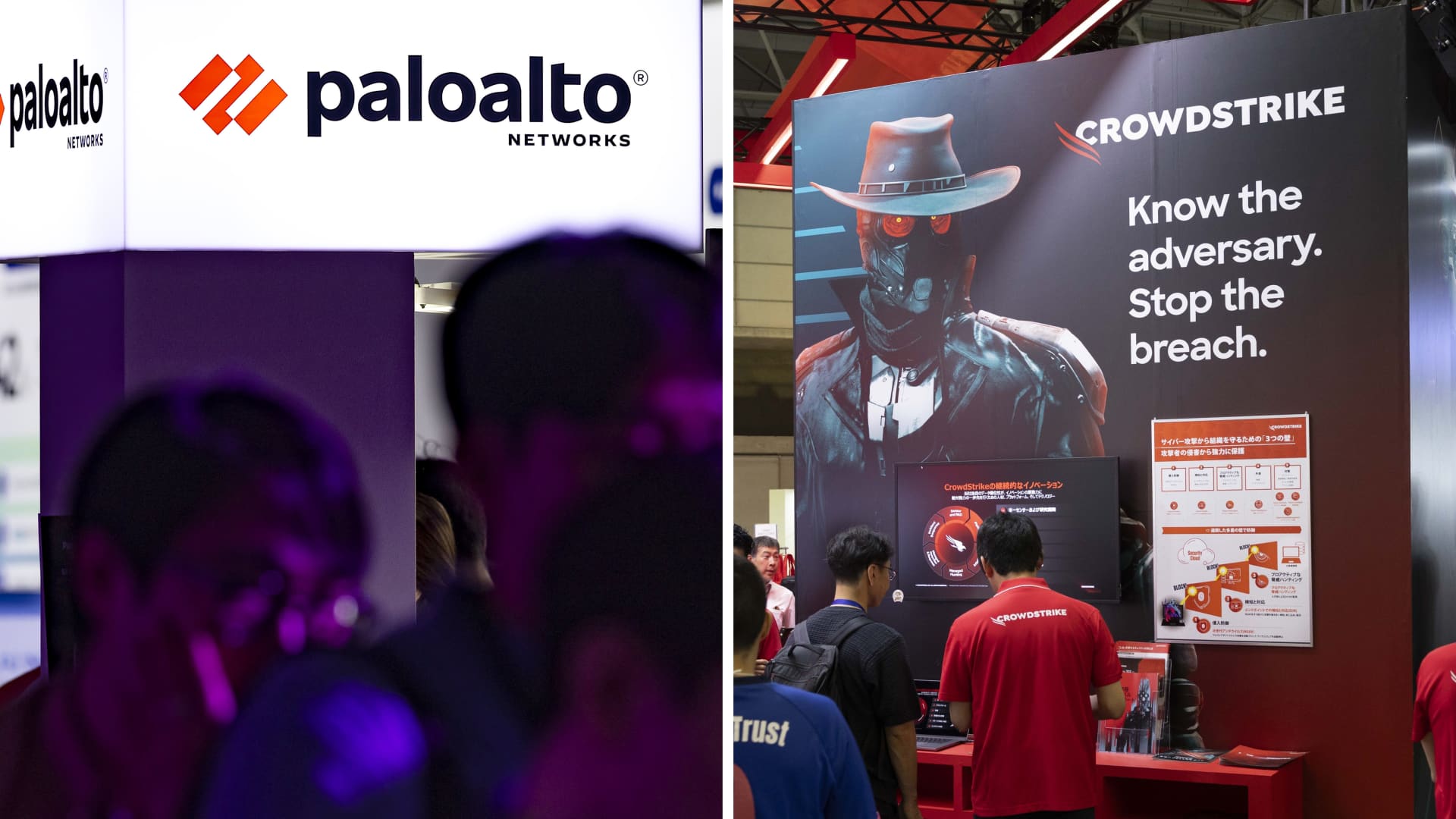
Palo Alto Networks and CrowdStrike just wrapped their best quarter ever. PANW rallied 113% from April through June. CRWD added 95%. The driver is real: new AI models, specifically the Mythos-class systems, have companies scrambling to upgrade defenses. CrowdStrike CEO George Kurtz called it a "Mythos inflection point" on the company's earnings call. Palo Alto CEO Nikesh Arora said more than 1,200 customers reached out about cybersecurity since Mythos, and the firm held 800 meetings in six weeks.
The simple read is that AI threats are a durable demand catalyst. The better read is that the market has already priced in that demand, and then some. Both stocks fell after reporting strong quarterly results and upbeat AI commentary earlier this month. Good wasn't good enough. Bernstein analysts wrote in a note that they "worry this disappointment could continue in future quarters if investors are hoping for even more momentum to show up in growth post Mythos."
That is the risk event for anyone holding these names. The earnings bar has moved from "did you beat?" to "did you blow away every conceivable estimate?" CrowdStrike's identity protection platform, Falcon Shield, ended its fiscal first quarter with four-times annual recurring revenue growth. That is a strong number. It still wasn't enough to keep the stock from sliding on the day.
PANW carries an Alpha Score of 52 out of 100, a Mixed label. That score reflects a stock that is fairly valued relative to its sector, not a screaming buy or a clear short. The score does not capture sentiment extremes, which is where the real risk sits.
TD Cowen analyst Shaul Eyal said both companies are "best positioned to continue to gain market share from a product perspective" because businesses lack the internal know-how to handle AI-driven threats and will partner with established leaders. That thesis is intact. The question is whether the stock prices already reflect years of that advantage.
What would confirm the risk? Another quarter where both companies beat guidance but the stocks sell off. What would weaken it? A quarter where the beat is wide enough to reset expectations higher. The next concrete marker is the July earnings season, when both firms report fiscal fourth-quarter results. Until then, the setup is a good business with an expensive stock, and that is a fragile combination.