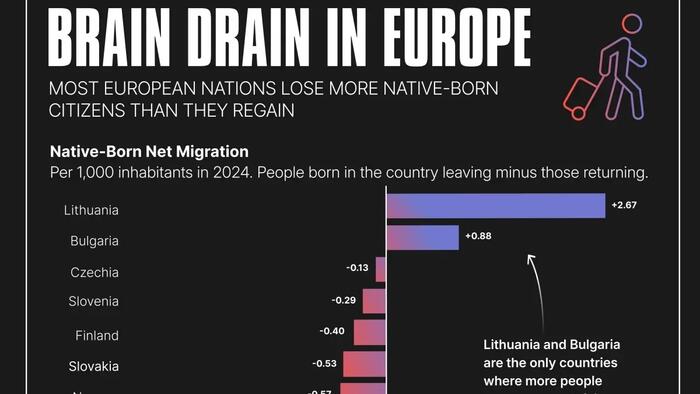
Lithuania and Bulgaria gained native-born residents in 2024 while Germany, Italy, and Sweden lost more. The drivers: wages, housing, demographics.
Lithuania and Bulgaria were the only European countries where more native-born citizens returned or arrived than left in 2024, according to Eurostat data compiled by DataPulse. Lithuania posted a net gain of 2.67 per 1,000 inhabitants. Bulgaria recorded a smaller positive balance. Every other country in the sample lost locally born residents.
Luxembourg had the largest outflow relative to its population. Belgium, Sweden, Estonia, and Romania also showed significant net losses. Germany and Italy lost native-born residents. The Netherlands did too.
The pattern reflects a mix of economic opportunity, housing affordability, and labor mobility within Europe. Younger and highly educated workers often move toward larger labor markets in Western Europe. Rising housing costs and demographic pressures push others to look beyond their home countries.
Population researchers say migration alone cannot offset Europe's broader demographic trends. Fertility rates remain below replacement levels across much of the continent. Populations continue to age. When highly skilled workers leave and do not return, the effects extend beyond population figures. Regions may face slower economic growth and labor shortages that reduce innovation capacity.
Similar dynamics play out globally, where migration increasingly shapes population growth and workforce sustainability. The data covers 2024, the most recent year available.
Prepared with AlphaScala research tooling and grounded in primary market data: live prices, fundamentals, SEC filings, hedge-fund holdings, and insider activity. Each story is checked against AlphaScala publishing rules before release. Educational coverage, not personalized advice.