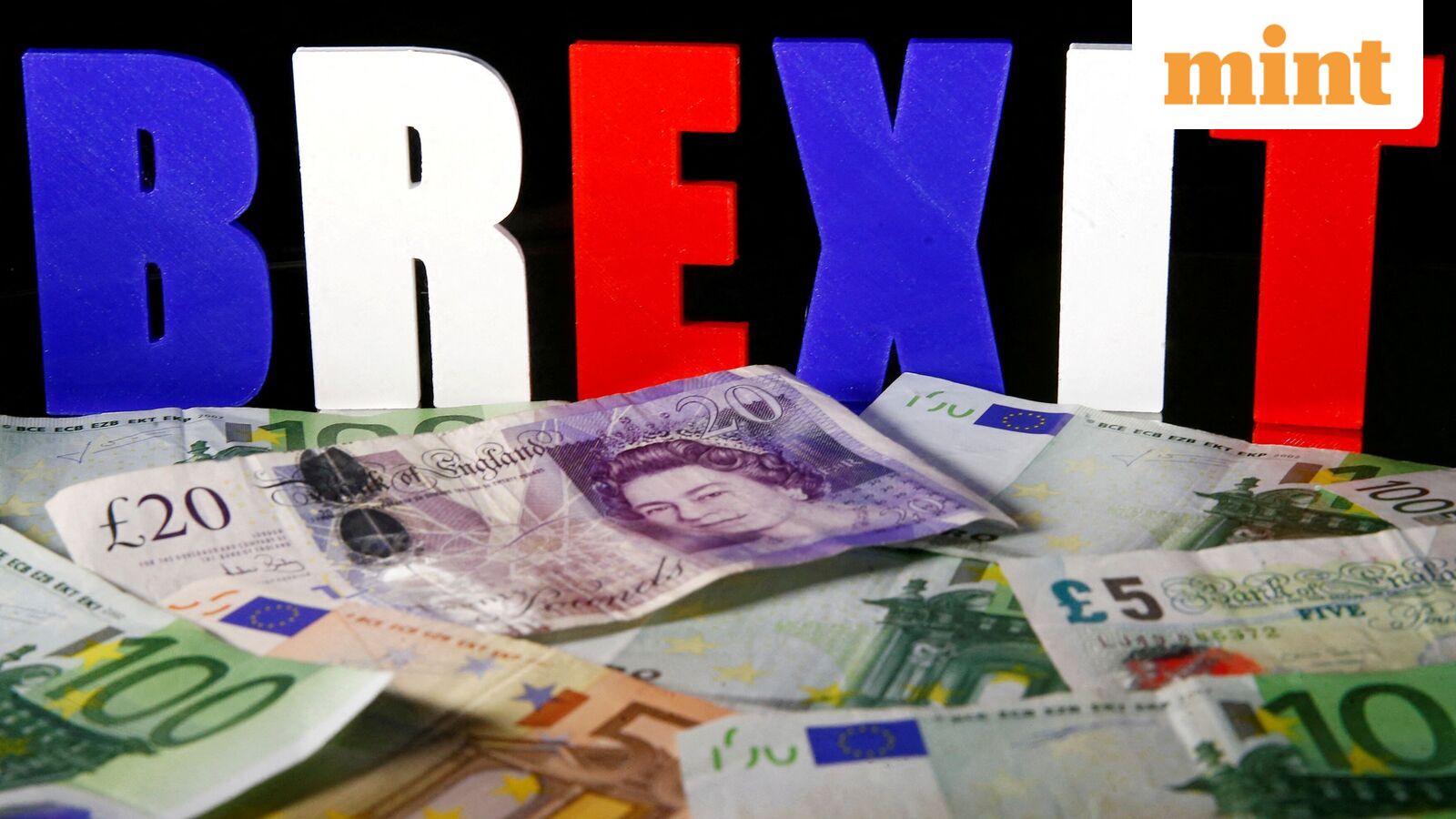
A decade on, Brexit has cost the UK up to 8% of GDP. India's trade strategy risks a similar delusion, missing gains from regional integration.
A decade after the referendum, the bill is coming due. Stanford University estimates Brexit will have cost the UK 6–8% of GDP by the end of 2025. Investment fell 12–13%, productivity dropped 3–4%, and employment ran 3–4% lower than it otherwise would have, according to the study led by Nicholas Bloom. The cause: a cocktail of elevated uncertainty, diverted management time and resources misallocated during the protracted exit process.
For India, the temptation to copy the UK's post‑Brexit trade playbook is real. A decade on, 45% of the UK's trade still goes to the EU. The free‑trade agreements signed with Japan, Australia and New Zealand – combined population 33 million – barely compensate for losing access to the single market of 450 million. India's own recent pacts with Australia and the proposed UK deal follow a similar logic: prioritise distant, politically friendly partners over the neighbours that account for the bulk of potential trade gains.
Dammu Ravi, a former Indian trade negotiator, points out that South Asia is the least trade‑integrated region in the world. Intra‑regional commerce accounts for just 1.5% of total global trade. China, meanwhile, offers nearly zero‑tariff access to India's neighbours and has built infrastructure that locks them into its own supply chains. Bilateral trade between China and South Asia (excluding India) hit $200 billion and grew 16% in the first four months of this year.
The root problem, common to both India and the UK, is ignoring the economics of embedded supply chains. Multinationals gravitate to Vietnam because it sits inside North Asian value chains. Turkey and Morocco serve as production bases for Europe because of proximity and efficiency. India's 'Make in India' push and its drive to sign trade deals with the Gulf, Europe and the Commonwealth risk flailing if they are not anchored in a regional production network that includes Bangladesh, Sri Lanka and Nepal.
Politically, the UK's experience shows how a divisive trade decision can paralyse domestic reform. The near civil war provoked by the 2016 referendum left the country with seven prime ministers in a decade. The tabloid press and billionaire‑led broadsides on social media have made fiscal consolidation almost impossible – Starmer's attempt to means‑test winter fuel subsidies for pensioners met ferocious pushback. India's own coalition politics may slow tariff rationalisation and trade liberalisation, even if the economic logic is clear.
For stock market analysis, the implications are sector‑specific. Companies that rely on tariff‑free access to Commonwealth markets – some textiles and gems – see only marginal upside from pacts with Australia or the UAE. Firms tied to regional supply chains, such as auto‑parts makers in the Chennai‑Bengaluru corridor or electronics assemblers, face a longer growth path if political will to engage SAARC remains weak. A confirmation of the trade delusion would be India signing a comprehensive FTA with the EU or the US while keeping high tariffs on Bangladesh and Sri Lanka. A weakening signal would be a new SAARC trade facilitation agreement or increased cross‑border infrastructure spending.
The UK's experiment offers a controlled test of what happens when trade policy ignores geography. India has the chance to learn without paying the same price. The next budget's import duty changes will show which direction New Delhi chooses.
Prepared with AlphaScala research tooling and grounded in primary market data: live prices, fundamentals, SEC filings, hedge-fund holdings, and insider activity. Each story is checked against AlphaScala publishing rules before release. Educational coverage, not personalized advice.