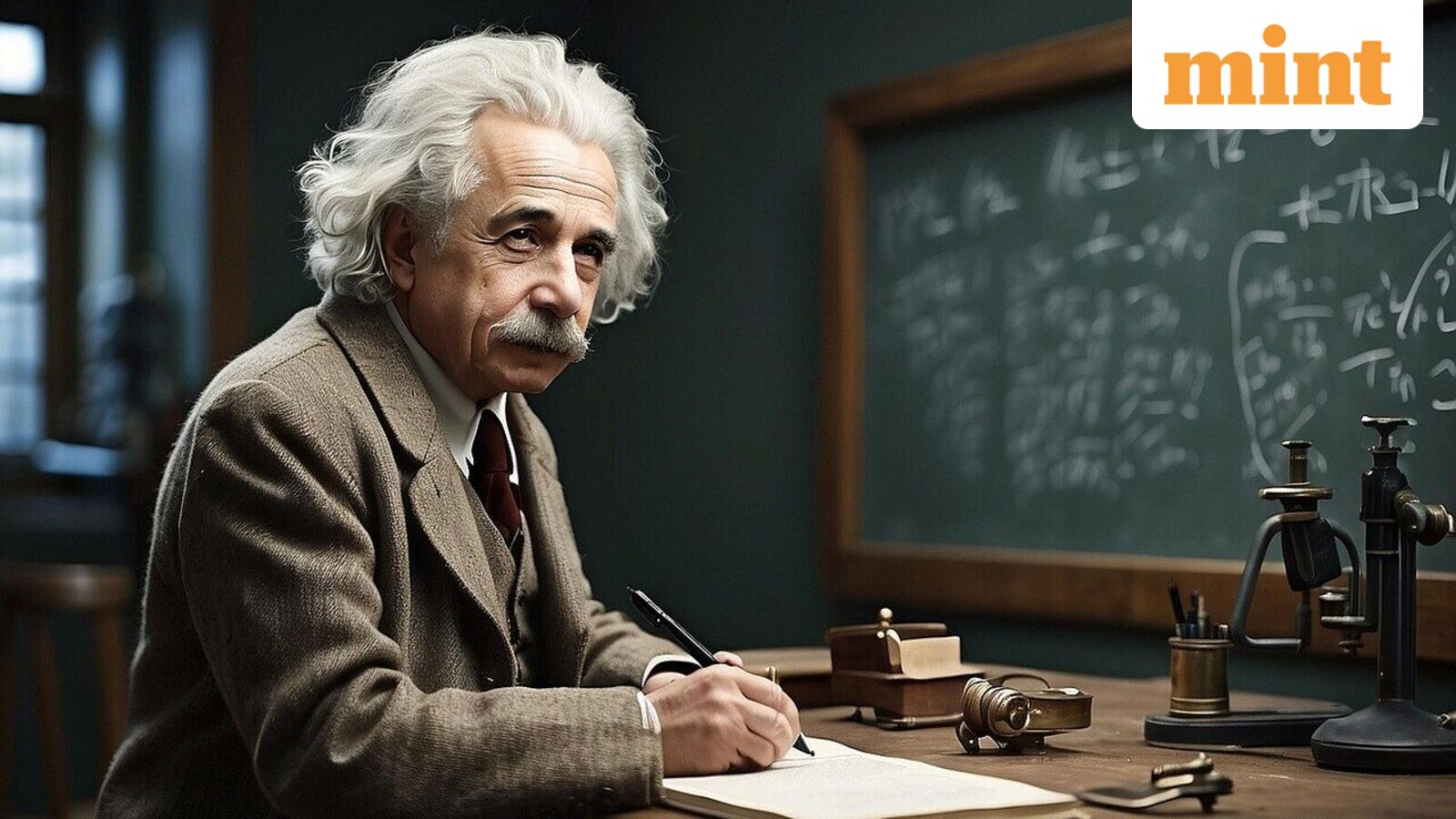
Einstein's most practical quote cuts against treating errors as shameful. Mistakes are the cost of entry for innovation.
Albert Einstein's most famous quote on innovation is also his most practical: "A person who never made a mistake never tried anything new."
The line, attributed to the German-born theoretical physicist, cuts against the instinct to treat errors as shameful. Einstein saw them as the cost of entry. Every major achievement, he argued, sits on a stack of failed attempts. The theory of relativity did not arrive fully formed. It emerged from years of wrong turns and dead ends.
For the youth Einstein was often addressing, the message is direct. Mistakes are not a sign of weakness. They are evidence that someone stepped outside familiar boundaries. A person who stays inside what they already know will never generate the friction that produces growth. That friction – the experience of being wrong, adjusting, and trying again – teaches resilience and adaptation in a way that no book or lecture can.
Einstein himself is the example. Before he became synonymous with genius, he failed exams, struggled to find academic work, and spent years as a patent clerk. His path was not a straight line. The pattern holds across every field. Rejection, disappointment, and failure precede success with near-universal regularity. What separates those who break through is not the absence of error but the response to it.
The deeper point is about courage. Innovation requires experimentation. Experimentation carries the risk of failure. A person who refuses to accept that risk will never discover anything new. The fear of being wrong keeps people in jobs they have outgrown, hobbies they have lost interest in, and ideas that no longer challenge them. Staying within familiar limits is safe. It is also a ceiling.
Einstein's other quotes reinforce the same theme. "Imagination is more important than knowledge," he said. Knowledge is finite. Imagination, by definition, reaches into the unknown – and the unknown is where mistakes live. "If you can't explain it to a six year old, you don't understand it yourself" is a test of clarity that most people fail on their first try. "Life is like riding a bicycle. To keep your balance, you must keep moving" is a direct instruction: stop pedaling, fall over.
The practical takeaway is simple. Every error carries an insight. The person who never made a mistake did not try anything new. The person who made a hundred mistakes tried a hundred things. The second person is the one who will eventually find something that works.
Einstein is known for General relativity, Special relativity, the Photoelectric effect, E=mc², Brownian motion theory, and the Einstein field equations, among others. He also gave the world the line: "Two things are infinite: the universe and human stupidity; and I'm not sure about the universe."
Prepared with AlphaScala research tooling and grounded in primary market data: live prices, fundamentals, SEC filings, hedge-fund holdings, and insider activity. Each story is checked against AlphaScala publishing rules before release. Educational coverage, not personalized advice.