Why Canada's Succession Crisis Is a $2 Trillion Opportunity
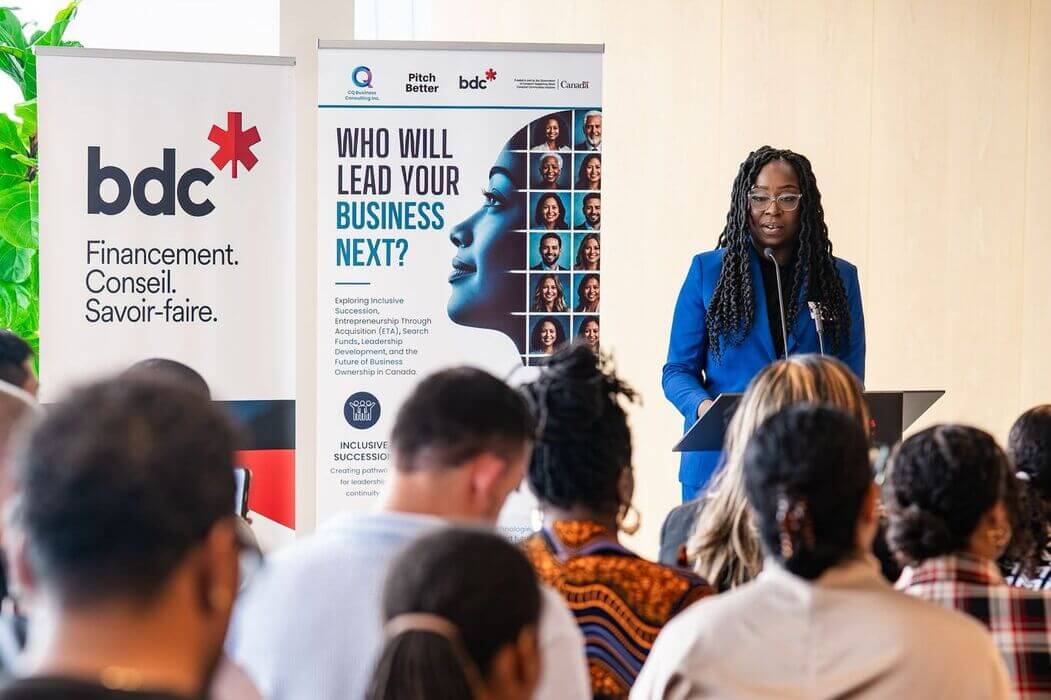
Underrepresented buyers lack the education and capital to acquire profitable SMBs from retiring owners, risking a $300B wealth transfer, a new study finds.
A new report argues that buying a profitable small business deserves the same attention as launching an AI startup. The gap between retiring owners and would-be acquirers from underrepresented groups sits at roughly $2 trillion, according to the study by national non-profit Pitch Better and CQ Business Consulting, funded in part by the Canadian government.
The research, called Inclusive Succession, found that entrepreneurs from racial and other traditionally underrepresented backgrounds face steep education and capital barriers when trying to take over an existing company. Lead researcher Chantelle Quow-Craig, managing director of CQ Business Consulting, said in an interview that talented people are starting businesses from scratch with fewer resources and no intergenerational business wealth. At the same time, thousands of viable, profitable businesses close when their owners retire.
She asked why those two groups are not finding each other. The report's answer: a lack of structured, accessible education on acquisition and exit transactions.
The revenue at stake
Canada's aging business owner population has created a staggering market opportunity. A January study by the Business Development Bank of Canada estimated that one in five small and medium-sized business owners plan to retire within five years, leaving $300 billion in annual revenue open for acquisition.
Search funds, which invest in finding and buying such businesses, are starting to appear. BDC launched a $50-million Thrive ETA Fund last fall aimed at women, framed as a way to narrow the gender gap in business ownership. Separately, BDC partnered with the First Nations Bank of Canada to help Indigenous groups fund ETA deals.
According to the Inclusive Succession report, sellers and buyers mostly muddle through these deals via costly trial and error. Many wish they had started the process earlier. One respondent said that access to networks and intergenerational capital determined who actually completed an ETA transaction.
Starting a business from zero requires long periods without income, something not everyone can afford. Quow-Craig and Pitch Better co-founder Amoye Henry noted that government-backed accelerators and incubators rarely offer ETA programming.
The report calls on the federal government to collect data on the demographics and deal sizes of ownership transitions and to incorporate ETA into university business curricula. No action, Quow-Craig said, would deal a huge hit to Canada's economy.
The quiet economic opportunity of ETA has not received the national buzz of startup creation. The report suggests that infrastructure – education, capital, data – is the missing link between a retiring generation and a generation of buyers ready to build on an existing base.
Drafted by a large language model from the source reporting linked above, then screened by automated publishing checks. It is not read by a journalist before publication. Some articles cite our Alpha Score. Verify prices and figures against the original source. Educational coverage, not personalized advice.