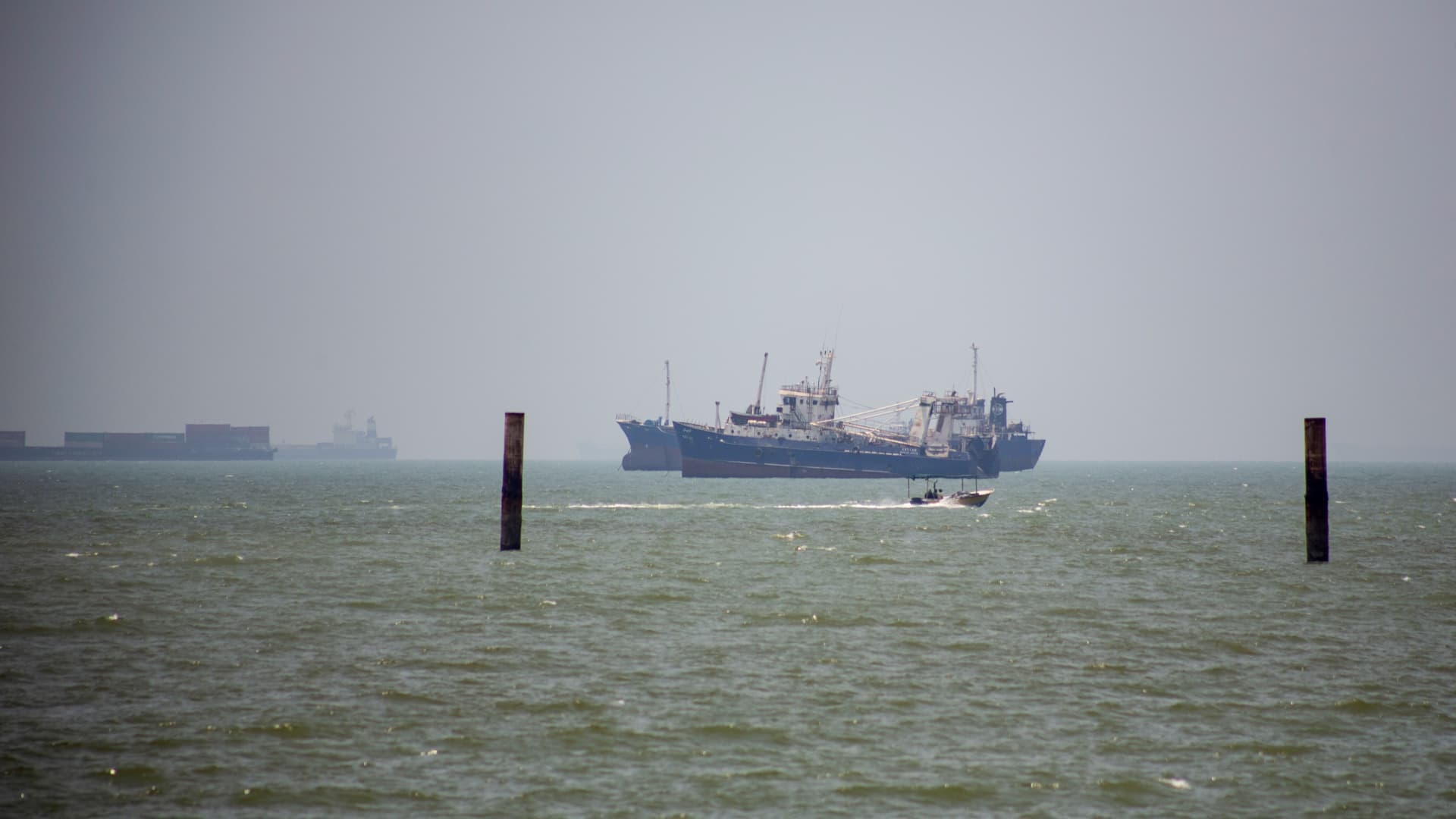
A tanker in the Strait of Hormuz was struck by an unidentified projectile on Saturday, the U.K. Maritime Trade Operations Centre reported. The bridge was damaged. The crew was safe. The attack followed hours after the U.S. military hit Iranian missile and drone storage sites and coastal radar sites on Friday, a retaliation President Donald Trump called for after what he described as a “foolish violation” of the 60-day ceasefire signed just over a week ago.
The sequence started Thursday. A drone attack struck the Singapore-flagged cargo ship Ever Lovely off the coast of Oman, according to U.S. Central Command. The vessel continued through the strait. Iran’s state media reported that the Islamic Revolutionary Guard Corps fired warning shots at ships not approved by Iran attempting to pass through channels, Reuters reported.
On Friday, Central Command announced its strikes. Shortly before that, Trump told a reporter at the White House, when asked about consequences for Iran: “You’ll find out.”
Vice President JD Vance, who traveled to Switzerland last weekend for talks with Iranian counterparts about the memorandum of understanding signed by Trump and Iranian President Masoud Pezeshkian, posted on X: “Iran signed a ceasefire agreement. We have honored it.” He added: “If they have disagreements about how the MOU is being applied, they can pick up the phone. Violence will be met with violence.”
The IRGC responded with a statement that called the U.S. strikes a ceasefire violation. The IRGC said it struck “the positions of the US terrorist army in the region” and warned: “If the aggression is repeated, our response will be broader than this.” The IRGC also claimed that under clause 5 of the MOU, control of passage in the Strait of Hormuz rests with Iran. It said the U.S. provoked the incident by sending an unauthorized ship through the strait.
Ebrahim Azizi, head of the national security commission of the Iranian parliament, posted on X: “The U.S. attacked Iran in the middle of negotiations once again. The failed U.S. President has shown he has no commitment to the principles of negotiation or a ceasefire. This reckless violation of the ceasefire will, as always, lead to retreat and regret on their part. The blame game does not work anymore.”
The Strait of Hormuz handles about a fifth of the world’s oil supply. A sustained disruption would push Brent higher and widen tanker rates. The IRGC’s statement explicitly ties the U.S. strikes to “the violation of the ceasefire by the Zionist regime in southern Lebanon,” linking two theaters. That linkage complicates any narrow diplomatic fix.
For now, the 60-day ceasefire signed by Trump and Pezeshkian in Islamabad is facing its first real test. Both sides accuse each other of breaking it. The next scheduled talks, after Vance’s trip to Switzerland, have not been publicly set. The IRGC’s threat of a broader response if aggression repeats remains open. The facts on the water – a damaged tanker, a hit cargo ship, dueling airstrikes – point to escalation, not de-escalation.
– CNBC’s Dan Mangan contributed to this report.