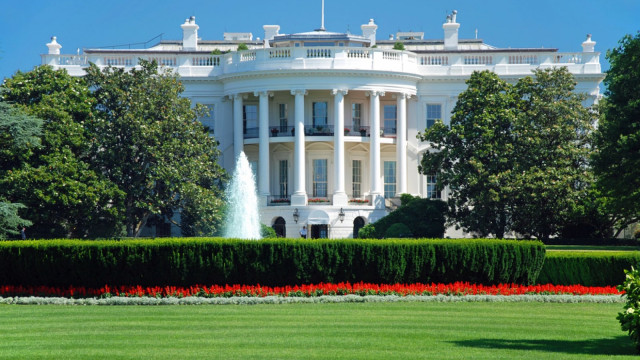
The White House will host talks this Wednesday with law enforcement groups over the Digital Asset Market Clarity Act, administration officials confirmed. The meeting targets the single remaining roadblock preventing the bill from advancing to a full Senate floor vote: concerns that developer protections in the legislation would hamper illicit finance investigations.
The Developer Protection Dispute
The core dispute centers on provisions that shield blockchain developers from liability for how third parties use their open-source code. Law enforcement groups argue this could create safe harbors for money laundering and sanctions evasion. Industry advocates counter that without these protections, developers would face legal risks that stifle innovation and drive projects offshore.
How the Mechanism Works
The Clarity Act creates a federal framework for classifying digital assets as commodities or securities. It defines when a developer must register as a money services business and sets anti-money-laundering (AML) obligations. The contested language exempts developers of non-custodial software from having to implement know-your-customer (KYC) checks on end users. Law enforcement sees this as a loophole: a developer could write a decentralized exchange (DEX) smart contract, and bad actors could use that DEX to move illicit funds with limited detection. Industry groups respond that forcing KYC on non-custodial code is technically infeasible and would effectively ban open-source development.
The Practical Impact on Senate Math
With a 60-vote threshold for most legislation in the Senate, the Clarity Act needs at least seven Democratic votes to overcome a filibuster. The bill cleared the Senate Banking Committee in May 2025 on a 14–9 vote, with two Democrats crossing the aisle. Several moderate Democrats have since indicated they will not support the bill unless law enforcement groups are satisfied with the final language. The Wednesday meeting is designed to produce a joint statement or agreed amendment language that would satisfy both sides.
Legislative Timeline and the Calendar Squeeze
The table below summarises the Clarity Act’s journey to date and the key remaining steps.
| Milestone | Date | Details |
|---|
| House passage | July 2025 | Passed by vote of 278–141 |
| Senate Banking Committee | May 2025 | Advanced, 14–9, two Democrats crossing |
| Reported to full Senate | May 2025 | Formal report filed |
| White House law enforcement talks | This Wednesday | Aimed at resolving developer protection issue |
| Potential floor vote | Unknown, likely Sept–Oct 2025 | Requires 60 votes to overcome filibuster |
Why the Calendar Matters
The Senate typically recesses in August. When it returns in September, the appropriations process and potential Supreme Court confirmations will dominate the floor. The Clarity Act must find a window before the end of the year, or it dies with the 118th Congress. Senator Cynthia Lummis, a vocal advocate for the bill, has warned that failure to pass the Clarity Act this year could delay any comprehensive crypto regulatory overhaul until 2030. A new Congress would restart the entire legislative process, and the political environment around crypto could sour further after any major scandal or enforcement action.
What Confirms a Compromise
- A joint statement from the White House and law enforcement groups this week expressing confidence that the developer protections can be amended without gutting them.
- A formal amendment filed by Senator Lummis or Banking Committee Chair Sherrod Brown that explicitly carves out sanctions evasion and terrorist financing from developer immunity.
- A vote on cloture (motion to proceed) before October 1, which would prove the 60-vote threshold can be reached.
What Weakens the Setup
- No agreement emerges from Wednesday’s talks. Law enforcement groups publicly reiterate their opposition, causing several Democratic senators to pull support.
- Senate Majority Leader Chuck Schumer declines to schedule floor time, citing the crowded calendar.
- A new enforcement action by the SEC or DOJ against a crypto platform that uses the Clarity Act’s developer protection language as a public-relations liability.
Second-Order Effects on Crypto Markets
If the Clarity Act fails, the immediate consequence is a return to the current patchwork: state-level BitLicense regimes, SEC enforcement via the Howey Test, and CFTC oversight for certain commodity tokens. That status quo benefits large, well-funded exchanges but hurts smaller developers and DeFi protocols that cannot afford legal bills. The crypto market analysis shows that policy uncertainty has already suppressed institutional allocations. A collapse of the Clarity Act would likely reinforce that caution.
The Galaxy Cuts CLARITY Act Odds to 60% on Senate Calendar Squeeze analysis already reflected below-consensus odds. This week’s talks will either confirm those odds as pessimistic or prove them too conservative.
Bottom line for traders: The Clarity Act’s fate hinges on a single issue. The White House meeting is the catalyst. No agreement this week means the bill likely dies, and the regulatory vacuum persists until at least 2030. Position accordingly.
The Wednesday White House talks are the highest-level engagement yet on this specific sticking point. Either they produce a concrete compromise that unlocks the Senate floor, or they confirm that the gap is unbridgeable. Traders and allocators should watch for a statement from the White House press office late Wednesday or Thursday. If the statement includes a timeline for an amendment, that is a bullish signal for asset prices linked to regulatory clarity. If the statement is vague or indicates “continued discussions,” the odds of passage drop sharply, and the bear case for crypto equities and tokens strengthens.