What is proof of stake? How validators replaced miners
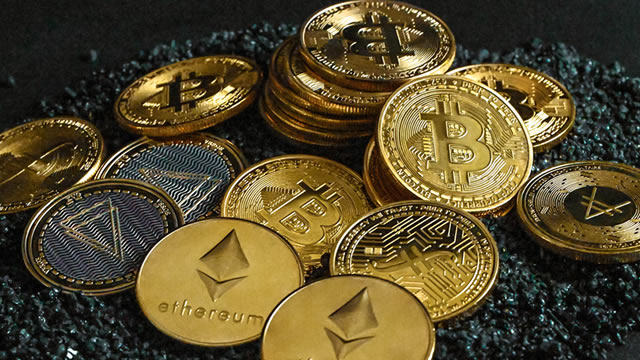
Ethereum's proof of stake cut energy use 99.95% and now secures $400B. How validators replace miners, the Merge's real impact, staking risks, and three ways to stake.
Alpha Score of 30 reflects poor overall profile with weak value, poor quality, moderate sentiment. Based on 3 of 4 signals – score is capped at 90 until remaining data ingests.
Ethereum’s switch to proof of stake in September 2022 cut the network’s energy consumption by an estimated 99.95% and replaced electricity-hungry miners with validators who lock up ETH as collateral. The mechanism now secures over $400 billion across Ethereum, Solana, Cardano, and a dozen other blockchains. Understanding how it works, what changed with the Merge, and where the risks sit matters for anyone holding staked tokens or considering it.
Proof of stake replaces the physical cost of mining with an economic one. Instead of burning electricity to solve cryptographic puzzles, validators deposit tokens into a smart contract. The protocol uses that deposit as both an entry ticket and a punishment tool. Correct behavior earns rewards. Misbehavior triggers slashing, the partial or total destruction of the staked tokens. The security guarantee is circular by design: attacking the network requires acquiring and risking an enormous amount of the network’s own currency, and a successful attack would destroy the value of the asset the attacker holds.
Ethereum’s implementation is the most battle-tested. Every twelve seconds, the protocol selects one validator to propose a block and a committee of several hundred to attest that the block is valid. The selection is pseudorandom, weighted by stake size, and unpredictable more than a few minutes ahead. The proposer builds the block from the transaction pool. Committee members independently verify it and publish signed attestations. Once enough attestations accumulate, the block is justified. Finalization comes after two epochs, roughly 13 minutes, when two-thirds of all staked ETH has attested. Reversing a finalized block would require destroying at least one-third of staked ETH, a cost that currently exceeds $35 billion, Ethereum’s developers said.
The fork-choice rule, LMD-GHOST, follows the branch with the most recent attestation weight. Combined with the Casper FFG finality gadget, the system produces blocks every 12 seconds, justifies them within minutes, and finalizes them within roughly 13 minutes.
The Merge and its aftermath
The Merge, executed on September 15, 2022, was the most complex upgrade in blockchain history. A live, $200 billion network switched its entire consensus mechanism without downtime, without a chain split, and without losing a single block, the Ethereum Foundation said. The Beacon Chain, a proof-of-stake chain running in parallel since December 2020, merged with the old proof-of-work chain.
What changed immediately: energy consumption dropped by 99.95%. Ethereum went from using as much electricity as Chile to using as much as a small town. Mining ceased. GPU prices fell as miners sold hardware. Ethereum’s environmental narrative reversed overnight.
What changed economically: new issuance dropped by roughly 90%. Under proof of work, Ethereum issued about 13,000 ETH per day to miners. Under proof of stake, issuance fell to about 1,700 ETH per day to validators. Combined with EIP-1559’s fee-burning mechanism, this made Ethereum’s supply deflationary during periods of high activity, a property no proof-of-work chain can replicate because miners need revenue to cover physical costs.
What did not change: gas fees, transaction speed, and throughput stayed the same. The Merge was a consensus-layer change, not an execution-layer one. Scaling depends on layer-2 solutions like Arbitrum and Optimism. The common misconception that the Merge would reduce gas fees was one of the project’s most persistent communication failures, Ethereum’s developers acknowledged.
Staking risks and the three paths
Slashing is the mechanism’s enforcement tool. Validators who sign two conflicting blocks or attestations lose a portion of their stake. The penalty scales with the number of validators slashed in the same period. A single slashing is modest. Mass slashing, from a coordinated attack or a bug in a widely used validator client, can destroy the entire deposit. The concentration of the validator ecosystem around a few major clients, Prysm and Lighthouse on Ethereum, makes this a non-theoretical risk, blockchain researchers said.
Lock-up periods create real liquidity risk. Ethereum introduced withdrawals in April 2023, but the queue can extend to days or weeks during high exit demand. Cosmos chains typically require 21 days to unbond. Polkadot requires 28 days. A 28-day lock-up during a market crash is not a theoretical concern; it has happened.
Liquid staking protocols like Lido and Rocket Pool solve the liquidity problem by issuing a receipt token that can be traded or used in DeFi. But they introduce smart contract risk. Lido holds roughly $15 billion in staked ETH. A bug or exploit in a liquid staking protocol could result in the loss of all deposited tokens, and because these contracts concentrate enormous amounts of stake, the blast radius would be severe.
Centralization pressure is the most debated long-term risk. Lido controls approximately 28% of all staked ETH on Ethereum. If Lido’s governance were compromised or its operators coordinated, they could influence block production or censorship decisions for a significant fraction of the network. The Ethereum community has debated self-imposed caps on liquid staking dominance, but the structural incentives favoring large pools have not changed.
For someone deciding how to stake, three models exist. Exchange staking through Coinbase or Binance is the simplest: one click, the exchange handles operations, and you receive rewards minus a 10-25% commission. The risk is custodial: your tokens are held by the exchange, and the collapse of FTX in 2022 showed what can happen. Liquid staking through Lido or Rocket Pool offers capital efficiency: you get a receipt token that can be used across DeFi, earning additional yield. The risks are smart contract exposure and potential depegging of the receipt token during stress. Solo staking, depositing 32 ETH and running your own validator, gives the full yield with no intermediary and maximizes network decentralization. The barriers are capital, technical competence, and ongoing maintenance.
Annual yields vary by network. Ethereum staking yields approximately 3-4% APR as of mid-2026. Solana offers roughly 6-7%. Cosmos ecosystem chains range from 8-15%. Higher rates almost always correlate with higher risk: token volatility, smaller validator sets, less-audited code.
Regulatory treatment remains fragmented. The SEC charged Kraken in February 2023 for offering unregistered securities through its staking-as-a-service program, settling for $30 million. Coinbase challenged a similar action and secured partial judicial skepticism. The IRS treats staking rewards as ordinary income at receipt, though a 2023 court case, Jarrett v. United States, suggested newly created rewards should not be taxed until sold. The IRS has not adopted that reasoning as policy. State-level regulation varies, with Wyoming and others offering more accommodating frameworks.
Bitcoin remains the most prominent proof-of-work holdout. Its community has shown no inclination to switch, arguing that proof of work’s energy expenditure anchors security to the physical world. That philosophical position may hold indefinitely, but as of 2026, the rest of the industry has standardized on proof of stake.
Drafted by a large language model from the source reporting linked above, then screened by automated publishing checks. It is not read by a journalist before publication. Some articles cite our Alpha Score. Verify prices and figures against the original source. Educational coverage, not personalized advice.