Macro● Neutral
Warsh Sworn In as Fed Chair, Market Sees No Cuts Through 2026
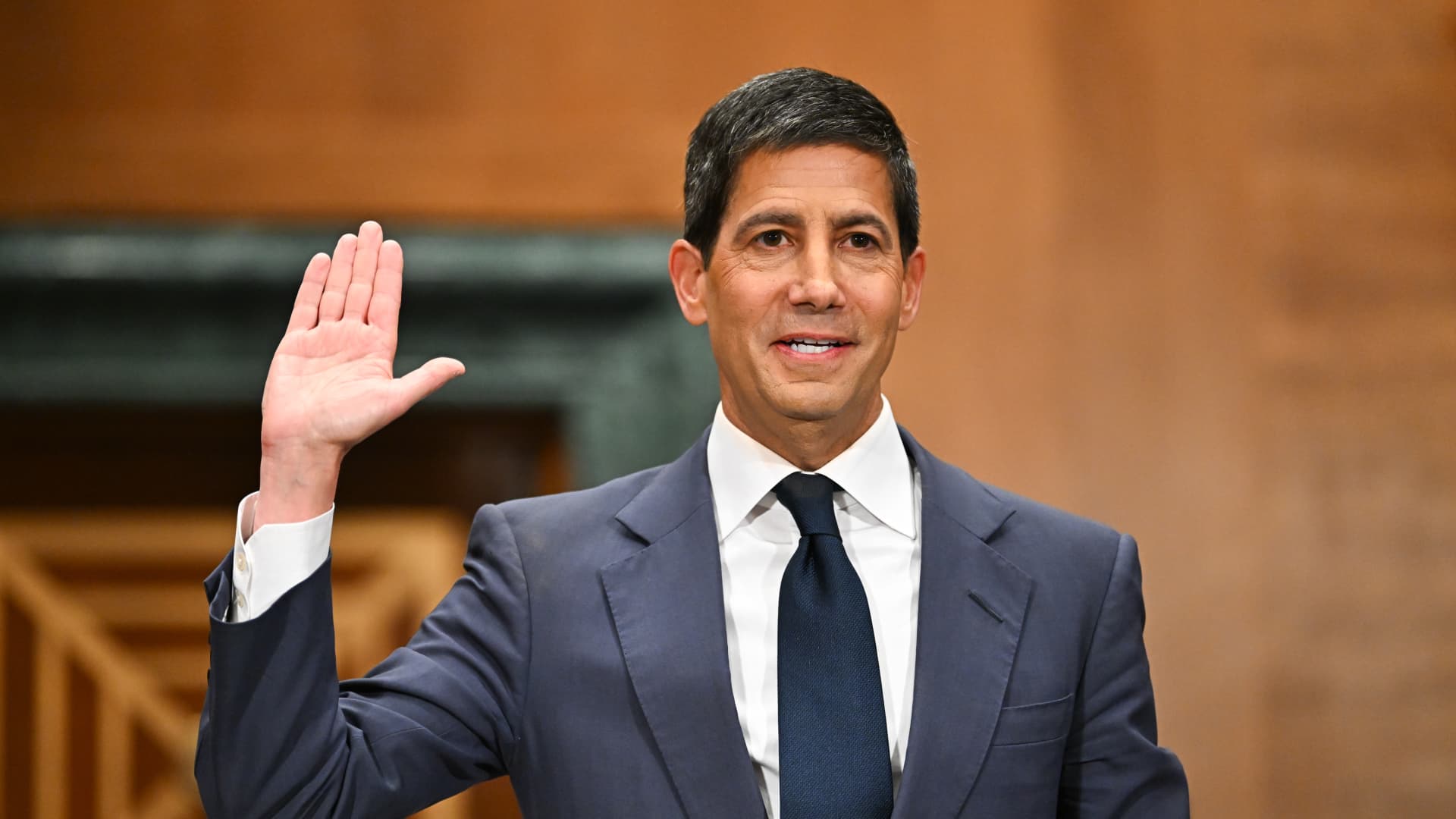
Kevin Warsh takes Fed chair Friday. Overnight index swaps price a hold through 2026 with a possible hike in 2027, contradicting his vow to cut rates.
Continue with
President Donald Trump will swear in Kevin Warsh as Fed chair on Friday, placing a critic of central bank mission creep at the helm of an institution where derivatives markets see no rate cuts until at least 2027. Warsh, 56, becomes the 11th chair of the modern Fed era, succeeding Jerome Powell, who will remain as a governor – the first former chair to stay on in nearly 80 years.
The appointment ends a search that began in mid-2025 and included more than 11 candidates. Warsh returns to the Fed after serving as a governor from 2006 to 2011, a period that spanned the global financial crisis and the central bank's emergency interventions. He has since criticised the Fed for keeping crisis-era policies in place and for expanding into areas such as climate change and social inequality, which he considers mission creep. Warsh has vowed to trim the central bank's footprint in markets.
Policy Signal: A Hawkish Background Meets a Dovish Vow
The simple read of the Warsh appointment is that a Fed chair who wants lower rates will push the committee toward cuts. The better market read is more nuanced. Warsh has pledged to control inflation while lowering benchmark rates, a dual promise that markets currently view as inconsistent. The market-implied rate path shows the Fed on hold through most of 2026, with a possible hike in early 2027.
The Rate Path: Market Prices No Cuts Through 2026
Derivatives pricing from overnight index swaps and fed funds futures indicates that the effective federal funds rate will remain at the current level for the next two years. The last data point from the source shows that markets are betting the Fed will stay on hold through most, if not all, of 2026, and then possibly raise rates in early 2027. This contrasts directly with Warsh's stated goal of cutting rates while still containing inflation.
Powell's tenure was marked by repeated public criticism from Trump, who demanded faster and deeper rate cuts. The Fed under Powell lowered the benchmark rate by three-quarters of a percentage point and raised by 4.25 percentage points during one stretch of the Joe Biden presidency. The takeaway: presidential pressure does not translate into monetary policy action, and markets are pricing that same independence into the Warsh era.
Bond Yields: The Term Premium and Credibility Gap
If Warsh attempts to cut rates prematurely, long-term bond yields could rise on inflation fears, widening the term premium. The 10-year Treasury yield has already repriced higher over the past year as the Fed struggled to keep inflation at its 2% target – a level that has been exceeded for five consecutive years under Powell. Warsh's challenge is to convince bond investors that inflation is truly under control before he delivers any cuts.
Dollar: Reserves and Carry Trade Implications
The U.S. Dollar Index faces a two-way risk. If markets eventually believe Warsh will cut rates, the dollar would weaken on lower interest rate differentials with other major economies. If markets remain skeptical of his dual mandate promise, the dollar could strengthen on the safe-haven bid that comes from a Fed that holds rates high. The carry trade in emerging market currencies would be affected: a weaker dollar supports EM assets, while a stronger dollar pressures them.
Gold: Real Rates and the Fed's New Face
Gold is acutely sensitive to real interest rates. A Fed that cuts rates would lower real yields, supporting gold prices. If Warsh inherits an economy where inflation stays above 2% and the Fed remains on hold, real rates will stay elevated. The metal's recent rally may already reflect some expectation of a more dovish stance, the market-implied timeline through 2026 suggests otherwise. For a deeper look at gold's dynamics, see the gold profile.