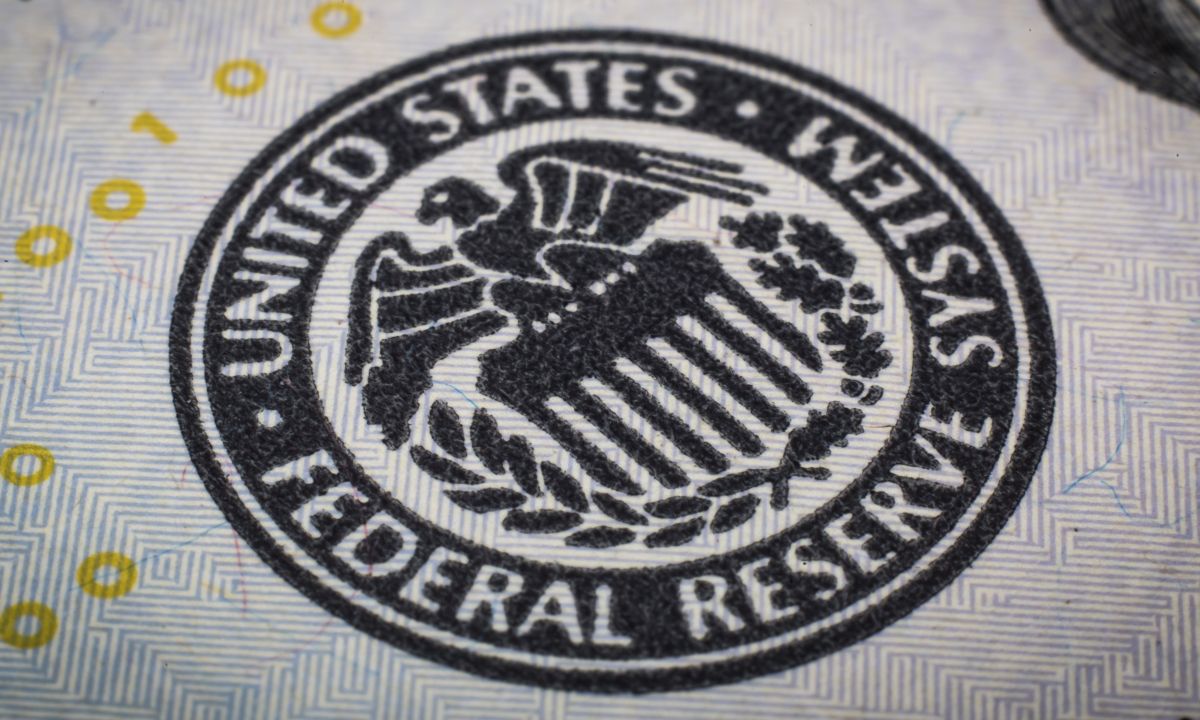
Fed Governor Waller opened the central bank's dollar conference by acknowledging private-sector tokenization is reshaping how dollars move across borders. Stablecoins and tokenized Treasuries create new demand channels outside the banking system.
Federal Reserve Governor Christopher Waller opened the central bank's fifth conference on the dollar's international role Monday with a direct acknowledgment: private-sector tokenization is reshaping how dollars move across borders.
"This year, we are here to discuss the implications of financial innovations, especially digital assets such as stablecoins, for the international roles of the U.S. dollar," Waller said.
The dollar's dominance still rests on the size of the U.S. economy, deep financial markets, and trust in American institutions, Waller noted. The environment around those pillars is shifting. Distributed ledger technology and tokenized assets are creating new channels for dollar intermediation that operate alongside traditional banking and payment systems.
"The private sector is moving rapidly to expand access to dollar-denominated assets, innovate in new financial services, and explore potential business opportunities that perhaps did not make sense with legacy technologies," Waller said.
The transmission mechanism for markets runs through two channels. Stablecoin issuance creates synthetic dollar demand. Every USDC or USDT outstanding represents a dollar liability backed largely by U.S. Treasuries, tying tokenized dollars to the same government paper that supports the traditional dollar. Tokenized Treasury products – short-duration bonds issued on-chain – offer foreign entities easier access to dollar yields without needing a U.S. bank account. Both channels reinforce dollar demand. They also fragment the intermediation layer away from the banking system Waller and his colleagues oversee.
Vice Chair for Supervision Michelle Bowman echoed that tension in testimony earlier this month. "The financial system continues to adapt to technological advances, including the rapid evolution of artificial intelligence capabilities and the risks and benefits of its use," she told lawmakers. She warned that digital vulnerabilities have magnified across critical financial infrastructure, including banking systems.
If tokenization deepens the dollar's role, it puts upward pressure on the dollar and downward pressure on gold, which competes as a non-yielding reserve alternative. Gold would face structural headwinds from a broader, more liquid dollar-asset pool. If tokenized assets weaken traditional dollar-demand channels by encouraging offshore dollar creation outside Fed control, the dollar could face new competitive pressure from other digital currency systems.
The conference itself is part of a broader Fed effort to understand these dynamics. Waller described its purpose as bringing together "different perspectives on the forces shaping the dollar's global role." Bowman's separate caution on AI amplifies the message: the Fed sees both opportunity and operational risk in the shift. The exchange of views over the two-day meeting will feed into how the central bank approaches stablecoin oversight and tokenized asset regulation. No policy signal emerged from Waller's opening remarks.
Prepared with AlphaScala research tooling and grounded in primary market data: live prices, fundamentals, SEC filings, hedge-fund holdings, and insider activity. Each story is checked against AlphaScala publishing rules before release. Educational coverage, not personalized advice.