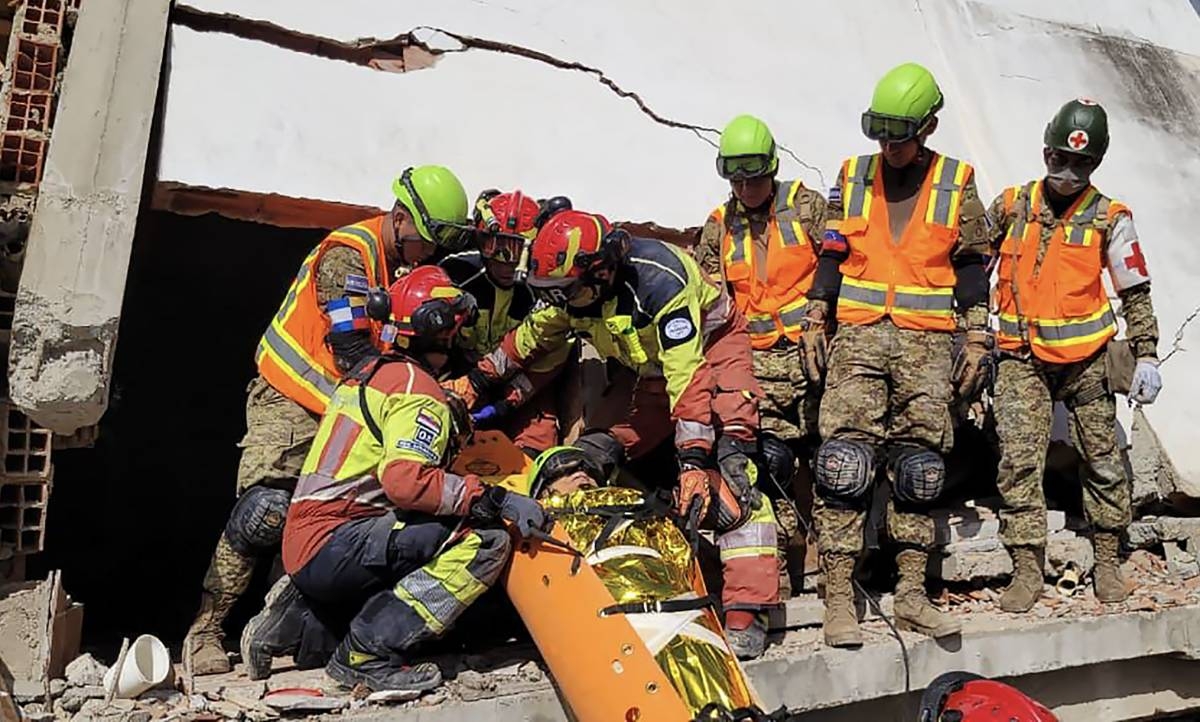
The twin earthquakes that struck Venezuela on Wednesday killed at least 1,430 people and left more than 50,000 missing, the United Nations said. Interim leader Delcy Rodriguez reported a rescue late Saturday. For oil markets, the immediate question is whether the disaster disrupts what little production remains.
Venezuela holds the world's largest crude reserves. Output has fallen to roughly 400,000 barrels a day from 2.5 million a decade ago. The magnitude 7.2 and 7.5 tremors hit the coastal state of La Guaira, north of Caracas, and damaged infrastructure near the main export terminal at Jose. State-owned PDVSA has not commented on operational status.
West Texas Intermediate crude rose 2.3% on Friday as the death toll climbed. The move was partly a short-covering rally ahead of the weekend. The United States Oil Fund (USO) gained 1.8%. The reaction was muted compared with the 8% spike after the January intervention that ousted Nicolas Maduro. The market sees limited supply risk because the country produces too little to move global balances, traders said.
What could change that calculus is a specific disruption to heavy crude supply for US Gulf refiners. US Gulf refiners process Venezuelan grades to meet asphalt and diesel demand. If PDVSA declares force majeure on export contracts within the next week, the market will price a 200,000 to 300,000 barrel per day loss for one to two months. That would tighten heavy crude differentials and lift WTI toward $80, several traders said.
The confirming signal is a sustained move above $78 in WTI with rising volume. The invalidating signal is a return below $74 on the first PDVSA restart announcement. Until then, the market is pricing a small tail risk, not a structural shift.
A faster restart within 10 days would reverse the move. The key data point is the weekly EIA report, which will show whether Venezuelan crude arrivals to the Gulf Coast have dropped. Traders should watch the EIA release for a decline in heavy crude imports.
The disaster tests the interim government of Delcy Rodriguez. She has restricted access to La Guaira and required permits for volunteers. Public anger is rising because many families had to dig their dead out of rubble themselves. The US has sent a 250-person disaster team and reopened one runway at Simon Bolivar International Airport for C-17 flights. Rodriguez said she spoke with President Donald Trump and Secretary of State Marco Rubio, who reaffirmed support.
The UN estimates $6.7 billion in physical damage, or 6% of GDP. That will strain an already hollowed-out state budget. Venezuela's economy contracted more than 80% under Maduro and has not recovered. The quakes add a massive reconstruction bill to a government that can barely pay for fuel imports.
For investors, the real exposure is not oil output but PDVSA's ability to service debt. PDVSA bonds trade at distressed levels. The government may divert revenue to relief efforts instead of paying creditors. The next catalyst is PDVSA's July payment on the 2020 bond, due in three weeks. A missed payment would confirm the credit deterioration and push spreads wider.
The simple read is that Venezuela's oil output is too small to matter. The better read is that the quake hits the country's ability to attract foreign investment for future production. International companies had been eyeing oil field reopenings after the political transition. A fiscal crisis could delay those plans by years.
Traders watching heavy crude differentials should focus on PDVSA's force majeure decision and the EIA import data. Those watching credit should track the July bond payment. Both events will tell the market whether the quake changes the underlying story or just adds another layer of damage to a already broken system.