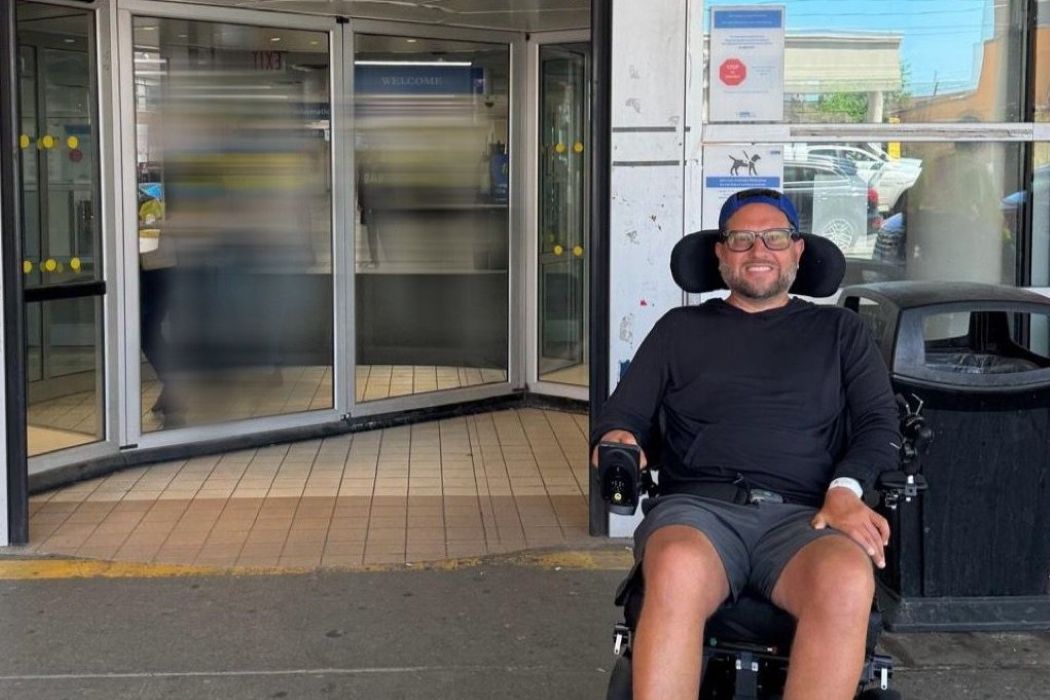
Lee Marten, a Vancouver police sergeant with ALS, received a Neuralink brain implant on May 20 at Toronto Western Hospital. He is the first Canadian with the disease to get the device, and the first patient worldwide to undergo a new surgical insertion method.
Marten's ALS had left him with limited hand mobility, just enough to steer his electric wheelchair. Now he can control a phone or laptop using only his thoughts. He is Neuralink's 26th patient.
"Getting a terminal diagnosis, you don't have much to look forward to," Marten told CBC News. "This is going to maybe improve my time that I have left, and allow me to be a kind of trailblazer for anyone else going through this."
Earlier Neuralink implants required cutting through the brain's outer protective layer, the dura, to place the device's electrode threads directly into brain tissue. The threads are too fine for human hands to handle; an experimental robot inserts them. The new procedure pushes the threads through the dura instead of cutting it open.
Neuralink said this removes one of the most delicate manual steps from the surgery. The company's head of neurosurgery, Dr. Matthew MacDougall, called it "the most cutting-edge version of this surgery" to date. A simpler procedure could help scale the platform beyond the current small cohort.
The implant is part of a four-year clinical trial evaluating safety and functionality. Toronto Western Hospital performed the first Neuralink implant outside the United States last year. Two other Canadian patients have received the device for quadriplegia. Marten is the first ALS patient and the first to get the dural-penetration technique.
Neuralink has now implanted 26 patients. The company said the new method, if follow-up scans confirm no added risk, would address a step that made the original procedure hard to replicate.
Marten's surgery produced one immediate result: he can now control a screen with his thoughts. The next milestone will be the six-month safety assessment.