Stocks● Neutral
Vance Takes Lead on Iran-Ukraine Talks, Sidelines Witkoff
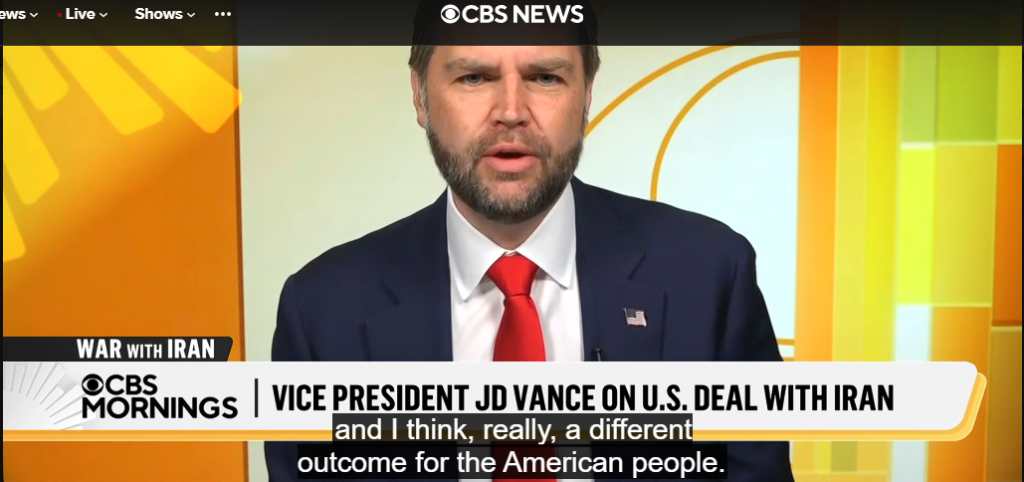
Vice President JD Vance assumes control of US end-of-war negotiations with Iran and Ukraine, sidelining White House envoys. A $300bn reconstruction fund for Iran hinges on a 60-day ceasefire set for signing Friday.
Continue with
Vice President JD Vance has taken over the lead in US negotiations to end the war with Iran and Ukraine, sidelining the trust-in-Trump approach promoted by White House envoys Steven Witkoff and Jared Kushner, according to Russian and Chinese intelligence sources. The assessment, reported by John Helmer and circulated through Hong Kong and Singapore channels, concludes that Russian President Vladimir Putin should refocus his talks strategy on Vance. It also says the bribery schemes run by Russian envoy Kirill Dmitriev will come to nothing.
The new strategy, dubbed the Vanchorage Formula, was agreed between Vance and President Donald Trump during a White House birthday call with Putin on Sunday. Under the formula, Vance will finalize the end-of-war terms with both Iran and Ukraine. Trump takes public credit for successes and works to pacify Israel and its Washington supporters. Vance outlined the framework on CBS on Monday. Iran would allow real inspections of its nuclear program in exchange for a return to the world economy, he said. “We will welcome you back into the world economy. I think what the President of the United States wants to do is to turn over a new leaf after 47 years of failed relationship between the United States and Iran.”
Russian Foreign Minister Sergei Lavrov gave the first public acknowledgment of the new formula at a press conference in Minsk. Trump confirmed in the Sunday call that he wants fair long-term solutions for Ukraine, Lavrov said. Russia still expects the August 2025 Anchorage agreement to be implemented. Lavrov challenged Witkoff and Kushner to explain the path forward when they visit Russia again, an event Putin’s spokesman Yury Ushakov had mentioned.