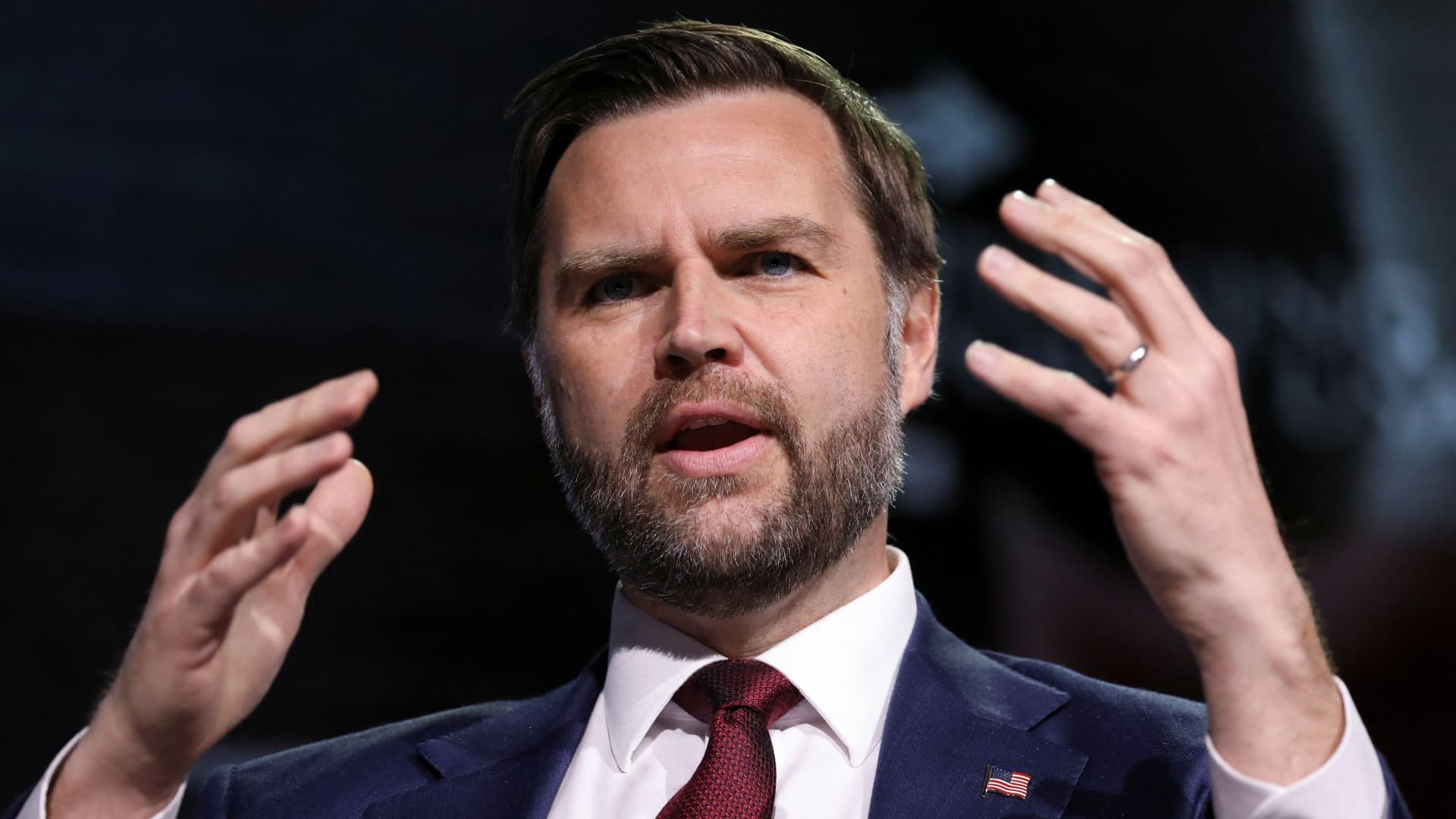
Vice President JD Vance said Monday the U.S. expects the Strait of Hormuz to open without a toll system for the long term under a deal with Iran.
"Our expectation is that the strait is going to be opened in a toll-free way for the long term, and that's the sort of thing that we're going to figure out in these technical negotiations," Vance told CNBC.
Iranian state media has reported that Hormuz will open to toll-free transits for an initial 60-day period. After that, the strait will be managed by Iran and Oman, according to Iran's Tasnim news agency.
The U.S. and Iran are expected to sign an agreement to end the conflict on Friday in Switzerland. President Donald Trump said the deal opens Hormuz without tolls in exchange for the U.S. ending its naval blockade against Iran.
Vance said ship traffic through Hormuz has already increased over the past 24 hours. CNBC could not immediately verify those claims.
The Strait of Hormuz is a chokepoint for roughly 20% of global oil shipments. A toll-free opening would remove a cost that shippers currently pay and lower the geopolitical risk premium embedded in crude futures, according to the terms Vance described.
Oil prices have fluctuated on Hormuz headlines in recent weeks. The agreement, if finalized Friday, would remove one source of uncertainty for crude markets. The United States Oil Fund (USO), which tracks crude futures, is sensitive to such developments.
Shipping companies that transit the strait would also benefit from lower toll costs. Defense contractors that supply naval assets could see reduced demand if the blockade ends, though the deal's long-term impact on military spending remains unclear.
The signing is scheduled for Friday in Switzerland. No further details on the technical negotiations have been released.