Uttar Pradesh's Workforce Shift: 16M Women Enter Dairy, Not Factories
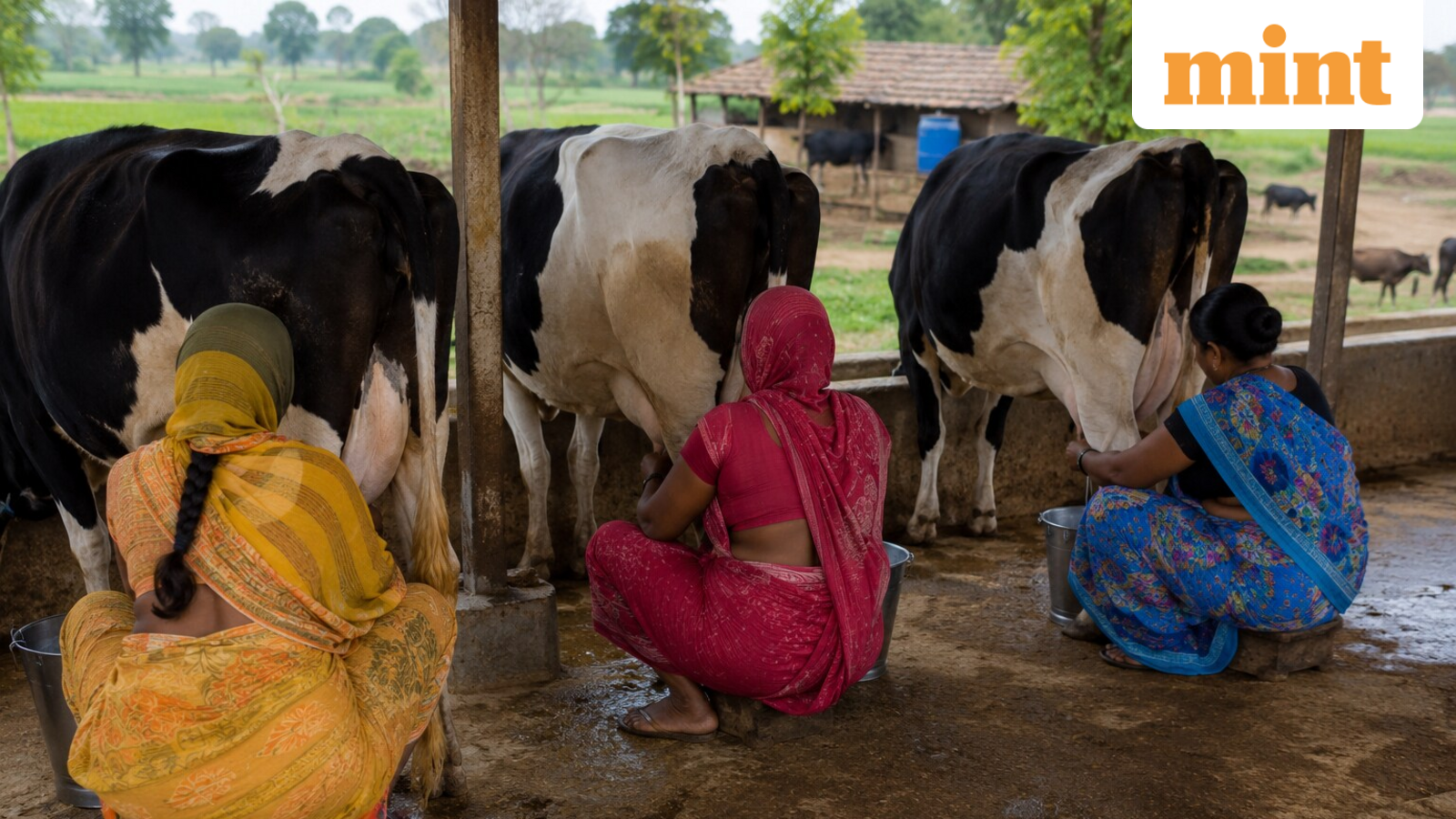
16M new women workers in UP, nearly all in dairy and crop farming. Young women still lack salaried jobs and hostels. Next leap: non-farm infrastructure.
Uttar Pradesh added 16 million women to its workforce between 2017 and 2025. The employment-to-population ratio for women aged 15-64 jumped from 13.8% to 33.4%. The share of women not looking for work fell from over 72% to 53%.
On the surface, that looks like a clear success. The composition of those jobs matters far more than the headline number.
Where the Jobs Went: Dairy and Crop Farming
Three-quarters of the increase went into agriculture and animal-rearing, the authors of a Mint analysis found. Dairy farming alone absorbed the biggest share. The proportion of working-age women in animal rearing climbed from 2.3% to 10.2%, more than quadrupling. Crop farming employment roughly doubled to 13% of working-age women. Together, these two segments account for about 12 million of the 16 million additional workers.
The Mint analysis stresses that the increase was not driven by unpaid work in household enterprises or by the public employment guarantee scheme. Young women did not forgo higher education to start working.
What likely triggered the shift was pandemic-era income strain. Most rural households already owned cattle, so little extra capital was needed. Extra milk that families once consumed at home could now be sold in the market. The government's White Revolution 2.0 aims to expand dairy cooperatives. That could bring many own-account workers into the organised sector and improve pricing.
Non-farm employment did rise but from a small base. Women in industry went from 1.8% to 2.9% of working-age women. Women in services climbed from 3.1% to about 7.6%. Combined, the two sectors account for about 10% of working-age women. That is a modest share of the overall increase.
The Non-Farm Bottleneck
The structural concern centers on young women. For those aged 15-29, the salaried employment rate stands at just 2%, compared with 12% for young men. Even among single young women, who face fewer household burdens, less than 9% work in non-farm sectors. Young men in the same group work at about 30%.
Young women in UP complete education at nearly the same rate as young men. Their pathways diverge sharply afterwards, the Mint analysis notes.
The infrastructure to connect women to non-farm work is missing. UP has only eight functional working women's hostels. The union budget for 2026-27 promised a hostel in every district for women in higher education. The same commitment is overdue for working women, the article argues. Tamil Nadu's Thozhi hostels, which shelter students and working women under one roof, offer a potential template.
The initiative's success will depend on financing and management. For a state this young and large, every year of delay ages another cohort of educated women out of the workforce.
Macro Transmission: From Dairy to Demand
The dairy-driven employment surge supports rural household incomes, the Mint analysis notes. Extra milk sold at market adds cash flow. With rising incomes and changing diets, demand for milk will remain strong. If dairy cooperatives can move beyond raw milk into value-added products such as paneer and ghee, income gains could be larger.
The broader constraint is the small share of non-farm employment. Only 10% of working-age women work in industry or services. That limits the state's potential for higher-productivity work and social security. The article argues that with education spreading, younger women will want work beyond crop or dairy farming. Such jobs will not always lie close to home.
Hostels and safer commutes will determine whether the dairy-led gains can be broadened. The union budget promised a hostel in every district for women in higher education. The same commitment is overdue for working women.
Every year of delay ages another cohort of educated women out of the workforce. The next gains will require non-farm jobs and the safe infrastructure to reach them.
Drafted by a large language model from the source reporting linked above, then screened by automated publishing checks. It is not read by a journalist before publication. Some articles cite our Alpha Score. Verify prices and figures against the original source. Educational coverage, not personalized advice.