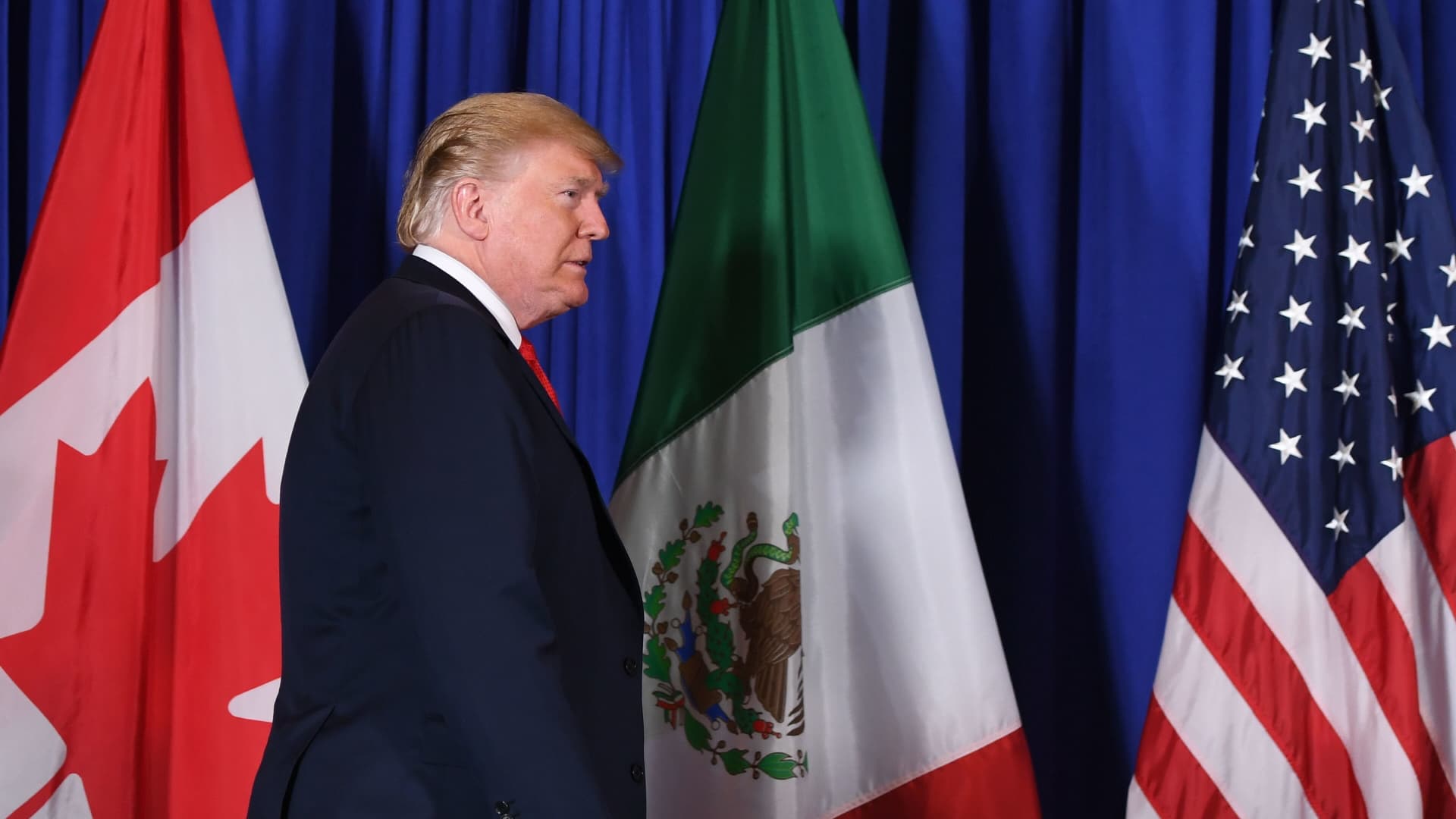
The Trump administration decided not to renew the USMCA for a second 16-year term, moving instead to annual reviews of the trilateral trade pact. The announcement came Wednesday, the deadline for the three partners to decide on renewal.
A senior administration official said Trump "chose not to rubber stamp a USMCA renewal without addressing existing issues." The official cited the U.S. trade deficit with Canada and Mexico as the president's main concern. The agreement remains in effect for another decade unless a member withdraws. The yearly reviews allow any party to request changes to major provisions.
The decision was widely expected. Trump had said in June he was not sure he would renew it, arguing the U.S. did not need anything from its neighbors but they needed everything from the U.S. His second-term tariff actions against both countries, though partly blocked by courts, signaled the administration's willingness to use trade pressure.
What changes for trade-dependent sectors
Auto manufacturers face the most direct exposure. General Motors and Ford both run assembly plants in Mexico and source components across all three countries. The annual review process introduces recurring uncertainty about tariff treatment for cross-border supply chains. The USMCA tightened rules of origin compared with NAFTA, requiring 75% of vehicle content to be made in North America and 40-45% of labor done by workers earning at least $16 an hour. Any renegotiation could loosen or tighten those rules, affecting production costs.
Agricultural exporters also have a stake. The U.S. runs a trade surplus with Mexico in farm goods but a deficit with Canada, particularly in dairy. U.S. Trade Representative Jamieson Greer said the administration "will continue to engage with Mexico and Canada to address the Agreement's shortcomings."
Other sectors could be drawn into the review as well. Canadian crude oil accounts for about 60% of U.S. petroleum imports, and any tariff change on energy would ripple through refining margins. Electronics assembled in Mexico also cross the border under preferential tariffs; a change in origin rules could raise costs for tech companies.
Timeline for the first annual review
Bilateral talks between the U.S. and Mexico were already underway and are scheduled to continue past the July 1 deadline. Canada has not started its own negotiations with the U.S. The first annual review could come as early as next year, though the administration has not specified a timeline. Under the USMCA, if a party requests changes and the others object, the requesting party can withdraw from the agreement with six months' notice, putting a hard deadline on negotiations.
If the Canada talks stall or if Trump threatens additional tariffs during the review process, pressure on trade-exposed stocks would rise. A quick bilateral deal with Mexico that reduces the U.S. deficit would lower that risk. The USMCA replaced NAFTA in 2020, which Trump had long criticized as a bad deal. The current agreement was supposed to lock in terms for 16 years. No date has been set for the first annual review. The U.S. and Mexico will continue bilateral talks. Canada has not started its own negotiations.