Crypto● Neutral
US to License Private Firms for Hacking Crypto Scam Networks
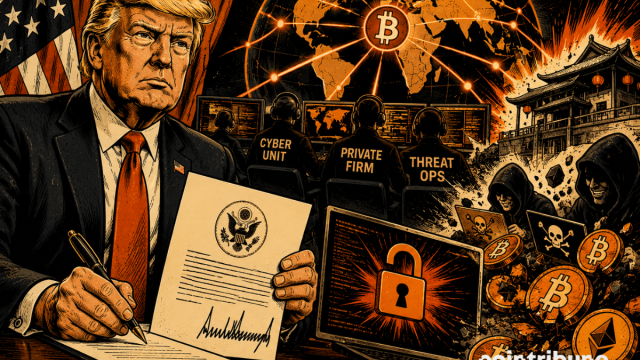
Trump signed a memo authorizing licensed US firms to conduct cyber operations against foreign crypto scam infrastructure. FBI data show 181,565 crypto complaints in 2025. Liability rules are due within 60 days.
Continue with
Donald Trump signed a memo on August 12, 2026, authorizing licensed private companies to conduct cyber operations against foreign criminal networks, including crypto scam infrastructure. The White House designated the National Coordination Center to implement the program, which it calls "Participating Companies."
The memo marks a shift in how the U.S. tackles crypto fraud. Until now, authorities relied on investigation, domain seizures, and asset freezing after the damage was done. A recent example was the freezing of over $700 million linked to the Tai Chang network. The new framework allows covert surveillance and technical disruption of scam infrastructure before victims lose their money.
FBI data from 2025 show the scale of the problem. The Internet Crime Complaint Center logged 181,565 crypto-related complaints, up 21% from the prior year. Declared losses hit $11.366 billion, a 22% jump. Investment fraud alone accounted for 61,559 complaints and $7.228 billion in losses. Those figures only represent reported cases. Actual damage is likely higher, the bureau said.
The memo targets networks that are more than simple fake investment sites. "Pig butchering" schemes, which gain a victim's trust before pushing them to a fictitious platform, combine social engineering, cross-border laundering, and in some cases forced labor in clandestine compounds. Intervening in their infrastructure could accelerate identification or disruption, the White House said. Whether it will reduce losses or recover stolen funds remains unanswered.