The U.S. military struck Iranian missile sites after an Iranian drone hit a tanker in the Strait of Hormuz, raising oil supply risks for the 20% of global crude that transits the chokepoint.
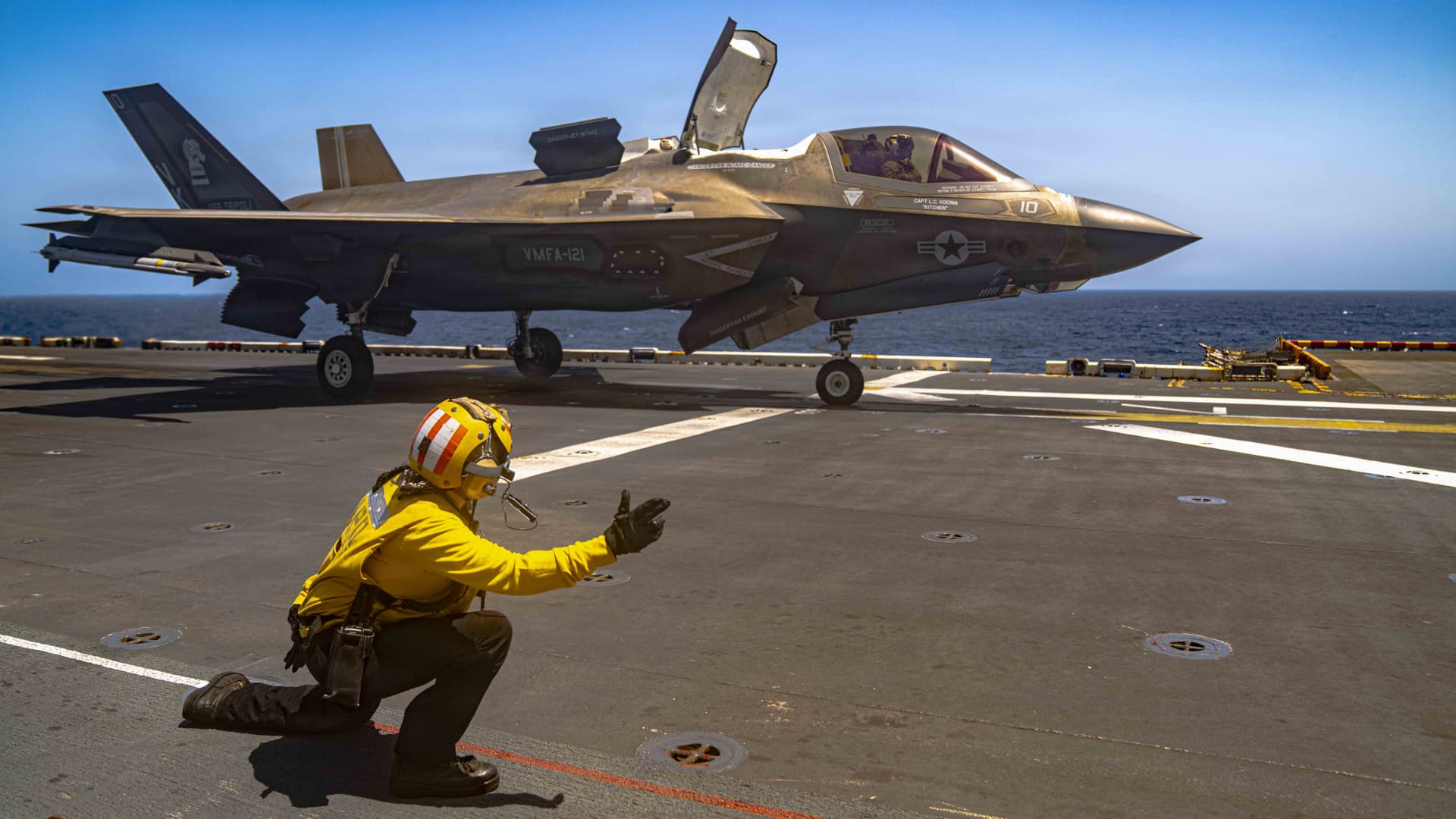
The U.S. military struck Iranian missile and radar sites Friday after President Donald Trump accused Iran of violating a ceasefire by launching drone attacks at ships in the Strait of Hormuz. Central Command said its aircraft hit missile and drone storage locations and coastal radar sites. The operation followed a one-way attack drone that struck the Singapore-flagged cargo ship Ever Lovely in the strait off Oman on Thursday. The vessel continued on its way, Central Command said on X.
"The unwarranted aggression against commercial shipping by Iranian forces clearly violated the ceasefire," Central Command said. The command added that Iran's actions "undermined freedom of navigation as commerce increasingly flows through the vital international trade corridor."
The strikes represent the first military engagement since Trump and Iranian President Masoud Pezeshkian signed a memorandum of understanding on a permanent peace deal just over a week ago. Vice President JD Vance traveled to Switzerland over the weekend for talks with Iranian counterparts about that deal.
Trump earlier Friday said U.S. forces shot down three of four Iranian drones launched at ships in the strait. The fourth hit the Ever Lovely. "Obviously, this is a foolish violation of our Ceasefire Agreement," Trump wrote on Truth Social. Asked at the White House whether there would be consequences, Trump said, "You'll find out."
The Strait of Hormuz handles about 20% of global oil shipments, roughly 17 million barrels a day. The waterway connects Persian Gulf producers like Saudi Arabia, Iraq, and Kuwait with Asian and Western refiners. Any sustained disruption tightens global crude supply and raises tanker rates and shipping insurance premiums.
For crude markets, the risk cuts two ways. A limited, one-off response that does not escalate keeps the ceasefire framework intact. That could reduce the risk premium that built into oil futures since the deal was signed. If Iran retaliates against shipping or U.S. assets, the strait itself becomes a theater of conflict. Oil futures, which edged higher after the initial attack, have not priced a prolonged closure, traders said. Markets are now watching for further escalation. The incident adds a geopolitical premium to energy stocks, a factor traders track closely in stock market analysis.
The Ever Lovely was able to continue its transit. Central Command said its strikes hit the Iranian sites Friday evening. No further U.S. operations were announced.
Prepared with AlphaScala research tooling and grounded in primary market data: live prices, fundamentals, SEC filings, hedge-fund holdings, and insider activity. Each story is checked against AlphaScala publishing rules before release. Educational coverage, not personalized advice.