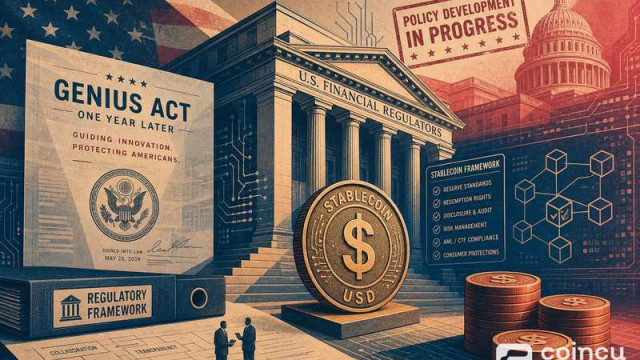
One year after the GENIUS Act took effect as Public Law 119-27, U.S. regulators have not finished the detailed stablecoin rules that will govern payment stablecoin issuers. The law set a federal framework. Turning that framework into enforceable rules takes longer.
Key items remain open. Anti-money-laundering and sanctions compliance requirements for issuers are still moving through comment stages. The Bank Policy Institute and The Clearing House have filed formal comments on the GENIUS Act's requirements. That means the final shape is not settled.
Reserve backing and redemption rights will define how issuers operate. Reporting standards add another layer. Tether, Circle, and PayPal's PYUSD all face obligations that are not yet fully defined. The Treasury has been active on the file, publishing announcements through its press office.
State oversight is another open question. Some lawmakers have urged the Treasury to preserve the role of state regulators, a point of tension when the federal framework overlaps existing state regimes.
Beyond banking regulators, disclosure and financial-crime compliance form another pillar. The Brookings Institution has outlined steps for implementing payment stablecoin rules. Interagency coordination is needed when a new law creates broad compliance duties.
For exchanges and trading platforms, obligations around listing, custody, and disclosure may shift. The rules will distinguish issuer duties from platform duties. Firms will adjust operations accordingly.
The Financial Action Task Force has pushed for stronger crypto AML enforcement as stablecoin-linked activity grows. U.S. rules will need to align with FATF recommendations, adding another layer of compliance.
The deadline for finished rules has already passed. One year after the GENIUS Act, regulators have not completed the rulebook. That keeps uncertainty in place for projects and investors.
The UK's FCA has moved to ease stablecoin limits, a contrasting approach that may attract issuers seeking clearer rules. U.S. regulators continue to advance implementing rules through comment periods and interagency coordination. The exact timeline remains unsettled.