US Resumes Iran Strikes After Pause as Oil Breaks $90
Iran said it will enter a phase of "complete offense" if US strikes continue. The US resumed bombing after a one-night pause. Brent crude hit $90 a barrel. A Houthi blockade of Bab el-Mandeb could be next.
The US military resumed airstrikes on Iran overnight after a one-night pause, a lull that had briefly fueled speculation about de-escalation. Brent crude rose above $90 a barrel for the first time in five weeks. US gasoline prices climbed back over $4 a gallon, the second time that benchmark has been hit since the war disrupted global oil supplies.
The pause had followed a weekend of heavy exchanges. The US struck bridges and a desalination plant in Iran, which Iranian officials said was repaired quickly. Iran responded by hitting a more strategically important desalination and power plant in Kuwait and pounding US operations in Jordan. Two more US military deaths were reported, according to CENTCOM. The resumed strikes came with a stated pretext: those two additional fatalities on top of two already reported.
President Trump had promised intensified strikes beginning more or less today if Iran did not return to negotiations, meaning capitulate. The US had already escalated last week, not just with the number of strikes but with the targeting: the desalination plant, bridges near Bandar Abbas, and approaches uncomfortably close to the Bushehr nuclear plant and a development site at Darkhovin.
Many analysts have argued the latest round looks like shaping attacks in preparation for something large. Scott Ritter, a former UN weapons inspector, said the likely shape is a raid. "A raid is the only military mission where we plan to retreat," Ritter said. "Every other military mission there's no plan. You commit and you go. A raid is in and out." A raid on Kharg Island, the heart of Iran's oil industry 55 km off the coast in Bushehr province, would fit that scenario: US forces landing to destroy infrastructure and then departing. Experts note Iran has at least four other export routes, so Kharg's loss would be inconvenient rather than fatal.
Robert Pape, a University of Chicago professor, said the US is likely to intensify its naval blockade of the Strait of Hormuz. "The first part has already started this week," Pape said on a broadcast with Andrew Neil. "Last week was the beginning of the air-suppression campaign for this week." Pape argued the 82nd Airborne and Marines could be used to push back if the blockade fails to reopen the strait. Neil resisted the idea that negotiations would not end the conflict, a tension Pape attributed to a refusal to see where events are heading.
A study of modern wars found more than half did not end with a negotiated settlement. The distrust between the US and Iran, which has reached the level of mutual loathing after the breakdown of the already fragile memorandum of understanding, makes a deal vanishingly unlikely. Iran knew before it entered talks that the US and Israel intended a "mowing the lawn" strategy: keep crippling sanctions in place and beat up on Iran periodically to weaken it and create internal divisions. After the illegal launch, the assassination of much of Iran's leadership, and war crimes exemplified by the massacre of school children in Minab, the country is unified around inflicting a decisive defeat.
Iranian leaders have said bluntly that negotiating with the US is not just pointless but demeaning. The Supreme Leader, Mojtaba Khamenei, made that case in a recent statement summarized by PressTV. Foreign Minister Abbas Araghchi subsequently gave an interview pushing back, saying talks should be pursued even if the chance of success is only 10%. One analyst on social media read the move differently: "They wanted to manufacture a clean record of 'we exhausted every diplomatic option.' Once that record existed, the hardliners could shut the process down without looking like the ones who refused talks."
An advisor to Khamenei, Mohsen Rezaei, was blunter. "I declare it is over. Both negotiation and war are over," he said. "If in the next two or three days the Americans continue the war, we will enter a phase of complete offense and destruction."
The tit-for-tat attacks are getting deadlier. Shipping volumes through Hormuz have slumped to levels seen at the height of the conflict in March and April. Kuwait continues to take some of the worst hits from Iran. Over the weekend, Kuwait's main state energy company said an unspecified site sustained "significant material losses," causing evacuation and injuries. Two power and desalination plants have been hit in recent days.
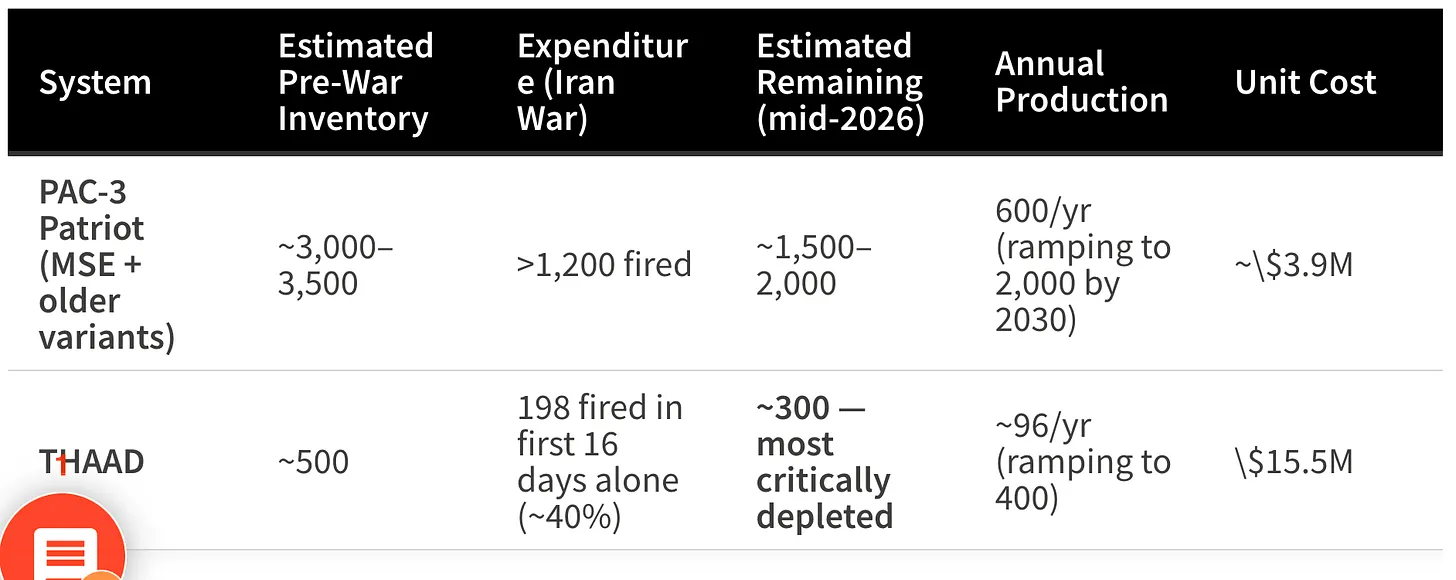
Iranian ballistic missiles struck Prince Sultan Air Base in Al-Kharj, Saudi Arabia, on July 18, wounding twelve US service members, two critically, and hitting KC-135 Stratotankers on the flight line. Air & Space Forces Magazine, drawing on multiple US military sources, reported the damage. Saudi Arabia's Civil Defense Authority cleared the sirens six minutes later without naming the weapon, the origin, or the damage. Neither Riyadh nor Washington issued an official statement. A lengthy analysis published by the House of Saud itself described a "three-party managed ambiguity" in which Iran, Saudi Arabia, and CENTCOM each benefit from leaving the damage question unanswered. Confirming the strike would force a public reckoning with a PAC-3 reserve that is approaching a ceiling none of them can afford to name.
Yemen's Houthi forces said they will make a "huge" announcement, with reports expecting a blockade of the Bab el-Mandeb strait. Together with Hormuz, those two chokepoints handle over 25% of global seaborne oil trade.
The weapon-depletion picture is getting worse. Larry Johnson, writing in "The US Faces a Strategic Crisis with Iran," estimated total US Tomahawk inventory at roughly 3,000 across all commands, with CENTCOM having fired 850 in the first four weeks of the war. All eight US missile systems rely on rare earth elements, and China controls the processing, separation, and magnet-manufacturing supply chain.
Israelis have never felt less secure. A poll showed 64% unhappy with how the endless wars have been run, 73% upset that no real investigation of October 7 has occurred. Iran's Foreign Ministry spokesperson said Tehran is determined to exercise sovereignty over the Strait of Hormuz through measures already taken, and stated that since the US failed to fulfill its commitments under the memorandum of understanding, Iran will not fulfill its own.
The next catalyst could come as early as today, when the Houthis are expected to announce their strait blockade.
Southern Company (SO), a regulated utility with an Alpha Score of 46/100 (Mixed), faces higher fuel costs as natural gas prices rise on Middle East supply disruption. Pacific Airport Group (PAC), which operates airports in Mexico, is exposed to higher jet fuel costs and potentially weaker consumer travel demand. Broader stock market analysis points to energy shares gaining while transport and consumer discretionary names come under pressure as Brent pushes above $90.
Drafted by a large language model from the source reporting linked above, then screened by automated publishing checks. It is not read by a journalist before publication. Some articles cite our Alpha Score. Verify prices and figures against the original source. Educational coverage, not personalized advice.