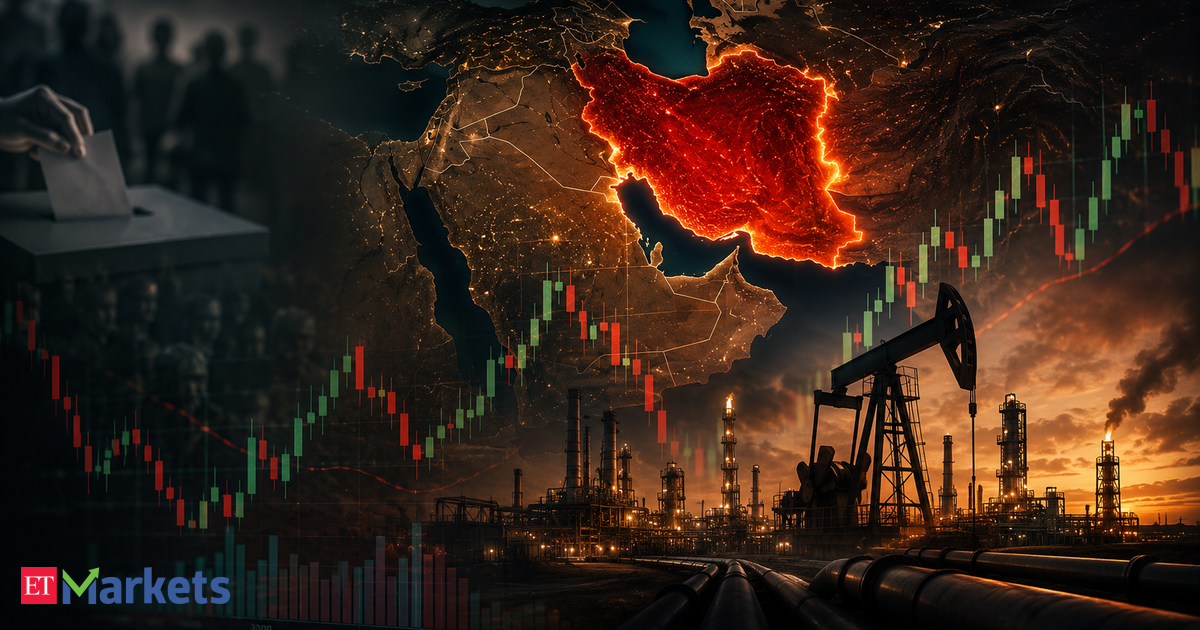
The shift in market focus from domestic election outcomes to the US-Iran geopolitical landscape marks a critical pivot for Indian equities. While local political cycles often dominate the headlines, the underlying risk to the Sensex and Nifty is now tied to the potential for supply-side shocks in the energy sector. When regional conflicts escalate, the immediate transmission mechanism to Indian markets is through the crude oil import bill, which dictates the fiscal health of the nation and the input costs for major industrial players.
Crude Oil Volatility and Fiscal Transmission
The primary read-through from US-Iran tensions is the threat to global oil supply chains. For an economy that remains heavily dependent on energy imports, any sustained spike in Brent crude prices acts as a direct tax on corporate margins and consumer purchasing power. While domestic political stability provides a baseline for policy continuity, it offers little protection against a sudden surge in imported inflation. Investors should recognize that the correlation between oil prices and the Indian rupee is the most significant factor in determining the volatility of the broader market indices.
If geopolitical friction leads to a sustained disruption in shipping lanes or production facilities, the impact will be felt first in the banking and technology sectors. Financial institutions, such as those tracked on our HDB stock page, face potential margin compression if higher inflation forces a hawkish shift in interest rate expectations. Similarly, the technology sector, including firms like INFY and WIT, is sensitive to the global growth slowdown that often accompanies energy price shocks. These firms currently exhibit mixed to moderate Alpha Scores, reflecting the uncertainty inherent in their current operating environments.
Sectoral Sensitivity to Energy Costs
Beyond the headline indices, the real-world impact of geopolitical tension is felt in the cost of production for heavy industry and the discretionary spending capacity of the middle class. When energy prices rise, the cost of logistics and manufacturing increases, squeezing the operating margins of companies that cannot pass those costs on to the end consumer. This is particularly relevant for the banking sector, where the health of the loan book is tied to the profitability of these industrial clients.
Market participants often mistake domestic political clarity for a risk-off environment, but the reality is that external shocks carry more weight for systemic liquidity. The current reliance on 98 million SIP accounts provides a buffer of retail liquidity, yet this support is not immune to a broader macro-driven sell-off. If the US-Iran situation deteriorates, the focus will shift from local policy implementation to the sustainability of the current account deficit and the resulting pressure on the central bank to manage currency volatility.
The next concrete marker for this transition will be the movement in Brent crude benchmarks and the subsequent response from the Reserve Bank of India regarding interest rate guidance. Traders should monitor the spread between domestic bond yields and global energy prices to gauge the market's risk appetite as the geopolitical narrative unfolds.