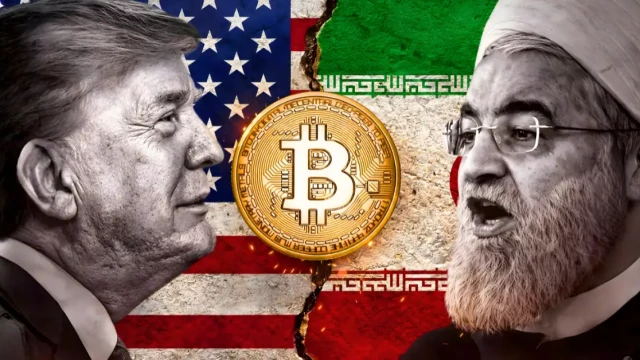
The prospect of a formal U.S.-Iran peace agreement, reportedly nearing finalization within a 48-hour window, has triggered a sharp repricing in risk assets. Bitcoin has surged toward the $83,000 threshold, reflecting a market that is aggressively pricing in the potential reopening of the Strait of Hormuz. This geopolitical pivot serves as the primary catalyst for the current move, as traders rotate out of safe-haven positioning and back into high-beta assets like Bitcoin (BTC) profile and Ethereum (ETH) profile.
The Mechanism of Geopolitical Risk Premium
The market’s reaction to this news is rooted in the direct correlation between the Strait of Hormuz and global energy supply chains. When military tensions escalate in this region, the threat of supply disruption forces a risk-off environment, typically characterized by rising oil prices and a flight to liquidity. The current rally in crypto assets is a direct reversal of that mechanism. By pausing "Project Freedom," the U.S. military operation aimed at securing the strait, the administration has signaled a tangible reduction in the probability of a supply-side shock. For crypto markets, this translates to an immediate compression of the geopolitical risk premium that has weighed on sentiment for the past two months.
Analyzing the 14-Point Framework
The proposed one-page memo, currently awaiting a response from Tehran, outlines a 14-point plan intended to de-escalate the conflict. If ratified, the agreement would trigger a 30-day negotiation period for broader diplomatic normalization. However, the market must distinguish between the headline-driven rally and the underlying structural reality. U.S. Secretary of State Marco Rubio has characterized the ongoing negotiations as "highly complex and technical," noting that the administration requires clarity on the specific concessions Iran is prepared to make. His public assessment that certain Iranian leaders are "insane" underscores the fragility of the current diplomatic window. For traders, this means the current price action is highly sensitive to binary outcomes; any failure to secure the 14-point agreement will likely result in a rapid unwinding of the gains seen in the last 24 hours.
Historical Correlation and Mean Reversion Risks
This is not the first time the crypto market has attempted to front-run a diplomatic breakthrough. The volatility profile of Bitcoin and Ethereum throughout this conflict has been defined by sharp, news-driven spikes followed by equally aggressive mean reversions. When Donald Trump previously announced a two-week ceasefire, Bitcoin jumped 5% to clear $72,000, while Ethereum gained 6% to hit $2,257. Those gains were predicated on a 12-15% drop in oil prices. However, the collapse of talks on April 13 serves as a cautionary case study. When the diplomatic channel failed, Bitcoin retreated below $71,000 in a matter of hours, demonstrating that liquidity in the crypto space is currently tethered to the perceived stability of the Middle East.
Sector-Wide Positioning and Liquidity Flow
The current rally is broad-based, suggesting that institutional and retail participants are moving in tandem. While Bitcoin is the primary barometer, the 4-5% gains in Solana, XRP, and Dogecoin indicate a healthy appetite for risk across the broader ecosystem. This is a departure from earlier, more isolated rallies. The following table summarizes the recent performance of key assets relative to the latest peace-talk headlines:
| Asset | Recent Move | Context |
|---|
| Bitcoin | +~2% | Approaching $83,000 resistance |
| Ethereum | +~2% | Recovering toward $2,400 levels |
| Solana/XRP | +4-5% | High-beta response to risk-on sentiment |
The Decision Point for Market Participants
The primary question for the next 48 hours is whether the market is pricing in a permanent resolution or merely a temporary tactical pause. If the 14-point plan is signed, the removal of the Strait of Hormuz as a flashpoint could provide the necessary macro tailwind for Bitcoin to retest the $100,000 level. Conversely, if the negotiations stall in Islamabad or Geneva, the lack of a formal agreement will likely trigger a sharp liquidity drain. Traders should monitor the delta between the official announcements and the rhetoric from both sides. The current price level of $82,398 for Bitcoin is heavily dependent on the assumption of a successful outcome. Any deviation from this path will likely see the market revert to its pre-news baseline, as the underlying uncertainty regarding the conflict remains unresolved until the ink is dry on the memorandum of understanding.