US Dollar Falls as Treasury Yields Hit Highest Level Since 2007
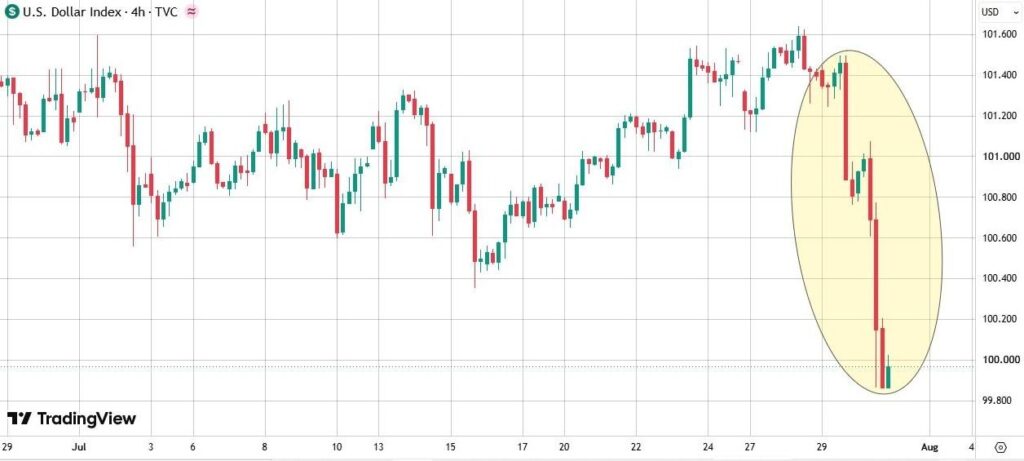
The 30-year yield hit 5.24%, highest since 2007, as quarterly inflation data offset a benign monthly PCE; GDP slowed, and the dollar fell 1.6% to below 100.
The dollar fell 1.6% this week, pushing the DXY below 100. At the same time, the 30-year Treasury yield rose to 5.2444%, its highest level since 2007.
The moves followed the release of June inflation and second-quarter GDP data. The Fed left rates unchanged, consistent with the benign monthly PCE numbers. The PCE index fell 0.1% from May, and the annual rate slowed to 3.7%. Core PCE, excluding food and energy, rose only 0.1% month over month, with the year-over-year rate at 3.3%.
The quarterly data told a different story. Over the full second quarter, inflation averaged higher because April and May saw larger increases that June's cooling did not reverse. The Bureau of Economic Analysis reported that the quarterly annualized inflation rate remained elevated, partly due to volatile energy costs.
GDP growth slowed to an annualized 1.5% in the second quarter, down from 2.1% in the first. That combination of slower growth and stubborn underlying inflation pushed long-term yields higher, even as the near-term policy outlook softened. Short-term yields and the dollar tend to track expectations for the Fed's next moves; long-term yields reflect expectations about the economy and inflation over many years.
The next data points that will shape the outlook are the July nonfarm payrolls report on Aug. 7 and the CPI on Aug. 12. The second estimate of Q2 GDP and the July PCE numbers follow on Aug. 26, ahead of the Sept. 15–16 FOMC meeting. Fed fund futures indicate traders expect a 25-basis-point rate hike at that meeting.
Drafted by a large language model from the source reporting linked above, then screened by automated publishing checks. It is not read by a journalist before publication. Some articles cite our Alpha Score. Verify prices and figures against the original source. Educational coverage, not personalized advice.