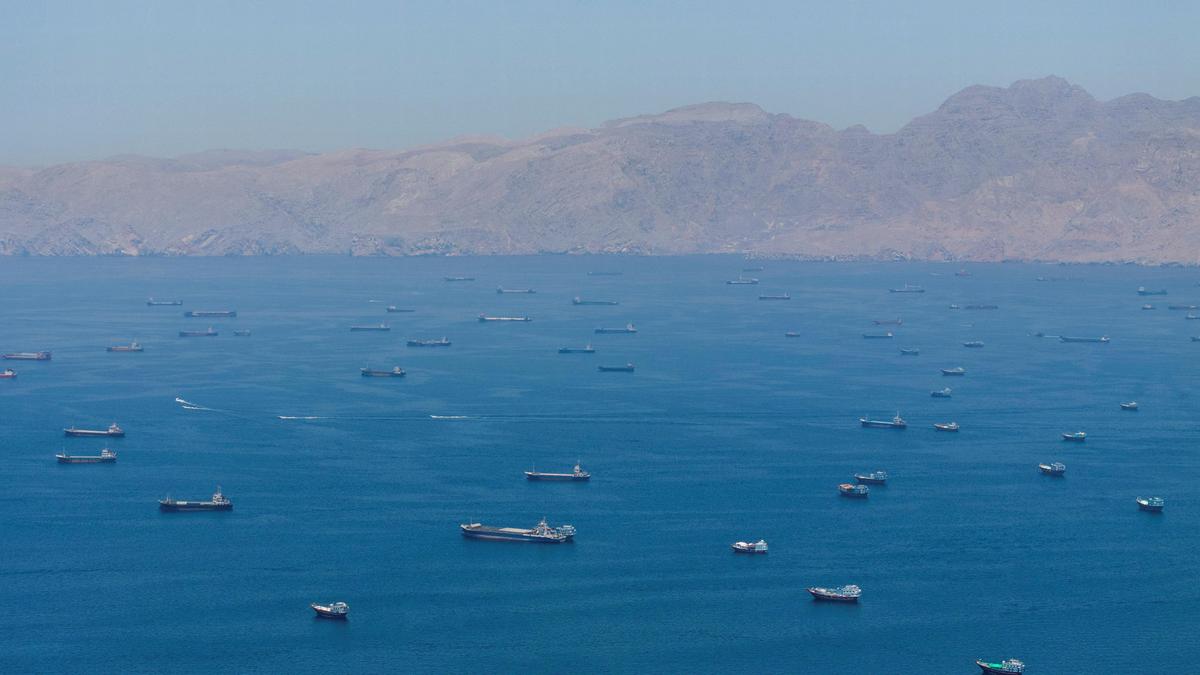
Oil traders see reduced blockade risk as US and Iran halt strikes ahead of Tuesday talks in Doha over the Strait of Hormuz chokepoint. The talks could ease global oil supply fears.
The United States and Iran have agreed to stop strikes against each other ahead of talks aimed at resolving a dispute over the Strait of Hormuz, a senior U.S. official said, according to a report by Axios on Sunday.
The two sides are expected to meet Tuesday in Doha to discuss the waterway that carries roughly a fifth of the world's oil shipments.
The deal de-escalates a period of direct confrontation. The strikes had escalated over the past two weeks, with the U.S. targeting Iranian vessels near the strait and Iran retaliating with attacks on tankers. Oil prices slipped after the Axios report, according to market participants. Traders viewed the cessation as reducing the probability of a near-term closure of the strait, several traders said.
The Strait of Hormuz is a chokepoint for crude from Saudi Arabia, Iraq, Kuwait, the UAE and Iran. A blockage would have cut global supply by roughly 20 million barrels a day. Shippers and insurers had started to adjust routes and pricing. One shipping broker said premiums for war-risk coverage in the Gulf had doubled over the past month.
The Tuesday talks represent the first direct diplomatic contact between the two sides since the confrontation began. Qatar has served as a mediator in past disputes between Washington and Tehran. Iran wants guarantees that its tankers will not be intercepted. The U.S. insists on free navigation. The senior U.S. official said both sides agreed to discuss the issues without preconditions.
The agreement buys time for diplomacy. For energy companies with Gulf exposure, the pause in strikes reduces an immediate operational risk. Producers in the region had begun to stockpile spare capacity and reroute cargoes. Those contingency plans remain in place until a broader deal is reached.
A follow-up meeting has not been scheduled, the official said.
Prepared with AlphaScala research tooling and grounded in primary market data: live prices, fundamentals, SEC filings, hedge-fund holdings, and insider activity. Each story is checked against AlphaScala publishing rules before release. Educational coverage, not personalized advice.