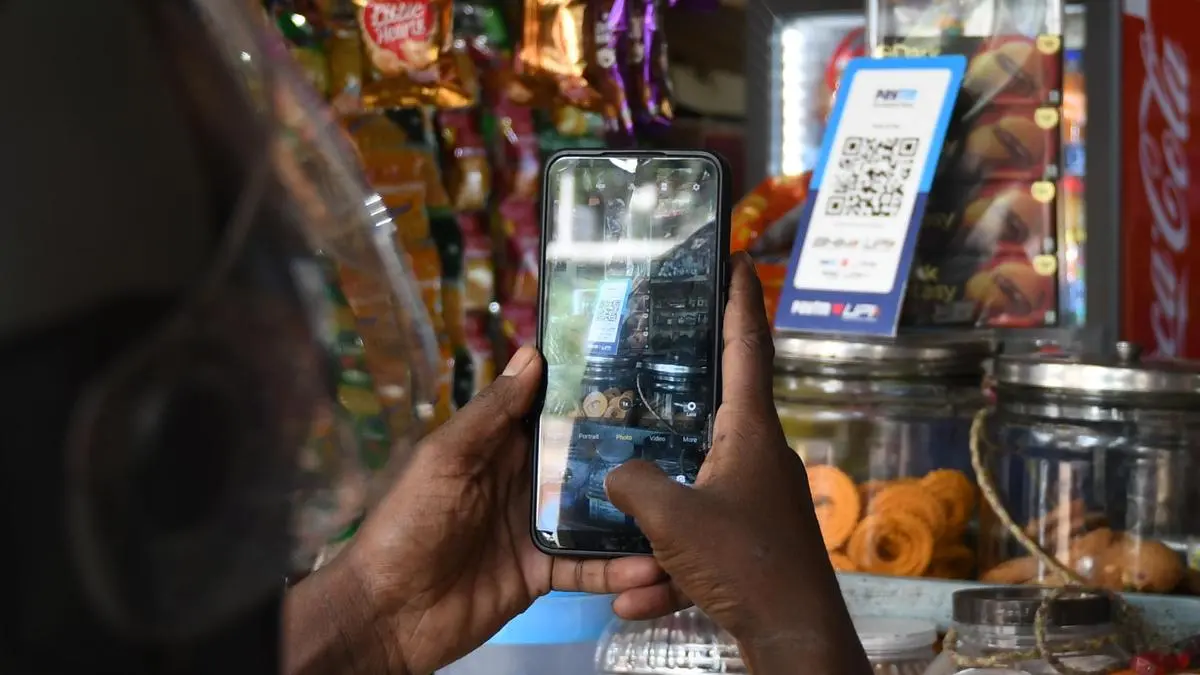
The National Payments Corporation of India (NPCI) reported that Unified Payments Interface (UPI) processed a record 23.20 billion transactions in May worth ₹29.90 lakh crore. On its face, the 3% month-on-month value increase and 4% volume increase from April extend a steady growth trajectory. Industry executives, including Anand Kumar Bajaj, Founder, MD and CEO of PayNearby, attributed the surge to summer travel spending, the IPL 2026 tournament and seasonal consumption trends.
The record masks a structural shift that matters for anyone holding payment-sector exposure. Akash Sinha, Co-founder and CEO of Cashfree Payments, put it directly:
“May’s numbers reflect strong organic demand. The more meaningful story is structural. The RBI’s Payments Systems Report shows UPI’s average ticket size has declined from ₹1,848 in 2021 to ₹1,313 in 2025. This is not a concern; it is a sign of a maturing ecosystem. High-value transactions are increasingly being handled by credit cards, whose transaction value has grown from ₹8.9 lakh crore in 2021 to ₹23.2 lakh crore in 2025. UPI, meanwhile, has become the default rails for India’s everyday economy, including payments to local merchants, transit and quick commerce. Each instrument is finding its natural place in the payments stack.”
Key insight: UPI is winning volume but losing value-per-transaction. The payment stack is bifurcating, and that changes the competitive dynamics for processors, lenders and merchant acquirers.
Exposed: The PhonePe and Google Pay Duopoly
Market concentration at 79%
For April, the most recent month with NPCI market share data, PhonePe processed 10.33 billion transactions – 46.2% of UPI volume and 49.3% of value. Google Pay handled 7.36 billion transactions for a 33% volume share. Together, the two platforms controlled 79% of all UPI transactions in April. Paytm held the third spot at about 8%.
What that concentration means for risk
A two-player duopoly on a system that processes 748 million transactions daily creates single-point-of-failure exposure – operational, regulatory and commercial. If NPCI or the Reserve Bank of India (RBI) imposes a market share cap like the 30% threshold proposed in earlier drafts, both players would need to cede volume. That would open a window for Paytm, Cred, Amazon Pay or new entrants. The transition period would introduce execution risk and settlement friction.
Risk to watch: Market share triggers. NPCI’s 30% cap proposal has not been enforced. May’s record volume gives the regulator more data to justify intervention.
Timeline: What the Falling Ticket Size Changes Next
Structural migration of high-value payments
Sinha’s data point – average ticket size dropping from ₹1,848 to ₹1,313 over four years – is not a blip. It reflects a deliberate consumer shift: high-ticket purchases (₹2,000 and above) are moving to credit cards, which now handle ₹23.2 lakh crore annually versus ₹8.9 lakh crore in 2021. UPI is absorbing the low-value, high-frequency tail – merchants, transit, quick commerce.
Implications for revenue per transaction
For UPI processors (NPCI, third-party app providers, banks) that earn interchange or merchant discount rate (MDR) on each transaction, falling ticket size compresses absolute fee revenue unless volume grows faster than the decline. May’s 4% volume growth did outpace the ticket-size erosion rate – only marginally. If volume growth decelerates, the revenue per user drops.
What this means: The next two quarters will test whether UPI processors can maintain revenue growth as ticket size continues to shrink. Watch for NPCI’s MDR policy updates and the RBI’s November Payments System Report.
Affected Assets: Payment Stocks and the Credit Card Displacement
Direct exposure
- One97 Communications (Paytm) – At 8% market share, Paytm is the third in the duopoly shadow. A market share cap could reset the competitive field. Paytm’s own UPI losses and regulatory overhang remain the dominant risk.
- PhonePe and Google Pay – The two leaders own the volume. They face regulatory and margin pressure. PhonePe’s valuation (over $12 billion as of its last round) depends on UPI monetization, which remains unproven at scale.
- Cred (DreamPlug) – Not a UPI volume player. Its credit card management ecosystem benefits from the shift of high-value transactions away from UPI.
- BillDesk, Razorpay, Cashfree – Merchant aggregators and payment gateways benefit from UPI’s merchant infrastructure expansion. Their take rates are thin.
Credit card issuers gain
The ₹23.2 lakh crore transaction value on credit cards in 2025 (up from ₹8.9 lakh crore in 2021) shows banks like HDFC Bank, ICICI Bank and SBI Cards are capturing the higher-value slice. UPI’s ticket-size decline reinforces that trend.
What Would Reduce the Risk
- Regulatory clarity on MDR and market share caps. A clear timeline from the RBI and NPCI on whether the 30% cap will be enforced, and at what pace, removes the biggest regulatory overhang.
- Diversification of UPI’s high-value use cases. If UPI adds functionality for recurring larger payments (insurance premiums, tax payments, mutual fund subscriptions) without losing its low-cost structure, the ticket-size decline could stabilize.
- Cross-border volume growth. UPI is live in seven countries including the UAE, Singapore, Bhutan, Nepal and Mauritius. If inbound merchant acceptance scales, processors gain fee revenue outside the domestic MDR ceiling.
What Would Make It Worse
- Imposition of a 30% volume cap. PhonePe and Google Pay would need to shed about 15% and 5% of their respective volume shares – a disruption that would scramble routing, settlement and customer acquisition economics.
- A regulatory cap on MDR for UPI transactions. The government has previously pushed for zero MDR. If that policy returns with enforcement, processor revenue collapses.
- Accelerated ticket-size decline. If the average drops below ₹1,000, the economics of the UPI app model (subsidized cashbacks, referral bonuses) become untenable without massive volume scale.
- Cybersecurity incident on one of the duopoly apps. A breach at PhonePe or Google Pay would cripple 79% of UPI volume and erode trust in the entire ecosystem.
May’s record is real, and the underlying demand is organic. The headline number is a lagging indicator. The leading indicators – ticket size, platform concentration and regulatory posture – tell a more nuanced story for anyone holding payment-sector exposure.