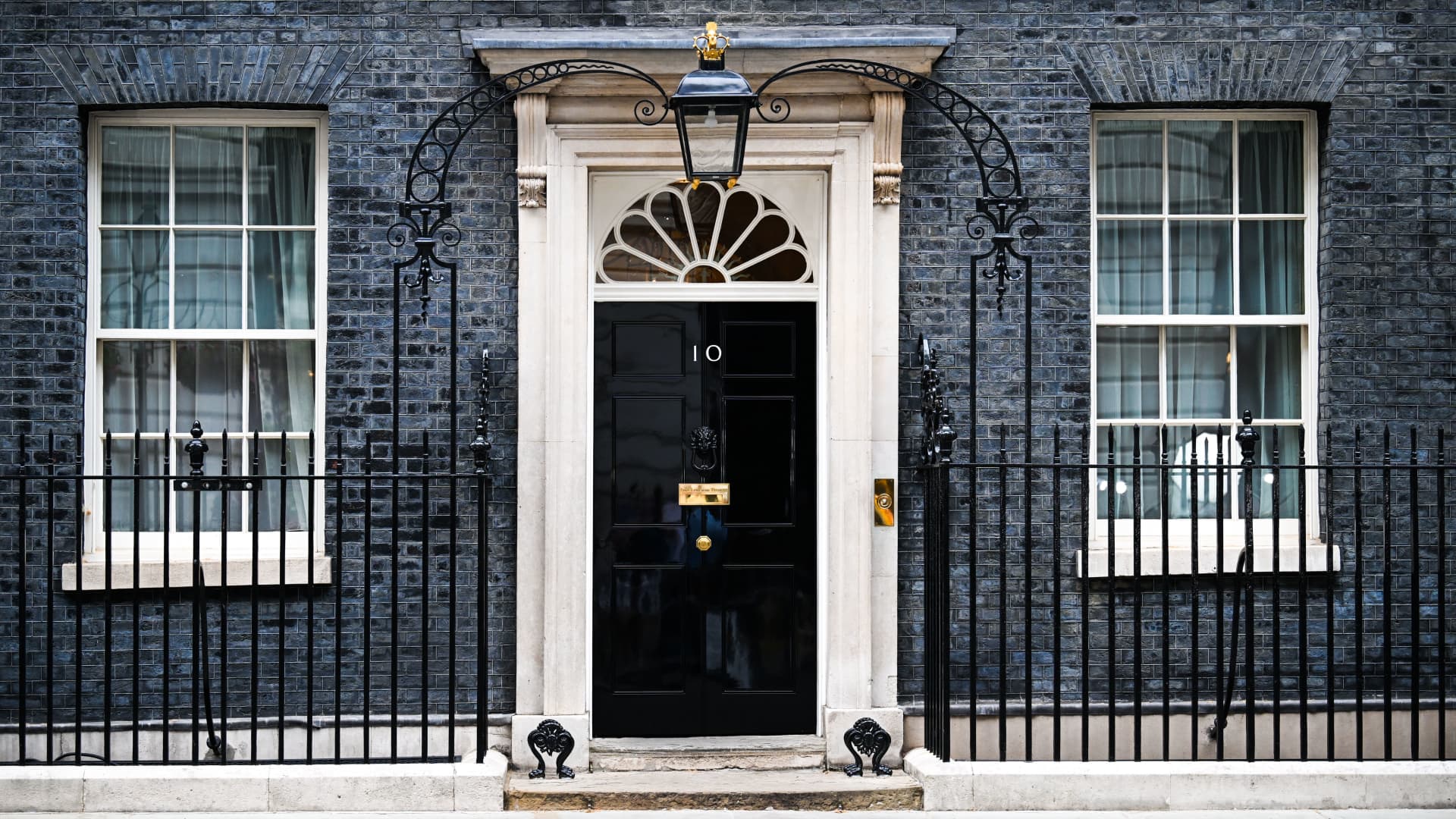
Keir Starmer becomes the seventh UK prime minister in a decade, with all but one forced out by their own party. The pattern leaves gilts and sterling exposed to fiscal uncertainty under his successor.
Keir Starmer announced Monday he will step down as prime minister, making him the seventh UK leader in a decade. That is two more than Italy has had over the same period – a country Britons often cite as a cautionary tale.
Of the last five prime ministers – Theresa May, Boris Johnson, Liz Truss, Rishi Sunak and Starmer – only Sunak was removed by voters in a general election. The rest were forced out by their own parties. The pattern creates a governance risk premium that bond markets price since the Truss mini-budget sent gilt yields soaring in 2022.
Pollster Luke Tryl points out that May threw away a parliamentary majority by calling an unnecessary election in 2017. Johnson was undone by lockdown rule-breaking. Truss was sunk by the adverse market reaction to her mini-budget. Starmer’s downfall came from self-inflicted unpopularity. He scrapped the winter fuel allowance for pensioners. He raised inheritance taxes on small farmers. He appointed a close friend of the late Jeffrey Epstein as ambassador to Washington.
The chaos traces back to 1990, when Margaret Thatcher was forced out by her own MPs – the first time in living memory a sitting prime minister had been ousted that way. Her successor John Major won the next election anyway. Conservative MPs learned that replacing a leader could keep them in power. Labour learned the same lesson after Tony Blair was pushed out in 2007. Now Starmer is out after his MPs identified Andy Burnham, the mayor of Greater Manchester, as a more electable alternative.
Burnham looks set to succeed Starmer unopposed. He has not said what he would do in the job. He has a reputation for telling people what they want to hear while avoiding tough decisions. That is the risk for fixed-income markets. Britain's benefits bill is spiralling. The Treasury depends on the top 1% of earners for 26% of income tax. Average earners are more lightly taxed than they have been in 60 years. Starmer’s attempt to tackle the benefits bill was blocked by his own MPs. Hard choices keep being deferred.
The Truss episode showed how fast bond markets can impose discipline. Gilts sold off, sterling crashed, pension funds nearly collapsed. A new leader who does not address the fiscal arithmetic could spook markets again. Yet British voters have accepted hard medicine before. In 2010, David Cameron told them the public finances needed repair, and they backed him. In 1979, Margaret Thatcher told them inflation and the unions needed taming, and they backed her. Honesty about trade-offs has historically stabilised the gilt market.
Burnham will take over without a detailed policy platform. The portents for change are not encouraging. The market reaction will depend on his first moves. If he levels with voters about the fiscal gap, yields could fall. If he prevaricates, the risk stays elevated. The first concrete marker is his initial budget, likely in the fall. Investors will watch for specific plans on benefits, taxes, and spending. Until then, gilts and sterling carry a political risk premium that may not fade quickly.
Prepared with AlphaScala research tooling and grounded in primary market data: live prices, fundamentals, SEC filings, hedge-fund holdings, and insider activity. Each story is checked against AlphaScala publishing rules before release. Educational coverage, not personalized advice.