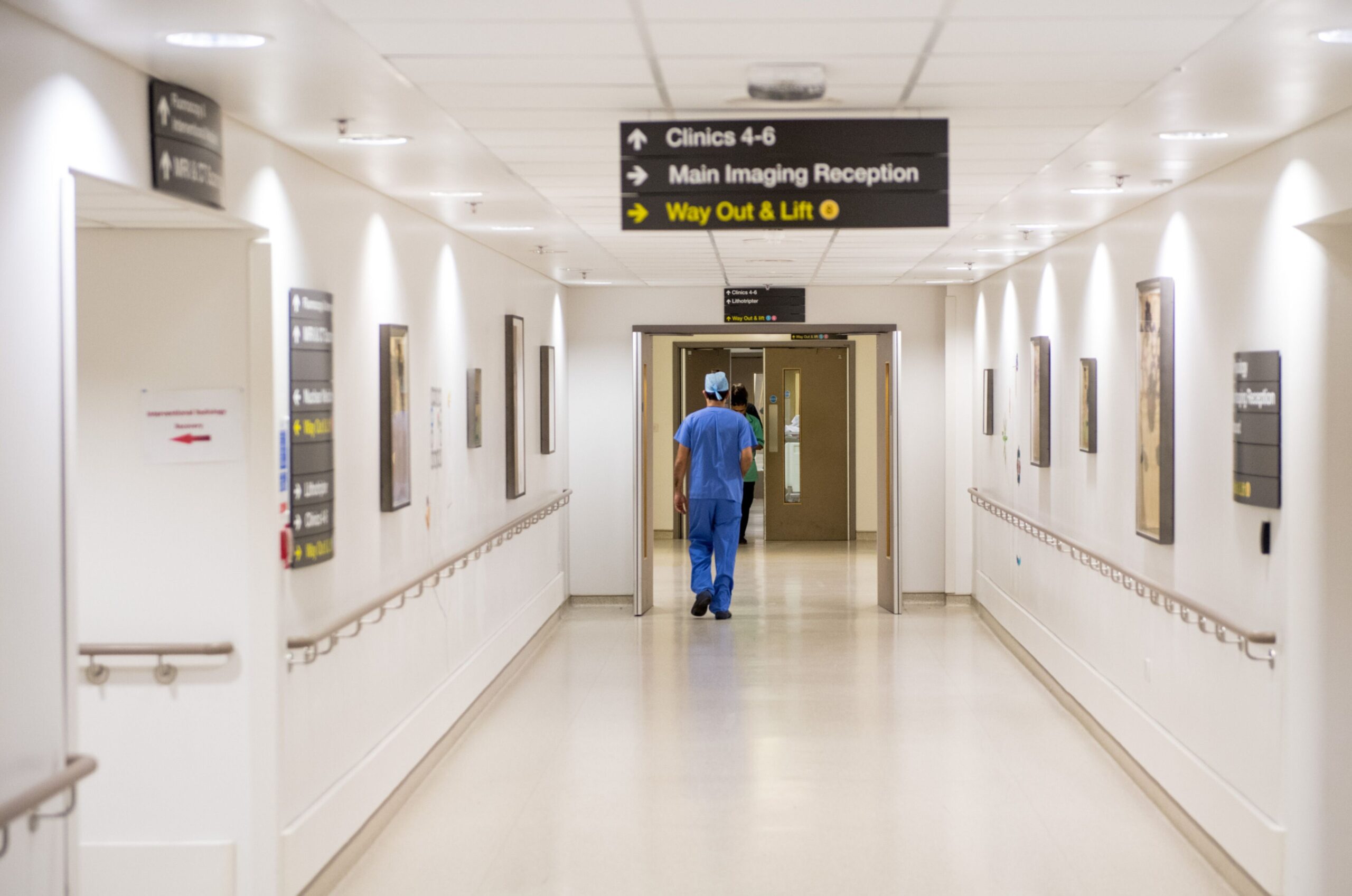
Some 90% of England's hospital buildings are vulnerable to overheating, according to the UK Health Alliance on Climate Change. The past few months have revealed how unprepared Britain's healthcare system is for the shift in climate already underway, with medical professionals describing conditions as "horrific, horrendous, unbearable, unsafe" in a survey by the Doctors' Association UK.
Britain's hospitals and care homes were built "with a core assumption that the climate was going to be stable," said Nick Watts, the former chief sustainability officer of the National Health Service in England. "That's just turned out to not be a good assumption." Watts, who now runs the Centre for Sustainable Medicine in Singapore, said the upgrades needed "are pretty expensive." The budget of the NHS and its capital allocations "were never intended to cover this sort of cost," he said.
In hospitals built for a cooler climate, staff are dealing with patients too sweaty to receive intravenous drips, medication at risk of degrading in high temperatures, and colleagues collapsing on the job with heat fatigue, according to accounts shared with Bloomberg News.
Matt Lee, a resident doctor and sustainability lead at the Doctors' Association UK who shared details of the June survey, said members are voicing "concerns about patient safety." In the survey, 83% of NHS staff described their workplace as "very hot" or "dangerously hot" in the June heat wave. More than two-thirds said the heat had affected patient safety.
Conditions are "inhumane," the Royal College of Nursing said on Thursday. It cited examples of members physically buckling under the strain. One nurse working in an unventilated ward ended up needing emergency treatment at the same hospital after collapsing from dehydration. Another said that hospital management had banned fans and portable air-conditioning units because of problems with the electrical supply.
Extreme heat is challenging almost every corner of Britain's infrastructure. Bus drivers in London announced strikes over the coming months because they're sick of enduring heat waves without air conditioning. Banks including JPMorgan Chase & Co. have allowed workers to stay home as un-air-conditioned rides on London's Underground become unbearable. Train tracks are buckling and schools have had to close.
Last month, the London Fire Brigade received a record of 27,580 emergency calls. During one of the heat waves in June, the London Ambulance Service fielded over 53,000 calls, surpassing the number received when the Covid-19 pandemic was at its height in March 2020. An additional 600 ambulance crews were deployed across London during the hottest days of June to care for patients suffering from cardiac arrest or other life-threatening conditions, according to information provided by the office of the Mayor of London.
Yvette Cooper, the UK's health and social care secretary, said in an emailed response to a request for comment that NHS staff are "doing a remarkable job" in light of the extreme heat. "But I have also been clear that the NHS now needs to plan for summer pressures in the way we currently plan for winter pressures," she said. "That includes making sure buildings are more resilient in these new extreme heat conditions as well as responding to additional patient needs."
NHS England said last week it had weathered "unprecedented pressure" due to the heat, with record attendance at emergency departments in July and the three busiest months ever recorded between May and July. It also said ambulance waiting times and waiting lists had both improved, despite growing demand due to medical problems exacerbated by the heat and dry weather.
"Staff are as ever demonstrating outstanding professionalism, flexibility and hard work in the face of this summer surge – seeing more patients, more quickly, while bringing down the waiting list despite record numbers of people being referred for treatment," said Professor Frankie Swords, NHS National Medical Director, in a statement.
Britain's health service, paid for through taxation, is already struggling to keep up with demand due to outdated facilities after decades of under-investment. In England, the NHS faces a £15.9 billion ($21.5 billion) bill to make overdue fixes needed to return buildings to a minimum acceptable standard. Wales and Scotland have maintenance backlogs of about £1 billion each.
In 2024, an independent review of the NHS found a £37 billion shortfall in capital investment in England's health service, relative to spending in peer countries during the 2010s. That has resulted in disruption to services in "crumbling buildings," 20% of which predate the founding of the nationalized health service in 1948, the review found.
Fiona Brennan, a consultant anesthetist working in Cardiff, south Wales, said the conditions she experienced during Britain's June heat wave were "far worse" than during the Covid pandemic of 2020. In the hottest week of June, she was part of a team carrying out radiology surgeries for patients with cancer, stroke and other life-threatening conditions. Surgeries are normally carried out in a room with less than 60% humidity and temperatures of about 20C to reduce the risk of infection, she said.
"We were up to 27C and humidity was really high," Brennan said. "We were wearing lead coats, and that's a weight. It's heavy. I was literally sat dripping in sweat. It was absolutely miserable. I felt really sick."
At those temperatures, basic procedures become much more difficult. Intravenous cannulas weren't sticking to one patient because of the sweat, Brennan said. "Everything was peeling off" and "we were just constantly having to keep looking at them and making sure they weren't slipping out. I think that alone is such a patient safety issue."
Clare Wade, director of nursing for the surgery clinical board at Cardiff and Vale University Health Board, said in a statement that the hospital is looking at installing window film in heavily glazed buildings and improving air-conditioning availability in the worst-affected areas. "We fully recognize that many colleagues worked in extremely difficult conditions during the recent period of exceptional heat," she said.
Less urgent operations and procedures were postponed to keep patients safe. At the end of June, the University Hospitals Sussex NHS Foundation Trust said that "challenges maintaining safe temperatures in some of our hospital theaters and certain facilities" meant appointments had to be delayed.
The Royal College of Physicians said doctors were experiencing "severe, unsustainable pressure" from heat. In one case, according to the group, a member said machinery used to treat cancer was failing due to the heat, as were the hospital's IT servers.
Staff are working in buildings that are difficult to shade and ventilate, with broken blinds and windows that barely open, according to the Doctors' Association UK. Its June survey included reports of doctors who weren't able to switch off radiators even as temperatures soared above 30C. Less than 5% of respondents said they had consistent access to air conditioning.
Leah Hazard, a midwife working in Scotland, said her unit is windowless. "Many hospitals in the NHS estate are not designed to have really efficient central ventilation," she said. "If the temperature in one of these hospitals rises from 25C to 30C, it's not just like things get a bit tougher. Everybody gets a lot sicker, everybody gets much more dehydrated, more stressed, more uncomfortable, so it's like a magnifying effect."
Midwives generally aren't free to control the temperature in the wards, and in some cases they're not even allowed to open windows or use fans, Hazard said. "We need windows that open. We need fans and air-conditioning units," she said. But "a lot of midwives and nurses are still being told that it's unprofessional to drink on the shop floor, to have water or a mug at the desk."
Extreme heat ultimately risks leaving medical professionals too unwell to look after patients, Hazard said. "Staff go off sick, or they burn out and they leave," she said. "If we're going to have more periods of extreme heat in the coming years, then it would behoove the government and individual health boards to start planning for this."