The number of people starting level two intermediate apprenticeships in England fell nearly a quarter over the past year, government data show. Starts at levels six and seven – which equate to bachelor's and master's degrees – rose. Level three numbers held steady.
The shift is reshaping how specialist manufacturers train their next generation. At Tolman, a Warwickshire classic car restoration shop, founder Chris Tolman said apprentices in mainstream dealerships risk becoming "just fitters" because diagnostic computers identify the fault and tell them which part to swap. His own technicians need to "identify and understand a problem, and then be creative and innovative to find the answer," he said.
Ollie Priestley, 29, is Tolman's apprentice. He is learning a "heritage vehicle technician" curriculum that includes 3D printing, computer-aided design (CAD), and electronic control unit diagnostics alongside welding and glazing. He recently fabricated a gearbox mount for a classic BMW. "It's cool to know that the things I create will bring the car back to life," Priestley said.
The three-year programme, offered through the Heritage Skills Academy (HSA) in Bicester, was introduced in 2018. Managing director John Pitchforth said it is "radically improved" because it combines modern technology with engineering fundamentals. When engineers from mainstream programmes transfer into the heritage sector, Pitchforth said, "they often lack the basic engineering principles and are unable to diagnose and repair vehicle systems without a computer telling them what's wrong."
Chris Iveson, CEO of Sheffield-based FourJaw Manufacturing Analytics, described the modern apprentice as someone who learns two things at once: the practical skill of making and the digital skill of monitoring production. That includes CNC programming, CAD, robotics, additive manufacturing and quality control systems. Iveson warned that if training becomes too narrow, apprentices can end up lacking a proper understanding of materials, methods, tooling and process.
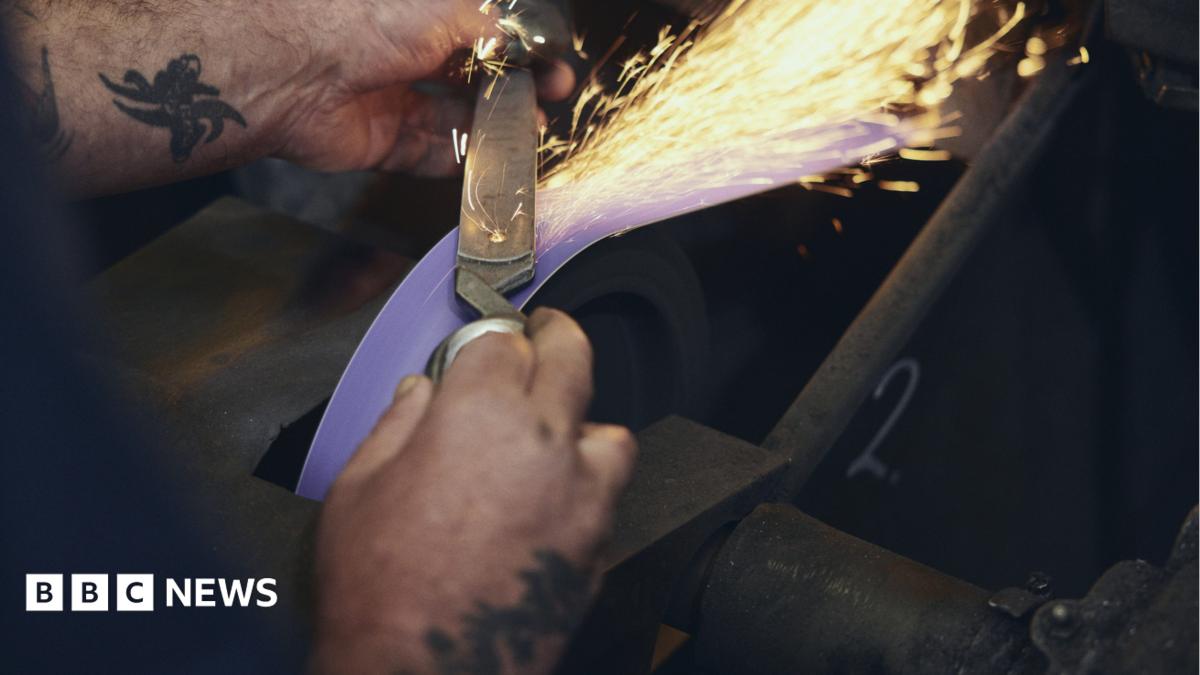
Sheffield's scissor-makers offer a counterpoint. Ernest Wright, operating since 1902, introduced 3D metal printing to create prototypes. Owner Paul Jacobs said the company can now test a design with six pairs instead of 6,000. The technology revived the 1960s "nurseryman scissors" and now produces one new product each year based on vintage designs. Apprentice Elliott Nurcombe, 21, works part-time alongside an aerospace engineering degree. He said 3D printing helps replicate parts for old machines that no longer exist. "In terms of actual production of what we make here and what we do day to day, there's no real opportunity for technology to take that over from the people that work here," Nurcombe said.
William Whiteley, the other surviving Sheffield scissor-maker, changed ownership in 2024 and is now run by Kaymich. Managing director Mark White said he is recruiting trainee scissor manufacturers rather than investing in more technology. "What we're not about is loading something on a machine and pressing a button," White said.
At Platts & Nisbett, a Sheffield maker of surgical instruments, the process uses CNC cutting at the first stage, followed by hand fitting and finishing. Each instrument carries a laser tag for traceability. Business development manager Julie Topham said recruiting people who like working with their hands has become harder. "There will be an abundance of people who want to press buttons. It's getting someone who likes to work with their hands, other than computers," she said.