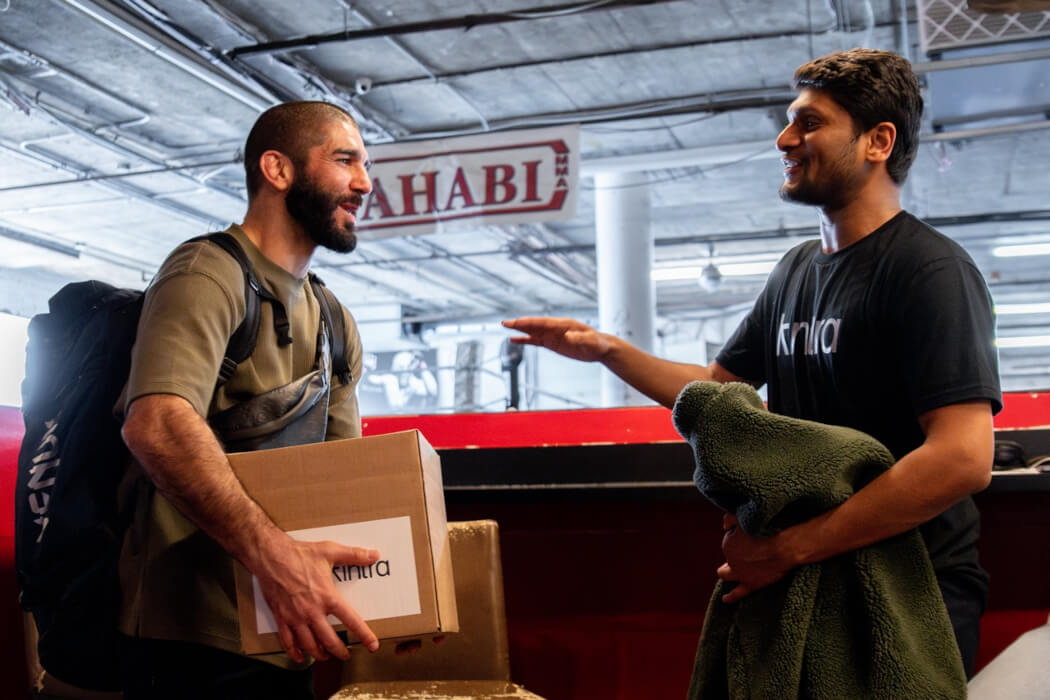
On June 14, bantamweight Aiemann Zahabi steps into the octagon at a UFC event on the White House grounds. He carries something new: a saliva dipstick backed by an AI engine that tracks his cortisol and testosterone in near-real time. The platform comes from Kintra, a Toronto startup. The fight is the highest-profile test yet of whether biomarker monitoring can give elite athletes a measurable advantage. For Garmin, the wearable maker whose smart watches dominate sports tracking, the outcome may matter.
Kintra is private and early-stage. It has raised an undisclosed sum from the family office of CommonSpirit Health CEO Lloyd Dean. The company has 15 employees and an advisory board that includes former Nike VP Tonia Jones. The platform combines gene testing, saliva and blood analysis, and plans for a wearable sensor. Right now it uses third-party lab kits and feeds the data into a custom AI model.
Garmin competes at a different level. Its watches measure heart rate, sleep, and stress from the wrist. Kintra goes deeper: hormone levels, recovery markers, and specific training recommendations. If the Zahabi fight validates the approach, it could persuade high-end athletes to look beyond ordinary wearables. Garmin’s stock carries an Alpha Score of 61 – moderate. That score reflects steady revenue from its fitness segment but limited differentiation against newer entrants.
The timing is tight. Two Virginia residents have filed a lawsuit to block the event, arguing the fighting structure on White House grounds needs congressional approval. If the fight is cancelled or moved, Kintra loses its biggest showcase. The case is pending in federal court.
Zahabi’s trainer Firas Zahabi, a well-known UFC figure, sees the tech as a way to avoid overtraining. “Injury is the number one obstacle to achieving our goal,” he said in an interview between sessions at Tristar gym in Montreal. His brother Aiemann was struck by a Kintra saliva report showing high testosterone reserves. “Look how tiny I am,” he said. The number “adds to the stack of proof” that he’s ready, he added.
Still, he is cautious. “We get a lot of people who approach us with gadgets,” Aiemann said. “99 percent are snake oil salesmen.” The question is whether Kintra falls into the 1 percent that works.
A strong performance – a win or even a close fight where Zahabi shows better recovery – would give Kintra a powerful testimonial. Media coverage would spread beyond MMA to other sports. More startups would chase the same market. Garmin would face pressure to add deeper biomarker features, improve its own algorithms, or make acquisitions.
The risk to Garmin is not immediate. Kintra has no public revenue and its own wearable is years from production. Stock market analysis shows the wearable market is crowded. The direction, however, is clear: athletes want more than step counts and heart rate zones. A validation event could compress Garmin’s premium valuation.
The fight is scheduled for 10 p.m. ET on June 14, subject to the court’s decision.