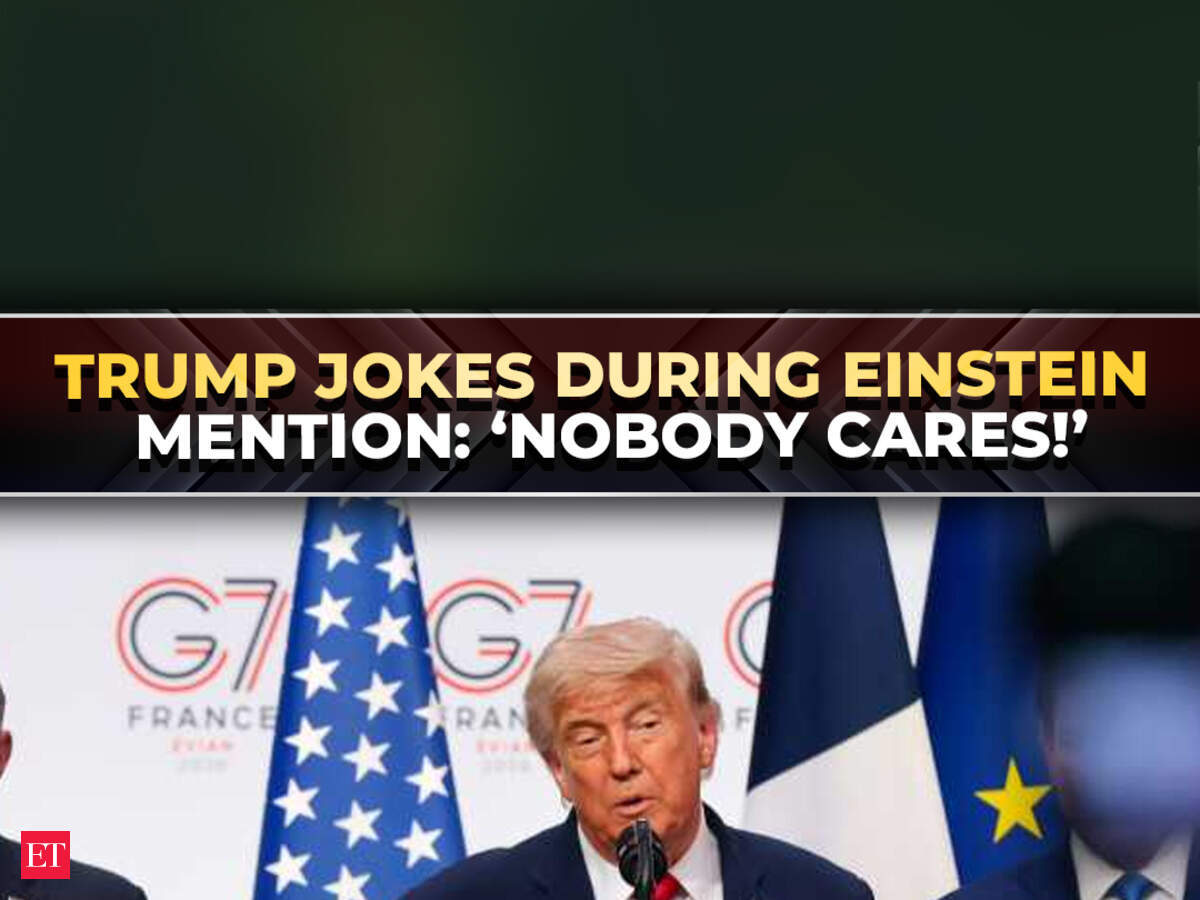
President Donald Trump drew laughter at a White House event Monday after a "nobody cares" punchline that followed a reference to Albert Einstein.
The moment came during a signing ceremony for two executive orders on quantum computing and cryptography. Trump had just mentioned Einstein in the context of American scientific achievement. He paused, looked at the audience, and delivered the line.
The room erupted. The joke landed with the kind of timing that has become a signature of Trump's public appearances – a self-aware pivot from policy to performance.
Trump signed the orders in the Oval Office. The first directs federal agencies to accelerate quantum computing research. The second mandates a review of cryptographic standards to prepare for post-quantum threats. Neither order carries a specific funding allocation. Both set deadlines for agency reports within 180 days.
The Einstein reference came as Trump described the history of U.S. innovation. "They said Einstein was the smartest man who ever lived," Trump said. "And then they said – well, I won't say who they said next." The crowd laughed. Trump smiled and continued.
Then came the joke. "But you know, nobody cares about that stuff," he said, waving a hand. "They just want to know if their computer works." The room laughed harder. Several aides in the front row were visibly chuckling.
The moment was brief. Trump returned to the substance of the orders within seconds. The exchange captured a dynamic that has defined his public events: a mix of policy substance and crowd work that keeps the room engaged.
The quantum computing order tasks the Office of Science and Technology Policy with coordinating research across the Department of Energy, the National Science Foundation, and the Pentagon. The cryptography order directs the National Institute of Standards and Technology to accelerate its timeline for post-quantum encryption standards.
Neither order breaks new policy ground. Both build on existing frameworks from the first Trump administration and the Biden years. The quantum order updates a 2018 directive. The cryptography order follows NIST's 2024 selection of four post-quantum algorithms.
For the quantum computing sector, the order signals continued government interest in the technology. Companies like IonQ, Rigetti Computing, and D-Wave Systems have long relied on federal contracts and grants. The directive could accelerate timelines for research programs already in place at national labs. The cryptography order has implications for cybersecurity firms that develop encryption products. NIST's accelerated timeline means companies must prepare for a faster transition to post-quantum standards. Firms like Palo Alto Networks, CrowdStrike, and Cloudflare have already begun testing quantum-resistant algorithms. The order could push more enterprises to adopt those standards sooner.
Trump did not take questions after the signing. He left the room with a wave, still smiling.