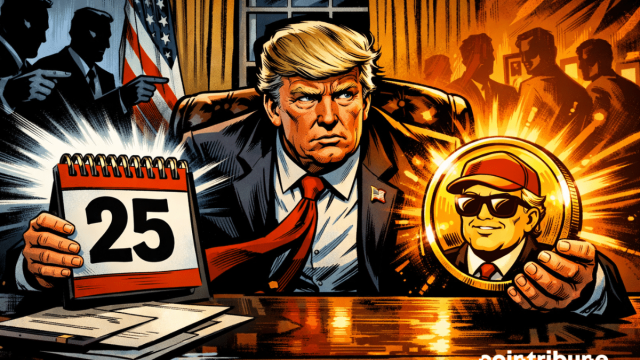
Trump’s Dual Commitment: A Clash Between Memecoin Culture and Political Tradition

A scheduling conflict involving Donald Trump’s attendance at a TRUMP memecoin luncheon versus the White House Correspondents' dinner has sparked Senate scrutiny over the intersection of political branding and speculative crypto assets.
A Scheduling Conflict at the Intersection of Politics and Crypto
In a development that highlights the increasingly blurred lines between political branding and the volatile world of digital assets, former President Donald Trump finds himself at the center of a scheduling controversy. On April 25, Trump is slated to attend a high-profile, private luncheon exclusively reserved for holders of the 'TRUMP' memecoin. However, this engagement directly conflicts with a long-standing commitment: his attendance at the White House Correspondents' Association (WHCA) dinner in Washington, D.C.
This scheduling overlap has ignited a flurry of questions in the U.S. Senate, as lawmakers and observers alike scrutinize the implications of a former president—and current political frontrunner—aligning himself so closely with a speculative cryptocurrency project. For market participants, the event serves as a bellwether for how digital assets are becoming inextricably linked to political narratives and candidate outreach strategies.
The Rise of Politically-Themed Memecoins
The 'TRUMP' memecoin represents a growing subset of the cryptocurrency market where tokens are tied to the personal brand, policies, or controversies surrounding political figures. Unlike institutional-grade digital assets, these tokens are primarily driven by community sentiment, viral marketing, and political developments.
While critics argue that such assets lack fundamental utility, their market capitalization and trading volume demonstrate a significant appetite among retail investors who seek to bet on political outcomes through the lens of blockchain technology. The fact that a major political figure is now participating in an event tied to such a token signals a potential shift in how political campaigns may interact with the crypto economy in the lead-up to future election cycles.
Senate Scrutiny and Ethical Questions
The Senate’s attention to this event is not merely about the logistics of a calendar conflict. It touches upon deeper questions regarding the promotion of speculative financial instruments by public figures. When a former president lends his presence—even implicitly—to a specific crypto project, it can lead to extreme price volatility. Traders often interpret these endorsements as signals, leading to 'pump and dump' cycles that can leave less sophisticated investors exposed to significant losses.
Lawmakers are now questioning the ethics and optics of mixing political fundraising with the promotion of unregulated digital assets. The controversy underscores a broader tension: as the crypto market continues to seek legitimacy and regulatory clarity, associations with speculative 'memecoins' may complicate the industry's relationship with Washington policymakers.
Market Implications: What Traders Should Watch
For investors and traders, this event serves as a cautionary tale regarding 'event-driven' crypto trading. The influence of public figures on asset prices is nothing new—historically, we have seen similar volatility triggered by social media posts or public appearances involving high-profile tech executives and influencers. However, the intersection with the U.S. political establishment adds a layer of systemic risk.
Traders should monitor the following in the coming weeks:
- Volatility Spikes: Expect heightened price swings in the 'TRUMP' token leading up to and following the April 25 date.
- Regulatory Rhetoric: Watch for any formal statements from Senate committees regarding the intersection of political fundraising and cryptocurrency promotion, as this could signal future legislative headwinds for the sector.
- Brand Association: Observe how the political establishment reacts to the tokenization of political identity. If the backlash is severe, it could deter other political figures from engaging with the crypto ecosystem.
Looking Ahead: The Future of Political Finance
As the April 25 deadline approaches, the primary question remains: which event will take precedence? The White House Correspondents' dinner is a staple of Washington tradition, while the private luncheon represents the new, decentralized frontier of political engagement.
Regardless of the outcome, this event has already succeeded in drawing significant attention to the 'TRUMP' token, proving once again that in the current financial landscape, political relevance is a powerful driver of market activity. Investors should remain vigilant, recognizing that in the world of memecoins, the only constant is the unpredictable influence of the figures behind the brand.