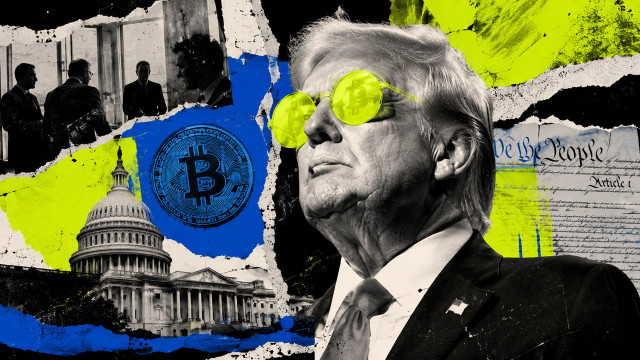
Senate Democrats are demanding stronger ethics language limiting how much senior officials, including the president and vice president, can profit from digital asset ventures before they back the CLARITY Act. The condition traces back to a warning crypto figures made before the 2024 election: tying the industry too closely to a political figure could turn market structure legislation into a partisan fight.
The CLARITY Act, the market structure bill the industry has wanted for years, is now testing whether that warning held up.
Republicans added ethics restrictions to the July 2025 CLARITY draft. Senate Democrats say the language remains too narrow and weakly enforced. A group of Democratic negotiators said the ethics and conflict-of-interest provisions "must be strengthened." Senator Elizabeth Warren specifically identified the investment exception, affiliated-company structures, and DOJ-only enforcement as loopholes.
President Donald Trump's pitch at Bitcoin 2024 in Nashville included promises: removing SEC Chair Gary Gensler, installing crypto-friendly regulators, opposing a central bank digital currency, supporting domestic Bitcoin mining, and building a government-held Bitcoin stockpile.
That bet paid off quickly. Gensler announced his departure as Trump returned to office. In January 2025, Trump's White House ordered agencies to review crypto rules and protect what it called "fair and open access" to banking services. Two months later, Trump created a Strategic Bitcoin Reserve funded with Bitcoin the government had already forfeited.
Kamala Harris's crypto supporters made a different case. At the Crypto4Harris event in August 2024, Anthony Scaramucci, Mark Cuban and others pushed the campaign to reset Democratic crypto policy. Scaramucci argued regulation needed to be "positive and bipartisan." The campaign's discussions with Coinbase, Ripple and other firms stayed at the outreach stage, short of policy commitments.
Trump's family-backed venture, World Liberty Financial, launched before voters went to the polls. Reports flagged conflict-of-interest problems at the time. Trump was promising to reshape crypto regulation at the same moment a business bearing his name entered the same industry.
Charles Hoskinson, the founder of Cardano, called Trump's DeFi venture "scary" for the industry. He argued that anything connected to Trump becomes politically charged, and that the venture could make Trump's own crypto agenda harder to enact.
CLARITY has traveled further than most market structure bills. The House passed the Digital Asset Market CLARITY Act 294 to 134 in July 2025. The Senate Banking Committee advanced the bill in May 2026.
Even Democrats who support the bill's broader goals might withhold final votes depending on how negotiations end. Senate Democrats want restrictions on how senior officials, including the president and vice president, can issue or sponsor digital assets. They want that language settled before backing the bill.
There are separate fights over stablecoin rewards, state enforcement authority, SEC fundraising exemptions, anti-money-laundering rules, and investor protections.
Galaxy cut its 2026 passage estimate from 75% in May to 60% in June, then down to near 50-50 as Senate scheduling tightened further.
In Europe, MiCA is in force. Its transition period for crypto-asset service providers ended on July 1, 2026. CLARITY will help determine whether the US can turn executive-branch relief into the kind of statutory certainty other jurisdictions already have.
In the bull case, Senate negotiators land on enforceable ethics language, a stablecoin rewards compromise, and enough Democratic votes to pass CLARITY. That outcome hands Trump both halves of the 2024 bet – fast executive relief and durable legislation – weakening the case that aligning with Republicans cost crypto anything lasting.
In the bear case, the ethics language, the stablecoin fight, or Senate scheduling stalls CLARITY before a final vote. That outcome hands the Harris-aligned warning more weight: crypto would have won rapid executive relief and still lack the durable statutory settlement only Congress can deliver.
Crypto's 2024 bet already delivered on its immediate promise. What CLARITY tests is the second half of that bet: whether tying crypto's legislative future to one president's business interests made durable law harder to reach.