Stocks● Neutral
Trump Open to Sending Iran Deal Memo to Congress for Review
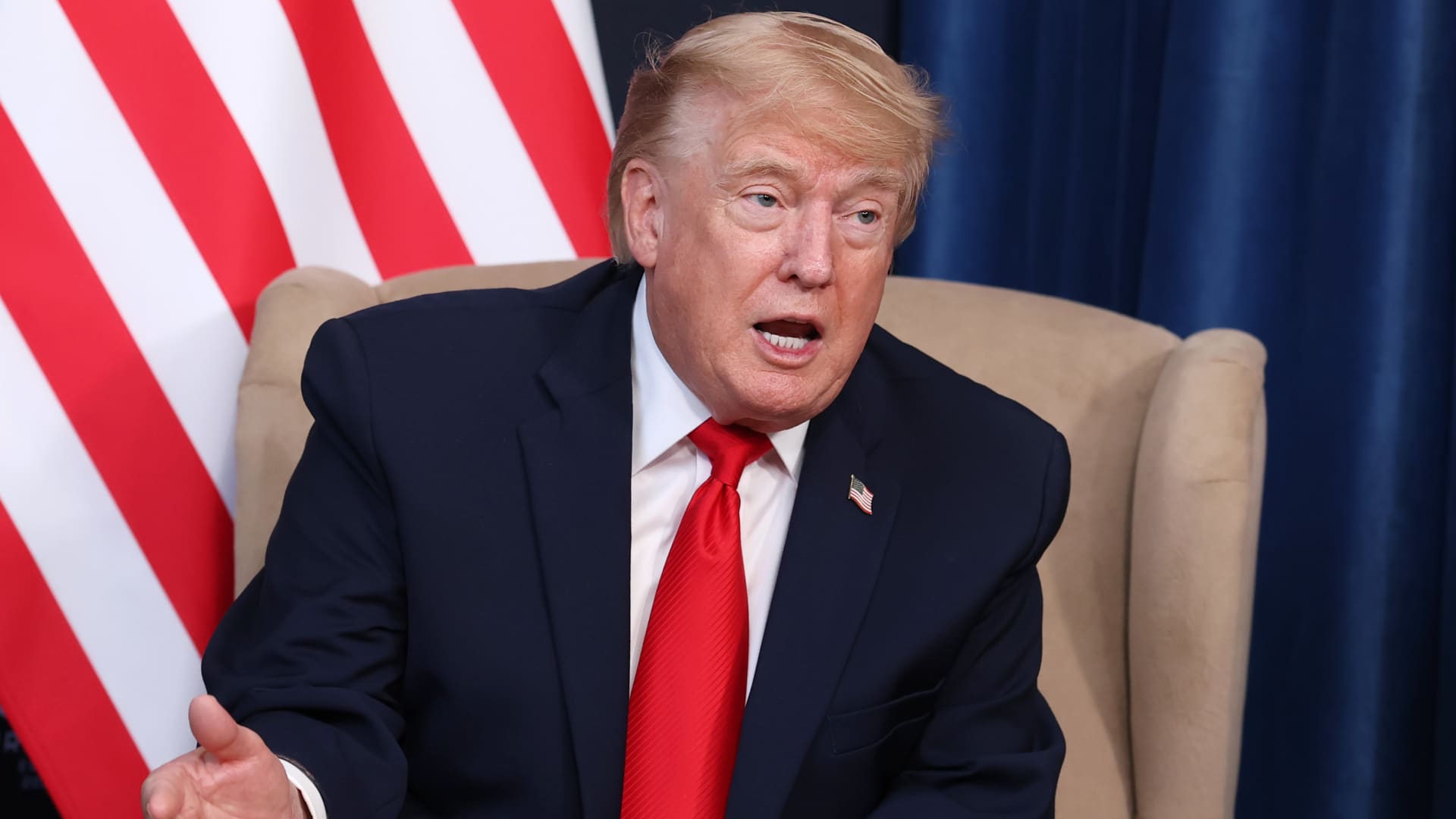
President Trump said he would not mind sending the Iran agreement to Congress for review, but lawmakers from both parties have raised questions about the deal's details.
Continue with
President Donald Trump on Tuesday said he would not mind sending the memorandum of understanding with Iran to Congress for review. Lawmakers from both parties have raised questions about the framework, signed digitally Sunday, that could end hostilities that began in February.
Trump spoke at the G7 summit in Évian-les-Bains, France, arriving for a bilateral meeting with United Arab Emirates President Mohammed bin Zayed Al Nahyan. He did not specify when Congress might receive the details.
“What I would like to do is send it to Congress and say ‘you shouldn’t approve it.’ And they will approve it,” Trump said, apparently joking.
The preliminary deal extends the U.S.-Iran ceasefire for 60 days and creates a framework for talks on Tehran’s nuclear program. Trump has said he would release the full text on Friday. The exact provisions remain undisclosed.
Oil prices have moved lower on the prospect of reopening the Strait of Hormuz, which was effectively shut this spring, disrupting global supply chains and sending gasoline costs higher. Trump said Tuesday that ships were already starting to move and oil prices were coming down rapidly. The Strait’s reopening cuts a key risk premium embedded in crude futures.