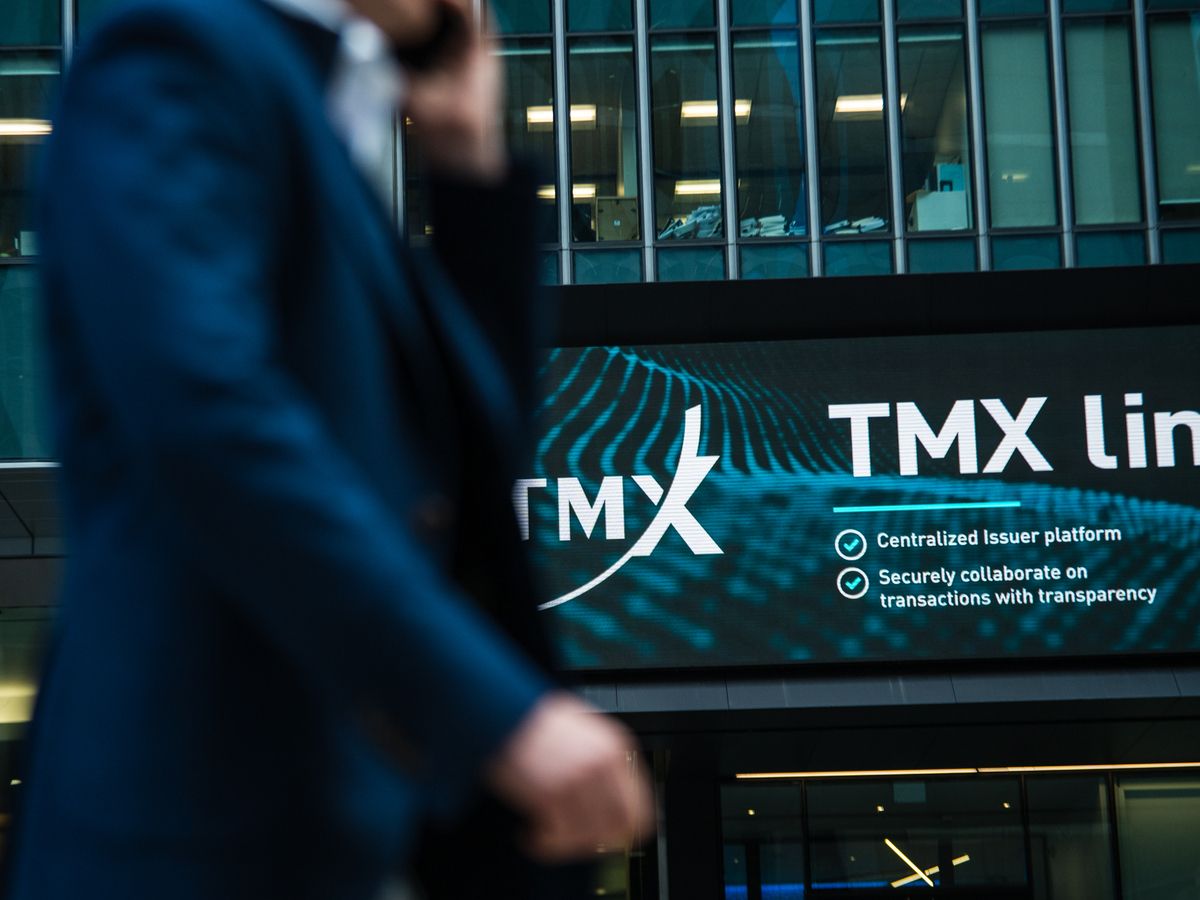
TMX Group Ltd. is buying RAFI Indices for $683 million, roughly 5% of its market cap. Scotia Capital Markets analyst Phil Hardie called the deal a fit for TMX's push into recurring and international revenue. He kept his price target at $71, making TMX his top pick. Shares closed Friday at $50.48.
"We think this deal reinforces our underlying thesis of continued earnings momentum and that accretive M&A remains a key catalyst for the stock over the next 12–18 months," Hardie said. The acquisition will add debt. Hardie pointed to TMX's track record of deleveraging after past deals. The company also pledged to maintain its long-term dividend payout ratio of 40% to 50%.
TMX shares have been volatile this year. They fell to about $44 in February, rallied 26% to $56 by May, then slumped to just under $48 in early June. Since then, they have risen nearly 8%. The stock carries a 12-month consensus price target of $65.03 from eight analysts, per Bloomberg.
The RAFI purchase is not a bolt-on. At 5% of TMX's market cap, it is a meaningful bet on index-based revenue streams that are less tied to trading volumes. TMX operates the S&P/TSX composite index. Adding RAFI's global index business gives it a product line that sells to asset managers and ETF issuers outside Canada. That fits Hardie's thesis: recurring revenue from data and listings is more predictable than transaction fees from a choppy equity market.
The risk is integration. TMX has done M&A before, the $683 million price tag is large relative to its roughly $13.7 billion market cap. Debt will rise. The dividend payout commitment leaves less room for error if the revenue ramp is slower than expected. Hardie's confidence rests on TMX's history of paying down leverage after past deals.
The next quarterly report will show whether TMX's core listings and trading revenue held up through the spring volatility. The RAFI deal is expected to close in the second half of the year. Hardie's $71 target implies about 40% upside from Friday's close. That depends on the market buying the recurring-revenue story rather than focusing on the debt.
UBS Global Research analyst Michael Lasser published a June 8 report covering U.S. and Canadian food retail and distribution companies. Inflation and rising gas prices were the backdrop. He examined Loblaw Cos. Ltd., Alimentation Couche-Tard Inc. and Dollarama Inc.
Sentiment on Loblaw is "mixed," Lasser said. Bulls argue the mega-grocer can keep winning from its large discount footprint. Bears worry that slowing population growth in Canada will compress its valuation multiple. Loblaw has a 12-month consensus price target of $70 from 10 analysts. Shares closed Friday at $65.
On Dollarama, "we're hearing more from bulls than bears," Lasser said. Investors believe financially stretched Canadian consumers will continue to "trade down" to the Montreal-based discount chain. Bears warned that Dollarama's move into Australia could drag on earnings if immigration policy changes slow demand. The stock has a 12-month consensus target of $210.08 from 17 analysts. Shares closed Friday at $190.94.
Sentiment around Couche-Tard was more positive than negative, Lasser said. The belief is the convenience-store operator "has turned the corner on food" by offering cheap, quick meals for $3, $4 and $5. Couche-Tard has a 12-month consensus target of $92.82 from 19 analysts. Shares closed Friday at $84.31.
Lasser's framework is simple. In a stretched consumer environment, discount and convenience win. Dollarama benefits from trade-down behavior. Couche-Tard benefits from cheap meal options. Loblaw sits in the middle – big enough to compete on price, exposed to a slowing population narrative that could cap its multiple.
The Australia risk on Dollarama is worth watching. If immigration policy shifts reduce the addressable market, the international expansion thesis weakens. For now, the bull case is intact. Seventeen analysts see roughly 10% upside from Friday's close. The trade-down dynamic is hard to argue against while inflation stays sticky.
Couche-Tard's food push is the most interesting. If the $3–$5 meal strategy gains traction, it could lift margins in a business that has historically depended on fuel and tobacco. The consensus target implies about 10% upside. The real catalyst would be evidence that food is moving same-store sales, not just traffic.
Loblaw is the value play at current levels. The 12-month target of $70 is only about 8% above Friday's close. The discount footprint gives it a defensive edge if the economy weakens further. The risk is that slowing population growth is a structural headwind, not a cyclical one.