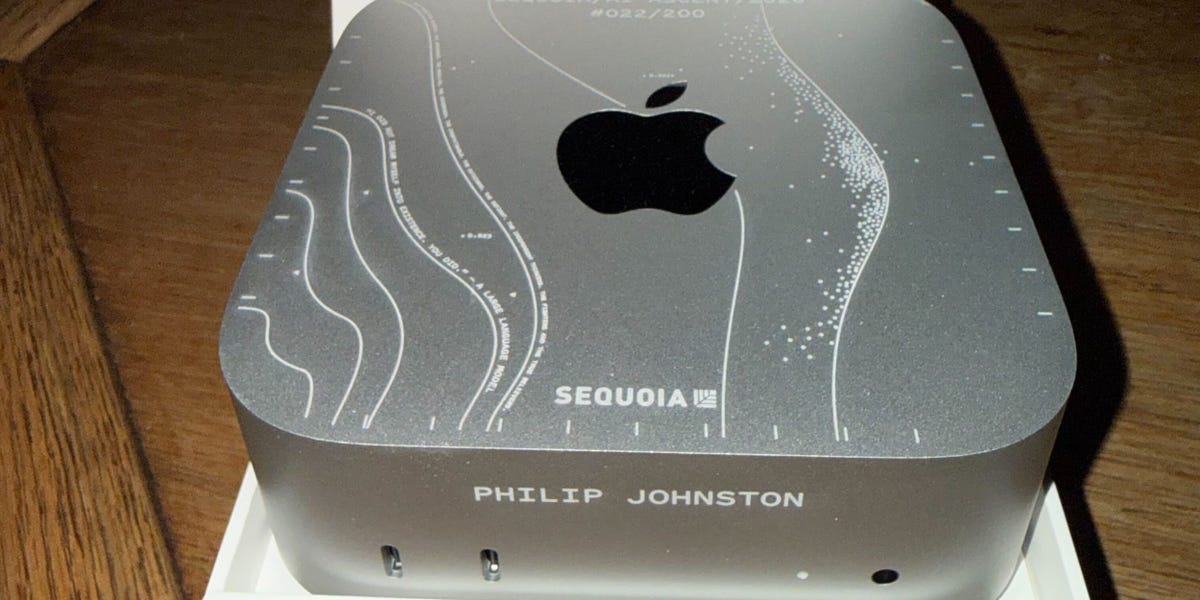
Sequoia Capital partner Alfred Lin has distributed 200 custom-engraved, numbered Mac Minis to select attendees at recent firm-hosted AI events. This move signals a shift in how venture capital firms are attempting to solidify their influence within the developer ecosystem. By pairing high-end, localized computing hardware with the Sequoia brand, the firm is positioning itself as the primary infrastructure partner for the next wave of AI agent development.
Hardware as the New Developer Standard
The choice of the Mac Mini as a vessel for this branding effort is intentional. As AI agents move from cloud-based testing to local execution, the demand for compact, high-performance hardware has increased. Developers require consistent, powerful environments to iterate on local models, and the Mac Mini provides a standardized baseline for this work. By placing branded hardware directly onto the desks of influential developers, Sequoia is embedding its identity into the physical workspace where AI innovation occurs.
This strategy reflects a broader trend in stock market analysis where venture firms are moving beyond capital provision to influence the physical tools of the trade. If developers adopt these specific units as their primary workstations for agent development, the firm gains a subtle but persistent presence in the early-stage development lifecycle. This is a departure from traditional software-only networking, aiming instead for a tangible connection to the hardware stack.
Sector Read-Through and Infrastructure Positioning
The hardware-AI nexus remains a critical area for investors tracking the transition from training large models to deploying functional agents. While firms like NVIDIA profile dominate the data center, the edge and local-compute markets are becoming increasingly competitive. The focus on the Mac Mini highlights the importance of the desktop environment in the current AI development cycle.
AlphaScala data currently reflects a mixed outlook for key technology and materials players involved in the broader hardware supply chain. For instance, ON Semiconductor Corporation (ON stock page) holds an Alpha Score of 45/100, while Linde plc (LIN stock page) maintains an Alpha Score of 49/100. These scores suggest that while hardware demand remains a focal point, the underlying supply chain and industrial inputs are navigating a period of uncertainty.
The Next Catalyst for Hardware Adoption
The success of this branding effort will be measured by the output of the developers who received these units. The next concrete marker for this narrative will be the release of agent-based applications that explicitly leverage the local compute capabilities of the M-series architecture. If these specific Mac Minis become the standard for local agent testing, it will validate the strategy of hardware-centric venture influence. Investors should monitor whether other major venture firms follow suit by subsidizing or branding the hardware stacks of their portfolio companies to maintain developer loyalty in a crowded AI landscape.