Stocks● Neutral
Tax traps in equity: Short-term vs long-term, speculative vs business income
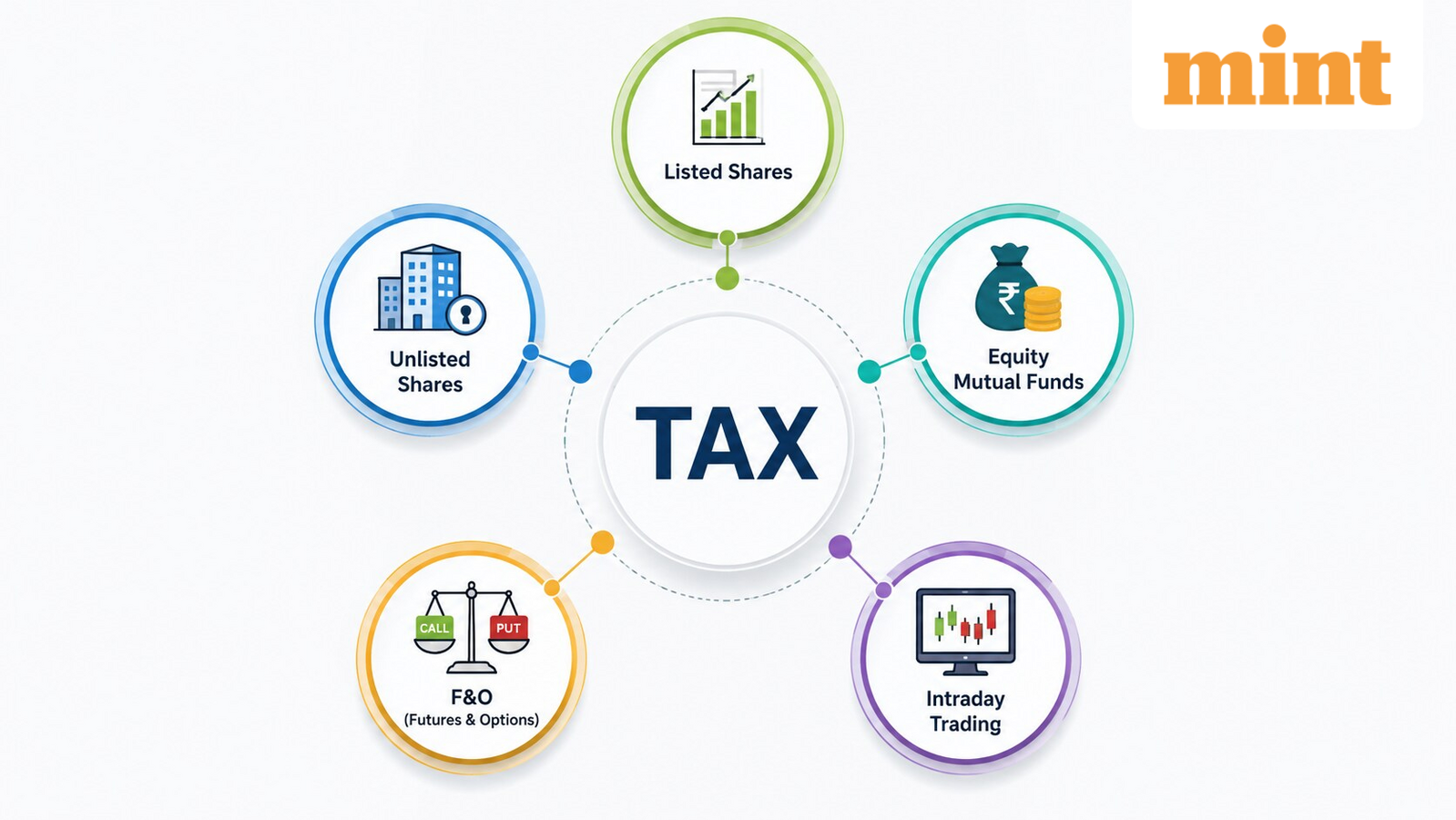
Equity holders and traders face different tax treatments based on holding period and trade type. Misclassifying intraday or F&O income as capital gains can lead to reassessment and penalties.
Continue with
The tax treatment of equity investments hinges on how you classify the income type, the holding period, and whether the activity counts as investing or trading. A mistake in classification can lead to incorrect tax filing, penalties, and scrutiny.
For listed equity shares, the holding period decides whether gains are short-term or long-term capital gains. Shares sold within 12 months generate short-term capital gains (STCG) taxed at 20%. Shares held longer than 12 months qualify as long-term capital gains (LTCG), taxed at 12.5% on the amount above ₹1.25 lakh in a financial year. Gains up to that limit are tax-exempt.
Intraday trading–buying and selling the same security on the same day without taking delivery–falls under Section 43(5) of the Income Tax Act. It is treated as speculative business income. That means the profits are added to your total income and taxed at your slab rate, not as capital gains. The distinction matters because losses from intraday can only be set off against other speculative gains. You cannot offset them against salary, rental income, or capital gains.
Unlisted shares follow a different timeline. Sold within 24 months? The gain is short-term capital gains taxed at your slab rate. Held longer than 24 months? It becomes long-term capital gains, taxed at 12.5% without indexation. Indexation benefits are no longer available for unlisted shares sold after a certain date–investors need to check the exact cut-off for their holding period.