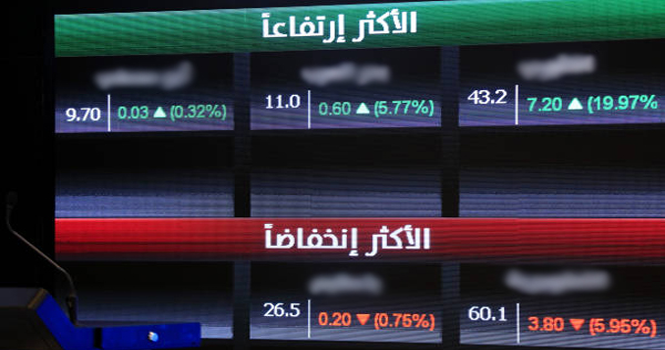
Two Saudi-listed companies fell to their lowest levels since debut on May 12, per Argaam data. The break below IPO prices can trigger margin calls and forced selling in less-liquid names.
On May 12, two stocks listed on the Saudi Exchange’s main market (TASI) fell to their lowest levels since their initial public offerings, according to data compiled by Argaam. The move pushed each name below the price at which it first sold shares to the public, a level that often acts as a psychological and technical floor for traders. When that floor breaks, the market signal shifts from a simple decline to a potential regime change in how the stock is financed and held.
An IPO price is not just a historical data point. In Saudi Arabia’s equity market, where retail investors account for a large share of daily turnover, the debut price frequently becomes an anchor for sentiment. Many local traders use it as a stop-loss level or a reference for margin lending. Once a stock trades below that anchor, two things can happen quickly. First, brokers may reduce or withdraw margin eligibility for the name, forcing leveraged holders to sell. Second, retail investors who bought at the IPO and held on may finally capitulate, adding to the selling pressure. The result is often a self-reinforcing downdraft that has little to do with the company’s fundamentals and everything to do with the mechanics of a thinning order book.
The two unnamed companies now face that exact dynamic. Their slide to all-time lows below the IPO price signals that the market is no longer willing to assign even the baseline valuation that underwriters and early investors accepted at the time of listing. For active traders, the immediate question is whether the selling reflects a genuine reassessment of earnings power or a liquidity-driven flush that will reverse once forced sellers are cleared out.
The volume accompanying the decline is the critical differentiator. A sharp drop on turnover that is two or three times the 20-day average often points to a capitulation event. In that scenario, weak hands are flushed out in a single session, and the stock can become a candidate for a rapid mean-reversion bounce. A slow grind lower on below-average volume, by contrast, suggests passive liquidation by institutions or a steady drip of retail stop-losses. That pattern rarely produces a tradeable low and instead signals that sellers remain in control.
Traders monitoring TASI’s small- and mid-cap segment should also watch for any company disclosures in the days following the low. A statement clarifying business conditions or, more powerfully, an announcement of a share buyback can reconfigure the narrative entirely. Silence is typically bearish in this setup. Without a catalyst, the broken IPO anchor tends to act as overhead resistance rather than a magnet for buyers.
Historical patterns across emerging markets show that stocks that reclaim their IPO price within five to ten sessions often attract momentum traders who then defend that level as support. A failure to recover, however, commonly leads to a slow bleed as long-term holders give up. For the two TASI names that hit all-time lows on May 12, the next two weeks will reveal whether the break was a capitulation flush or the start of a deeper decline.
Positioning for either outcome requires access to the Saudi exchange and tools to filter for similar technical setups across the broader market. A range of brokers offer pathways to TASI execution (best stock brokers), and screening for relative strength divergences can help isolate names where the selling is company-specific rather than sector-wide. Broad stock market analysis tools can also highlight other TASI names building similar technical weakness (stock market analysis). The immediate task is to monitor volume, watch for corporate disclosures, and decide whether the IPO anchor has become a launchpad or a ceiling.
Drafted by the AlphaScala research model and grounded in primary market data – live prices, fundamentals, SEC filings, hedge-fund holdings, and insider activity. Each story is checked against AlphaScala publishing rules before release. Educational coverage, not personalized advice.