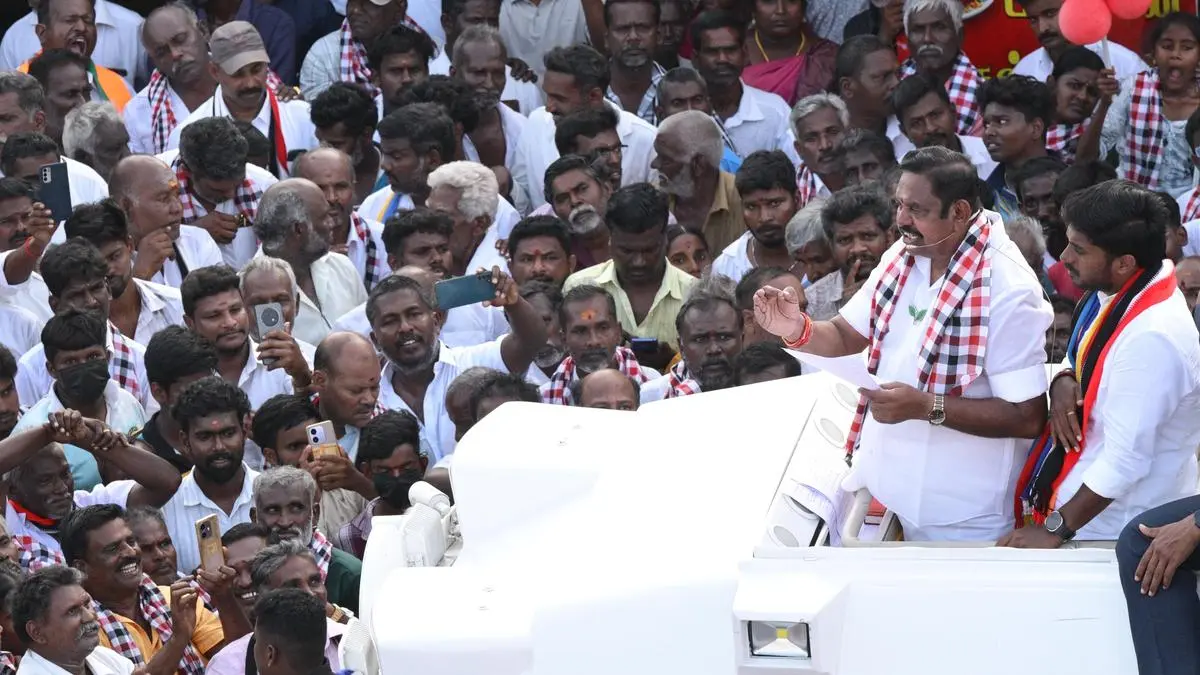
The announcement by AIADMK chief Edappadi K Palaniswami regarding the 2026 Tamil Nadu Assembly elections marks a hardening of the political narrative against the incumbent DMK. By framing the upcoming contest as a direct referendum on dynasty rule, the opposition has signaled a shift toward a more aggressive electoral strategy. The stated goal of securing over 210 seats suggests a consolidation effort aimed at dismantling the current power structure through the National Democratic Alliance platform.
Strategic Pivot Toward Dynasty-Centric Opposition
The focus on family-based political structures serves as the primary wedge issue for the opposition. This rhetoric is intended to mobilize voters who have grown weary of long-standing political dynasties that have dominated the state for decades. By positioning the 2026 election as a binary choice between dynastic continuity and a new governance model, the AIADMK is attempting to force a realignment of regional voting blocs. This strategy relies on the assumption that anti-incumbency sentiment can be successfully channeled into a rejection of the current leadership's family-centric operations.
Regional Stability and Economic Policy Implications
For investors and market observers, the stability of the regional political environment remains a critical variable. Shifts in state-level governance often precede changes in industrial policy, infrastructure project prioritization, and tax incentives for manufacturing hubs. As the political discourse intensifies, the potential for policy volatility increases. Companies operating within the state will need to monitor how this rhetoric influences legislative priorities and the speed of regulatory approvals. The transition from campaign promises to actionable policy will be the next major hurdle for the state's economic outlook.
AlphaScala data currently reflects a broader landscape of market sentiment, with companies like ON Semiconductor Corporation holding an Alpha Score of 40/100, Kellanova at 63/100, and Agilent Technologies, Inc. at 55/100. These scores highlight the varying degrees of stability across different sectors that may be impacted by regional political shifts. While these firms operate on a global scale, localized policy changes in major industrial states can create ripples in supply chain logistics and operational costs.
The Path to the 2026 Assembly Election
The next concrete marker for this narrative will be the formalization of seat-sharing agreements and the release of detailed manifestos by the contending parties. These documents will provide the first real evidence of whether the anti-dynasty platform includes specific economic reforms or merely focuses on power redistribution. As the election cycle progresses, the focus will shift from rhetoric to the practicalities of coalition building. The ability of the opposition to maintain a unified front under the NDA banner will determine if this political challenge can translate into a tangible shift in the state's legislative composition.