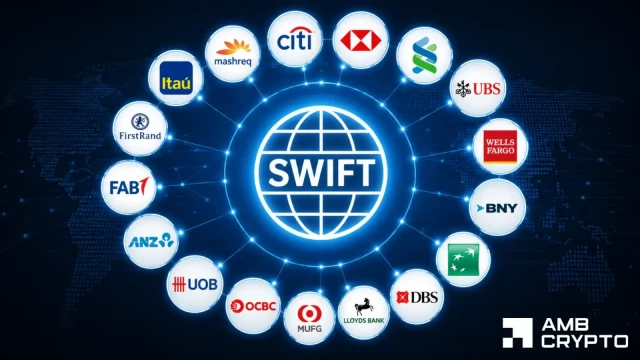
Swift has moved its blockchain-based ledger from development into live use. Seventeen banks across six continents are preparing to pilot cross-border payments using tokenized deposits, the cooperative said.
The shared ledger acts as an orchestration layer. It lets banks move tokenized deposits issued on their own ledgers, enabling 24/7 payments while still settling through existing financial infrastructure. Swift said the approach is designed to improve liquidity management and payment flexibility without changing the compliance, risk, and control frameworks already embedded in the global banking system.
The move puts Swift in direct competition with public blockchain payment networks and stablecoins. Unlike stablecoin-based systems that move funds outside regulated banking, Swift's platform keeps tokenized deposits on participating banks' own ledgers. The shared ledger connects those systems, allowing real-time cross-border coordination while relying on existing settlement rails.
Participating banks described the initiative as an important step toward round-the-clock cross-border payments. They said tokenized deposits could improve liquidity efficiency, increase payment transparency, and enable faster settlement while staying within regulated infrastructure. The cooperative expects to expand the platform's functionality after the initial controlled go-live phase.
The pilot group includes Citi, HSBC, Standard Chartered, UBS, Wells Fargo, BNY, BNP Paribas, DBS, Lloyds Bank, MUFG Bank, OCBC, UOB, ANZ, First Abu Dhabi Bank, FirstRand Bank, Itaú Unibanco, and Mashreq. Wells Fargo (WFC) carries an Alpha Score of 59 at AlphaScala, reflecting moderate positioning in the financial sector. MUFG (MUFG) scores 57, also moderate.
Swift said the ledger was designed and built in nine months with input from international financial institutions. The cooperative continues to build on its existing payments network, where 75% of payments already reach beneficiary banks within 10 minutes, often within seconds.
The development signals growing institutional adoption of regulated digital asset technology. It also lays groundwork for future applications such as programmable money and agentic commerce, Swift said. The pilot is expected to run through the end of the year.