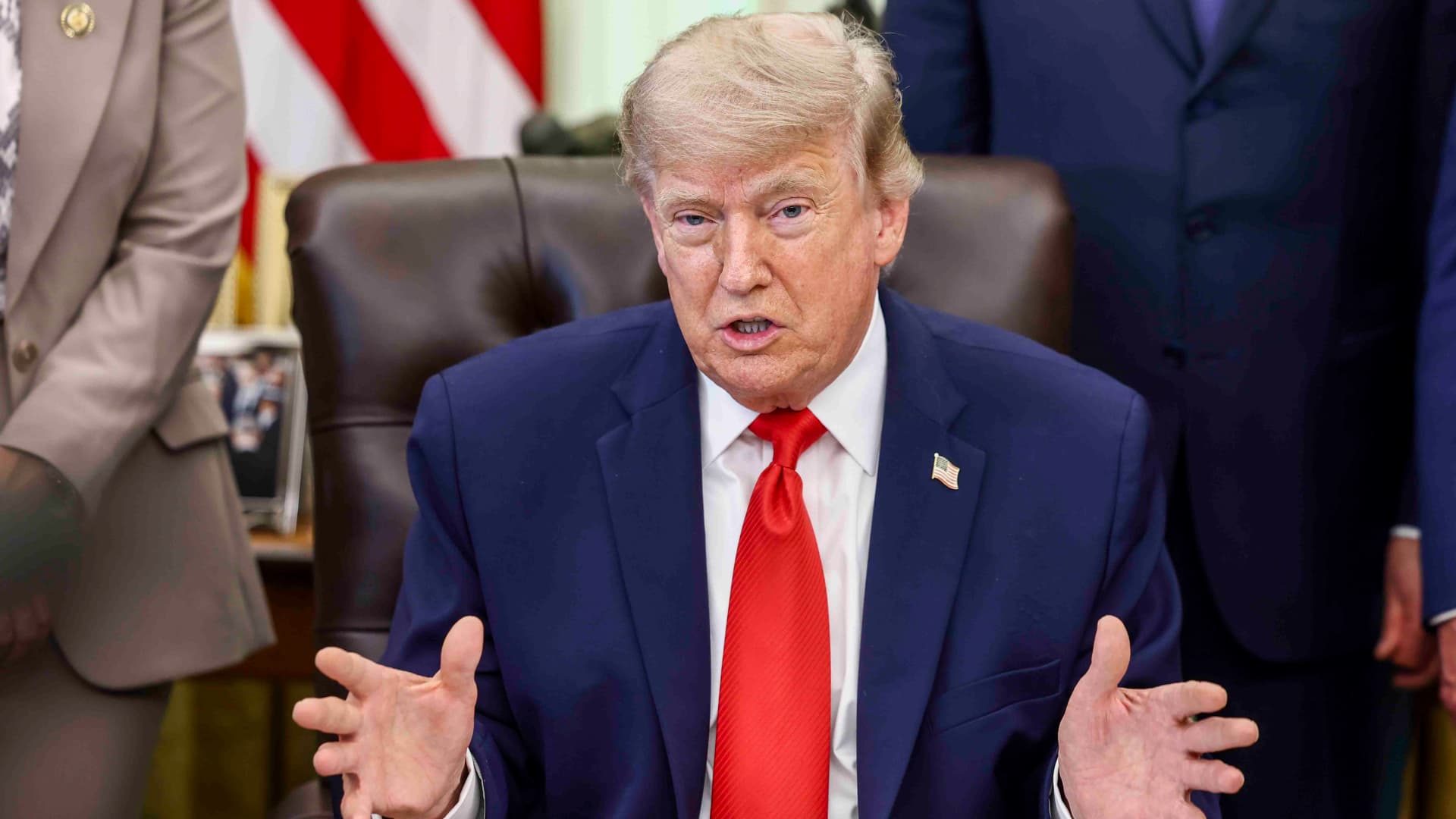
President Donald Trump said on Truth Social that a deal ending the war with Iran will be signed on Sunday, with the Strait of Hormuz opening immediately after. The post was echoed by Pakistani Prime Minister Shehbaz Sharif, who said the two sides are “closer to a peace deal than ever before” and that technical talks would follow next week.
Crude oil futures fell sharply on the news in early electronic trading, though volumes were thin with weekend liquidity. Brent crude dropped more than 3% to near $61 a barrel, while WTI slipped below $57. The move reflects the market pricing out a long-running risk premium tied to the Strait of Hormuz chokepoint, through which about 20% of global oil passes.
A sustained reopening would cut shipping insurance costs and tanker rates, which have been elevated since the conflict began. It would also increase the effective supply of Middle East crude to Asian and European buyers. Traders said the quick reaction looked like position squaring ahead of Sunday’s signing, not a structural shift, because the deal’s durability remains unclear.
Trump added that the U.S. would later remove enriched uranium from Iran – “the Nuclear Dust, buried deep under the powerful sunken granite mountains,” he wrote. He concluded with a veiled threat: if the process does not work out, “we have the ultimate alternative, hopefully never to be used again.”
The White House did not respond to a request for clarification. A senior Trump administration official said Friday the U.S. is not “100%” confident the agreement will be signed. Iranian state media reported that Foreign Ministry spokesperson Esmaeil Baghaei struck a cautious tone on the timing. That gap between the president’s announcement and the official posture is the key source of uncertainty for traders through Sunday.
If the deal holds, the immediate winner is crude oil importers – especially India, Japan and South Korea – and the shipping lines that had rerouted around the Cape of Good Hope. The loser is the war-risk premium built into energy equities and the broader Middle East basket. The USO oil fund and the XLE energy sector ETF both gapped lower in after-hours trading.
If the deal falls apart or delays, the premium snaps back fast. The market has already started to price in a resolution, so a failure to sign Sunday would look like a surprise. That asymmetry – cheap option on peace, expensive option on conflict – is the setup for Monday’s open.