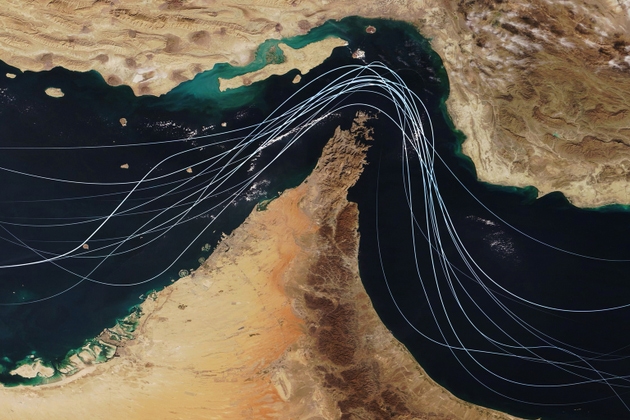
The deployment of additional naval mines within the Strait of Hormuz this week has introduced a direct physical threat to one of the world's most critical energy chokepoints. As a primary artery for global crude oil exports, the Strait facilitates the transit of approximately one-fifth of the world's daily oil consumption. The presence of new mining infrastructure forces a recalibration of maritime risk premiums for tankers navigating the Persian Gulf, as the potential for vessel damage or total transit blockage increases the cost of insurance and operational logistics.
Maritime Transit and Supply Chain Integrity
The Strait of Hormuz serves as the essential maritime corridor for producers in Saudi Arabia, the UAE, Kuwait, and Iraq. Any sustained interference with the freedom of navigation in this region creates an immediate bottleneck for global supply chains. When transit times are extended due to rerouting or increased security protocols, the velocity of oil delivery slows, effectively tightening the market even if absolute production levels remain unchanged. The current situation necessitates a close monitoring of tanker traffic patterns and the potential for increased naval escorts, which often serve as a precursor to broader logistical delays.
Geopolitical Risk and Inventory Sensitivity
Global energy markets are particularly sensitive to disruptions in this region because of the limited availability of alternative export routes. While some pipelines exist to bypass the Strait, they lack the total capacity to offset a full-scale closure. The current escalation adds a layer of volatility to crude oil pricing, as the market must now account for the probability of a sudden supply shock. This environment often leads to a rapid increase in the demand for prompt-delivery barrels as buyers seek to secure supply before potential transit windows narrow further.
AlphaScala data currently tracks the broader energy and industrial landscape, noting that firms like Bloom Energy Corp BE stock page hold an Alpha Score of 46/100, reflecting the mixed sentiment currently surrounding industrial and energy-adjacent sectors. Meanwhile, AT&T Inc. [T stock page](/stocks/t] maintains an Alpha Score of 56/100, illustrating the varying stability metrics across the broader market as investors weigh geopolitical risks against domestic corporate performance.
For those following these developments, the primary marker for further market movement will be the response from international maritime authorities and the subsequent impact on tanker insurance premiums. Any formal announcement regarding the suspension of shipping lanes or the implementation of mandatory naval escorts will serve as the next definitive signal for crude oil pricing. Traders should monitor daily tanker transit counts and regional maritime security bulletins to gauge the severity of the disruption. For further analysis on how these supply-side pressures interact with broader market trends, see our commodities analysis section.