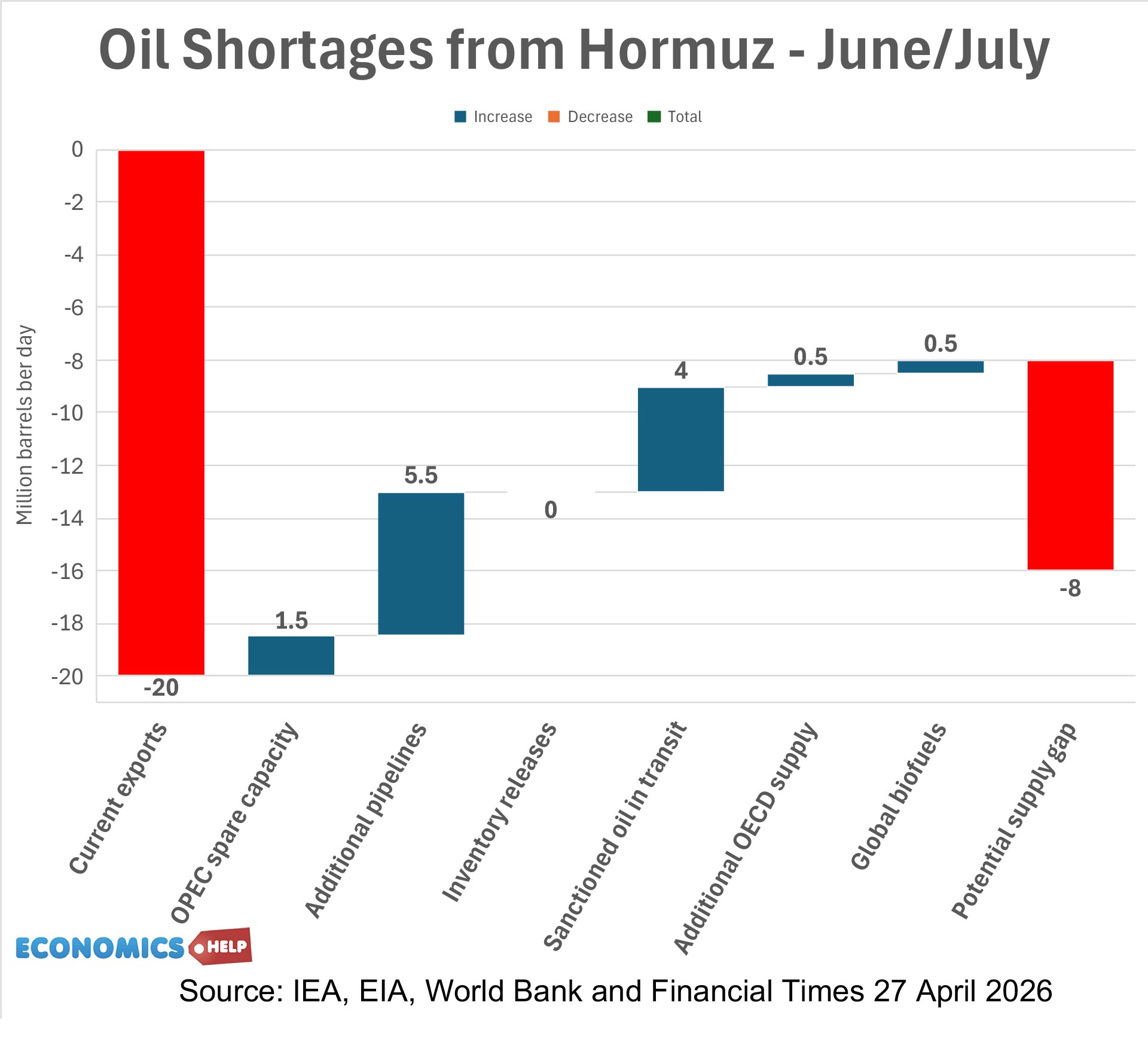
Global energy markets face a structural supply shock as the effective closure of the Strait of Hormuz threatens to remove 20 million barrels per day from international circulation. While headline price action shows an 80% increase, the current market stability remains fragile. The reliance on OPEC spare capacity to offset this volume creates a precarious imbalance that leaves little room for further geopolitical escalation or infrastructure failure.
Supply Chain Vulnerabilities
The loss of 20 million barrels per day represents a significant portion of global daily consumption. Current logistical workarounds depend heavily on existing pipeline networks and the assumption that regional producers can maintain elevated output levels indefinitely. If these alternative routes reach maximum capacity, the ability to move crude from the Middle East to major demand centers in Asia and Europe will face severe constraints. The Crude Oil Volatility Rises on Middle East Supply Risks analysis underscores how quickly transit bottlenecks translate into physical delivery failures.
Inventory and Transit Risk
Inventory levels are currently being drawn down to buffer against the immediate supply shortfall. This strategy offers a temporary reprieve for refiners but fails to address the underlying deficit in crude availability. As storage facilities deplete, the market will lose its primary defense against further supply-side volatility. The transit risk is compounded by the concentration of tanker traffic through narrow chokepoints, where any disruption to shipping lanes forces immediate rerouting and higher insurance premiums for maritime transport.
Market Context
Broader market sentiment remains cautious as industrial sectors adjust to higher energy inputs. For instance, ON Semiconductor Corporation (ON) currently holds an Alpha Score of 46/100, reflecting a mixed outlook within the technology sector as firms manage rising operational costs. Investors monitoring these shifts can find additional details on the ON stock page. Meanwhile, Loews Corp (L) maintains an Alpha Score of 59/100, indicating a moderate position as it navigates the current macroeconomic environment, with further data available on the L stock page.
Market participants should monitor upcoming tanker tracking data and official statements from major producers regarding their actualized spare capacity. The next concrete marker will be the release of updated inventory reports, which will confirm whether current drawdowns are accelerating or if supply-side adjustments have begun to stabilize the flow of crude.