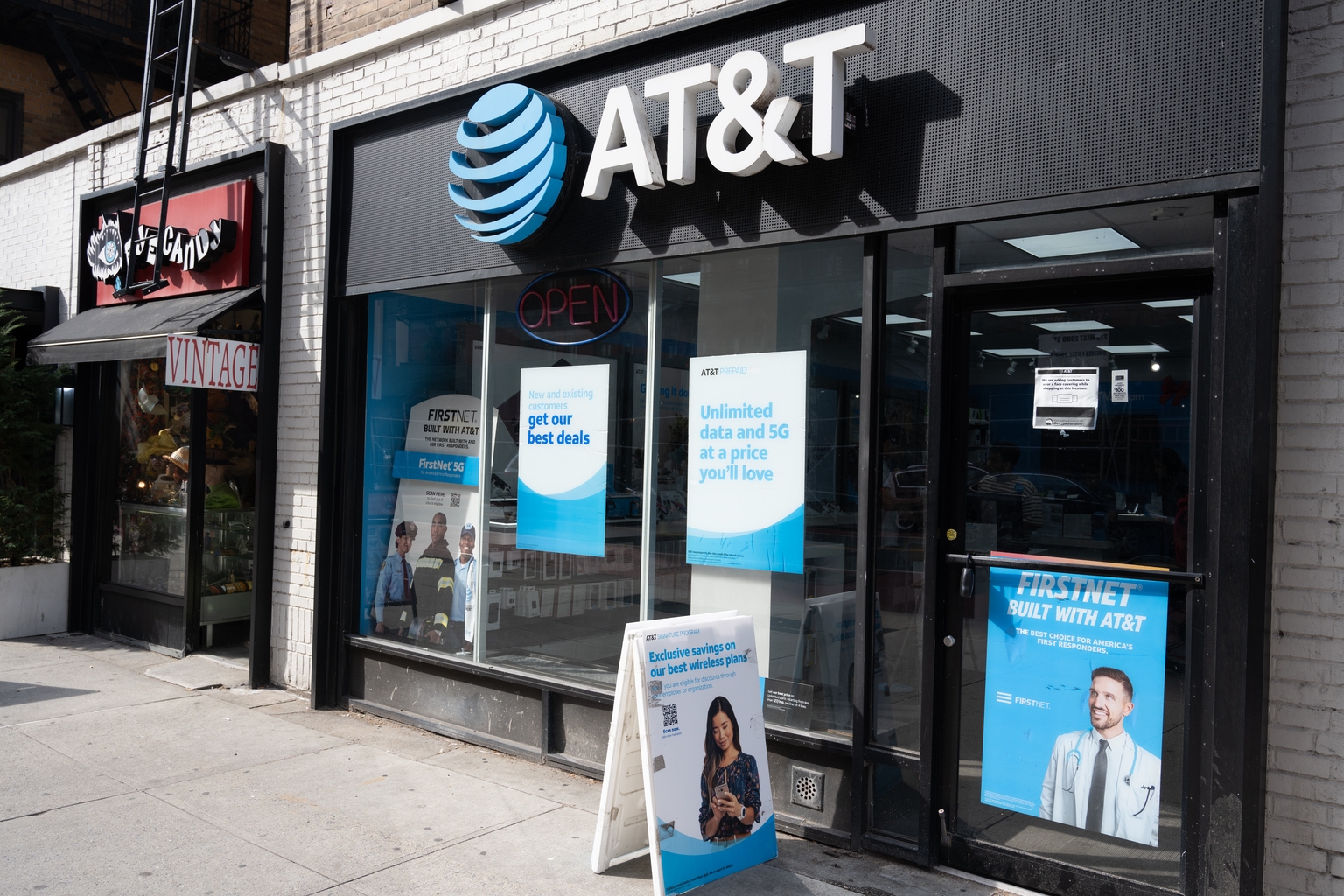
SpaceX is building the capability to bypass cell towers entirely. Starlink, already serving hundreds of thousands of subscribers with low-earth orbit internet, is expanding into direct-to-cell service. That move threatens the structural advantage that has protected AT&T for decades.
AT&T spends more than $20 billion a year on network capital expenditure. It carries net debt above $130 billion. Its dividend yields roughly 5.5%. Those numbers depend on a market where new entrants face enormous barriers: scarce spectrum licenses and the cost of building physical tower infrastructure. Direct-to-cell satellite service could weaken both barriers.
The exposure is most acute in rural areas. Wireless subscribers in low-density regions pay higher margins because building towers is expensive relative to the customer base. Starlink, with coverage from space, avoids that cost entirely. A household switching from AT&T fixed wireless or cellular to a satellite connection removes a high-margin revenue stream.
AT&T's debt load amplifies the risk. More than $130 billion in net debt means the dividend consumes a large share of free cash flow. Sustained revenue pressure would force a choice between cutting capex and reducing the dividend. AT&T has already spun off WarnerMedia and sold some tower holdings. The remaining options are narrower.
The threat is not immediate. Starlink's capacity remains limited today. Direct-to-cell requires additional satellites and regulatory approval. Still, the trajectory is clear. SpaceX is launching satellites at a pace no competitor can match. Its vertical integration gives it cost advantages that terrestrial carriers cannot replicate. Second-generation Starlink satellites will carry the antennas needed for direct-to-cell connectivity.
Mitigating factors exist. AT&T operates a dense fiber network that supports enterprise services. Starlink will not replace fiber-to-the-home or dedicated corporate connections anytime soon. Wireless alone, however, accounts for a large portion of revenue. A 5% or 10% loss of subscribers to satellite alternatives would hit earnings.
The catalyst to track is the SpaceX partnership with T-Mobile. That arrangement currently covers texting, with voice and data expected in later stages. Full mobile coverage without requiring a dish would directly compete with every carrier's network. Federal Communications Commission rulings will set the rollout timeline.
History offers a cautionary note. Earlier satellite ventures like Iridium and Globalstar failed to compete with terrestrial cellular because of high latency and limited bandwidth. Starlink operates in low-earth orbit, delivering latency under 30 milliseconds. User terminals are cheaper and improving with each generation. SpaceX has already launched roughly 7,000 satellites and has regulatory approval for up to 12,000.
The analyst who flagged this risk in a recent Seeking Alpha piece held no position in AT&T. The threat was described as structural rather than cyclical. The stock's current earnings multiple does not appear to price in a meaningful challenge from satellite services.
For broader market context, readers can refer to our ongoing stock market analysis.
The next stage of Starlink direct-to-cell deployment and the FCC's response will determine how quickly this risk becomes a material revenue issue for AT&T.