Stanley 1913 targets café and mobility growth beyond Quencher
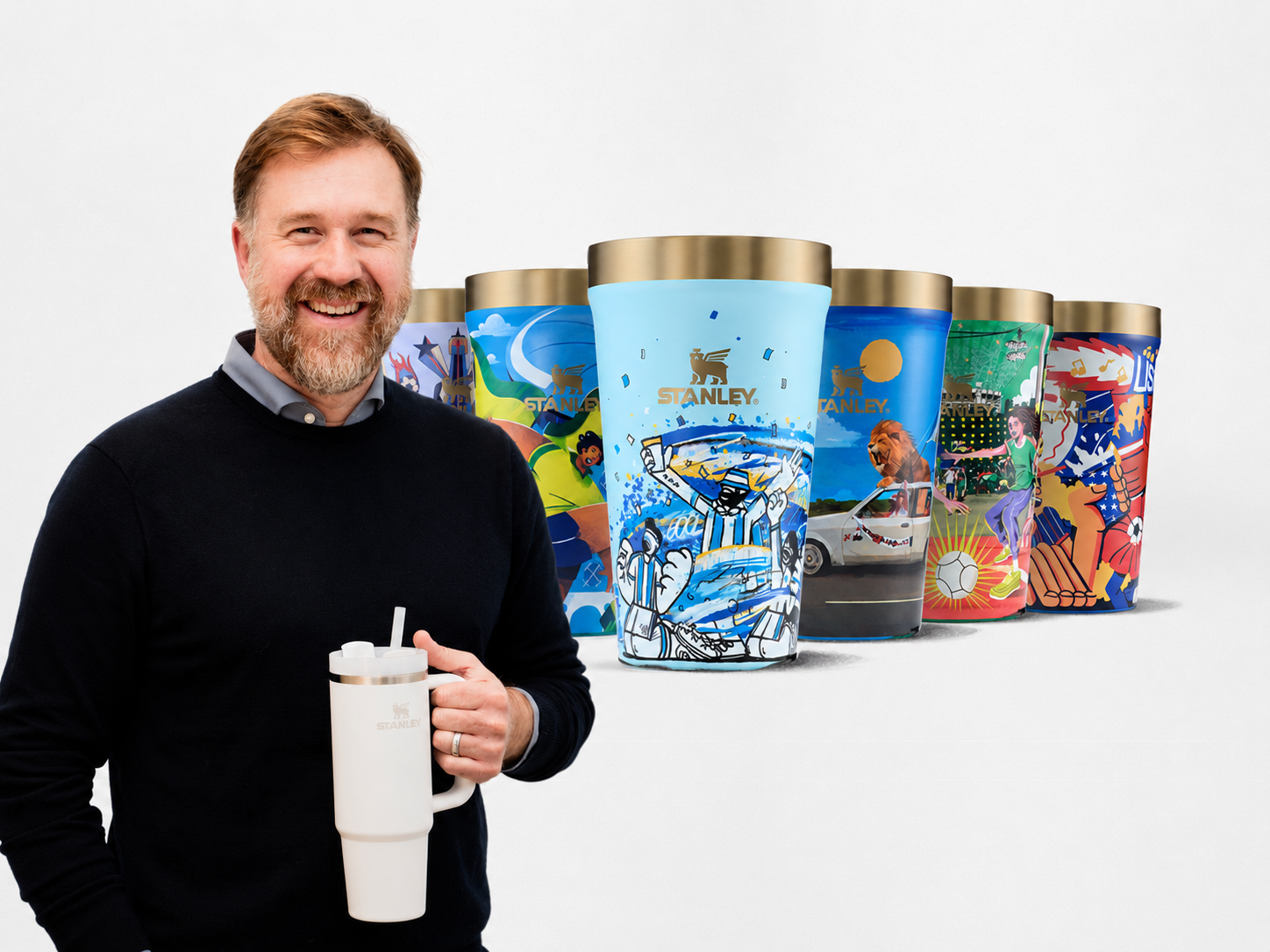
Stanley 1913 EMEA GM Ben James on how the brand is expanding into café and mobility categories, with café set to hit 30% of revenue by 2026.
Stanley 1913 is pushing beyond the Quencher tumbler that made it a household name. The brand, part of PMI WW Brands, LLC, plans to become a multi-category food and beverage company, with café products set to account for 30% of EMEA revenue in 2026, said Ben James, the operation's general manager.
James said the mobility and storage category, which includes soft coolers and lunch bags, grew about 36% at the time of the interview. Two years ago, the EMEA arm still centered on outdoor products and a narrow assortment. It now follows the broader strategy established in North America.
The Quencher opened the brand to a new audience around 2020. James said the company focused on retaining its durability and lifetime warranty while chasing the viral moment. “You go into it with a little bit of caution because you don’t want to sway away from who you are as a brand,” he said. “But you have to listen, redefine, evolve and continue to put your foot on the gas of innovation.”
Customers asked for a softer base and a lid less likely to leak. The brand also addressed handle comfort, introducing siliconised elements. The Quencher ProTour became a leakproof version. James said the company became more attentive to social channels, reviews and retailer feedback. Colour, material and finish became commercial tools.
The fitness range shows the expansion. The shaker bottle dispenses with the loose spring or metal ball found in competing products. The conical interior mixes the liquid. A built-in strainer filters fruit or chia seeds. Protein powder sits in a compartment at the bottom. James said the shaker has grown about 40% since launch and represents roughly 5% of EMEA hydration sales. Its double-wall stainless steel construction keeps drinks cold for about eight hours.
The shaker belongs to the Vitalised collection, with bags designed to carry bottles and equipment from the office to the gym or Tube. James described these opportunities as “consumer rituals” – the repeated acts around which people organise their day, from making coffee to carrying water.
Ecommerce often provides the first encounter with Stanley 1913. James said the company’s direct online business was growing 52% year on year at the time of the interview. He believes stores are better placed to show how far the range has moved beyond the Quencher. JD Sports has become an important partner, with new displays bringing the categories together.
Collaborations with Arsenal, Lionel Messi and Kacey Musgraves have helped reach beyond the established base. James said the partnerships generated a 200% increase in new consumers through direct channels. Arsenal players carrying Stanley 1913 products during a parade produced more than five million earned impressions. He is wary of partnerships that amount to placing two logos on a product. “I definitely don’t want to just slap our logo and their logo on a product and call it a day,” he said.
Messi’s association with maté gave Stanley 1913 the basis for a multi-year, four-product collaboration. Partnerships with Arsenal, Paris Saint-Germain and Juventus introduced the brand to fans who may never have considered its products.
Internally, product development brings together merchandisers, marketers, engineers and sales staff. James described that culture as Stanley 1913’s “biggest superpower.”
Asked which product he would take to a desert island, James chose the Spring bottle. He likes its slim profile and covered mouthpiece. The ease of carrying it between meetings and the school run also appeals to him. “If I talk to you in a month, it’ll probably be a new product,” he said, “because I’m just that much of a fan.”
Drafted by a large language model from the source reporting linked above, then screened by automated publishing checks. It is not read by a journalist before publication. Some articles cite our Alpha Score. Verify prices and figures against the original source. Educational coverage, not personalized advice.