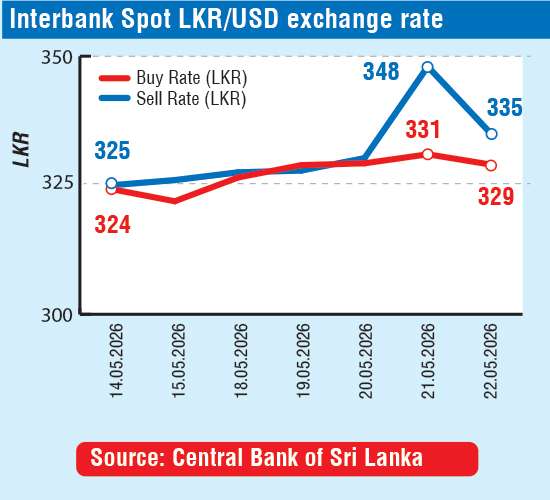
Sri Lanka rupee stabilized at 329/335 after CBSL capped interbank spot at 330. The cap halts panic demand, risks a two-tier market if reserves fall short.
The Sri Lankan rupee ended its two-day slide on Friday after the Central Bank of Sri Lanka (CBSL) forced a cap on the interbank spot rate. Commercial banks were instructed to quote a maximum bid of Rs. 330 per dollar. The market settled around Rs. 329/335, compressing sharply from Thursday's disorderly range of Rs. 331/348.
The previous session had seen panic dollar demand from importers and delayed exporter conversions widen the bid-ask spread. The CBSL's directive removed the uncertainty premium that had driven the extreme volatility. A simple reading is that the central bank restored order with a single administrative tool. The better market read is more cautious. A hard ceiling does not eliminate the underlying demand-supply imbalance. It shifts it.
Exporters who delayed conversions may now accelerate repatriation to capture the capped rate. That provides temporary relief. Importers and energy companies with open dollar needs face a narrower window to cover. They risk a build-up of deferred demand that could test the cap if the CBSL does not supply enough dollars from reserves concurrently.
The cap's immediate effect is on pricing in the real economy. Fuel, pharmaceutical, and food importers now transact at a tighter rate. That should slow pass-through to retail prices in the coming weeks. It is a net positive for inflation expectations and the CBSL's monetary policy credibility.
On the bond side, the rupee stabilisation removes one source of pressure on foreign-currency-denominated sovereign debt. A controlled currency lowers the carry risk for offshore investors holding Sri Lanka International Sovereign Bonds. The cap also raises the probability that the CBSL will need to defend the peg with reserve sales. That cost shows up in the next external reserves print.
Administrative caps work best when the fundamental imbalance is small and temporary. Sri Lanka's current account deficit, funded by remittances and tourism receipts, required a flexible rate to adjust to external shocks. A fixed ceiling at Rs. 330 risks creating a two-tier market: a controlled official rate for select transactions and a grey-market premium for urgent dollar needs. Dealers in Colombo have already noted widening bid-ask spreads outside the interbank window.
The CBSL's next decision point is whether the cap is a temporary circuit-breaker or a semi-permanent peg. If the central bank can demonstrate sufficient reserve cover to meet the backlog of dollar demand at Rs. 330, the move will have stabilised the market. If the backlog pushes volumes into the forward market or informal channels, the policy will force a costly reset later.
The rupee has found a technical floor. The harder question is whether that floor holds without a deeper reserve drawdown. The CBSL has bought time. It has not yet bought a durable solution.
The next scheduled data release that will test the policy is the weekly external reserves figure, followed by the monthly trade balance print. For ongoing coverage of emerging market policy moves, see AlphaScala's market analysis.
Prepared with AlphaScala editorial tooling from the source reporting linked above. Indexable analysis may include a cited Alpha Score value. Publishing checks screen each story before release. Educational coverage, not personalized advice.