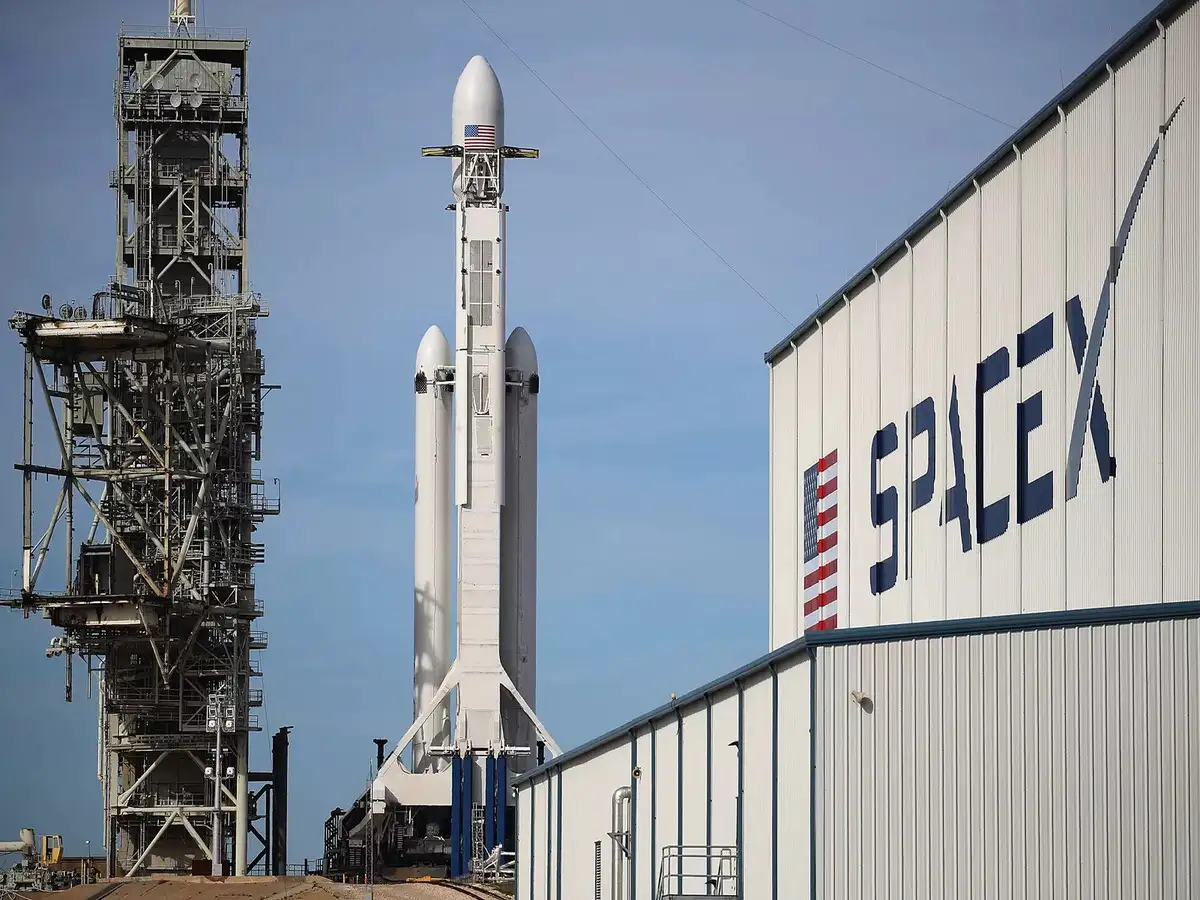
SpaceX has accelerated its IPO timetable to target a Nasdaq listing as soon as June 12, according to people familiar with the matter. The rocket and satellite company aims to make its prospectus public next Wednesday, begin its roadshow on June 4, and price the share sale as early as June 11. The faster schedule follows a quicker-than-expected review by the SEC. The offering could raise about $75 billion at a valuation of roughly $1.75 trillion, which would make it the largest stock market debut on record.
The choice of Nasdaq over the New York Stock Exchange marks a major win for the exchange. Nasdaq has rolled out fast‑entry rules designed to speed inclusion of newly listed large‑cap companies into its Nasdaq‑100 index. For a company of SpaceX’s size, index access can drive passive fund demand, raise institutional visibility, and support early trading liquidity. Other index providers, including S&P Dow Jones Indices and FTSE Russell, have introduced similar rules.
SpaceX is expected to trade under the ticker SPCX. The symbol had been used by Tuttle Capital Management’s SPAC‑focused ETF before the firm changed its ticker to SPCK in April, a move that sparked market speculation.
IPO Timeline and Index Access
Morgan Stanley, Bank of America (BAC), Citigroup, JPMorgan, and Goldman Sachs (GS) are leading the offering. Another 16 banks are expected to take smaller roles across institutional, retail, and international channels. The size of the syndicate reflects the expected global demand for the deal.
For the underwriters, the IPO represents a flagship fee opportunity and a test of their ability to price a $1.75 trillion company. Bank of America and Goldman Sachs carry Alpha Scores of 53 and 52, respectively, both labeled Mixed in AlphaScala’s proprietary framework. Their stock pages are available at BAC stock page and GS stock page.
Index inclusion matters almost as much as the venue. Nasdaq’s fast‑entry rules allow newly listed large caps to join the Nasdaq‑100 quickly, triggering passive buying from ETFs tracking the index. For SpaceX, early inclusion could support price stability and reduce the typical post‑IPO drift. The same logic applies to S&P 500 inclusion, though that requires a longer track record.
Key Dates for Traders
- June 4: Prospectus publication and roadshow start.
- June 11: Pricing date.
- June 12: First trade on Nasdaq.
The roadshow will reveal institutional demand. If the book is oversubscribed quickly, the price range may be raised. If demand is tepid, the valuation could be cut.
Valuation Risk: From $1.25 Trillion to $1.75 Trillion in Four Months
The targeted valuation marks a sharp increase from the $1.25 trillion combined valuation set when SpaceX merged with Elon Musk’s AI startup xAI in February. That jump gives investors a narrow window to assess whether the company’s launch, satellite internet, and AI‑linked strategy can justify one of the richest public‑market entries in history.
Investors will focus on SpaceX’s revenue mix, capital needs, Starlink growth, launch cadence, and the financial links created by the xAI combination. Starlink is the primary revenue driver, the satellite internet business faces competition from terrestrial broadband and other low‑Earth orbit constellations. Launch services, while profitable, are lumpy and dependent on government and commercial contracts.
The xAI merger adds an AI component that could justify a higher multiple. It also introduces integration risk. The prospectus will need to detail how the two businesses share resources, technology, and capital allocation.
Revenue Breakdown Must Be Transparent
- Subscription growth from Starlink is the key metric to watch. Any slowdown in subscriber additions would reprice the stock quickly.
- Launch cadence: Government and commercial contracts provide visibility, delays accumulate risk.
- Capital expenditure: Space is capital‑intensive. The prospectus must show how the company funds Starlink expansion and next‑gen Starship development.
Risk to watch: The $1.75 trillion valuation assumes Starlink’s growth trajectory accelerates. Any slowdown in subscriber additions would reprice the stock within weeks.
What Confirms the Setup
A successful SpaceX IPO would reset expectations for the rest of the year. The listing comes as the IPO market recovers from a difficult stretch shaped by volatility tied to U.S. tariff policy and geopolitical uncertainty. Other large technology and AI companies, including Anthropic and OpenAI, are expected to tap investors later in 2025, setting up a crowded calendar for growth companies seeking public capital.
For the setup to hold, three conditions matter:
- Prospectus clarity: The filing must give public‑market buyers enough detail to support a $1.75 trillion valuation. Vague revenue breakdowns or opaque capital expenditure plans would weaken the thesis.
- Passive demand: Early inclusion in the Nasdaq‑100 would drive ETF buying. If index providers delay inclusion, the stock could face higher volatility in the first weeks.
- Macro backdrop: A stable rate environment and low volatility support large IPOs. A spike in Treasury yields or a tariff escalation could reduce risk appetite.
Roadshow Demand Signal
The roadshow starting June 4 will reveal institutional demand. If the book is oversubscribed within days, underwriters may raise the price range. A tepid response would force a valuation cut.
What Weakens the Thesis
The biggest risk is valuation. At $1.75 trillion, SpaceX would trade at a multiple that leaves little room for execution missteps. If Starlink subscriber growth slows, or if launch delays accumulate, the stock could reprice quickly.
Another risk is the crowded IPO calendar. If Anthropic or OpenAI file around the same time, investor attention and capital could be split. The underwriters will need to manage allocation carefully to avoid a post‑IPO slump.
Regulatory risk is also present. The SEC’s fast review does not guarantee a smooth path. Any last‑minute disclosure issues or legal challenges could delay the listing. SpaceX did not respond to requests for comment. Nasdaq and the SEC declined to comment.
Macro Risk: Tariffs and Yields
The IPO lands in a period shaped by U.S. tariff policy and geopolitical uncertainty. A sudden escalation in trade tensions or a spike in Treasury yields would reduce risk appetite across growth stocks. That would directly affect SpaceX’s debut.
Decision Point for Traders
For traders, the key dates are June 4 (roadshow start), June 11 (pricing), and June 12 (first trade). After the IPO, watch for index inclusion announcements. Nasdaq’s fast‑entry rules could bring SpaceX into the Nasdaq‑100 within weeks, triggering passive buying and supporting the stock. If inclusion is delayed, the stock may trade more on fundamentals and sentiment.
The IPO also tests the broader market’s appetite for large‑cap tech at premium valuations. A strong debut would boost sentiment for other upcoming listings. A weak debut would reinforce caution.
The event is set. The timeline is tight. The stakes are high for Nasdaq, the underwriters, and the IPO market as a whole. The prospectus will be the first real test of whether the $1.75 trillion valuation holds.