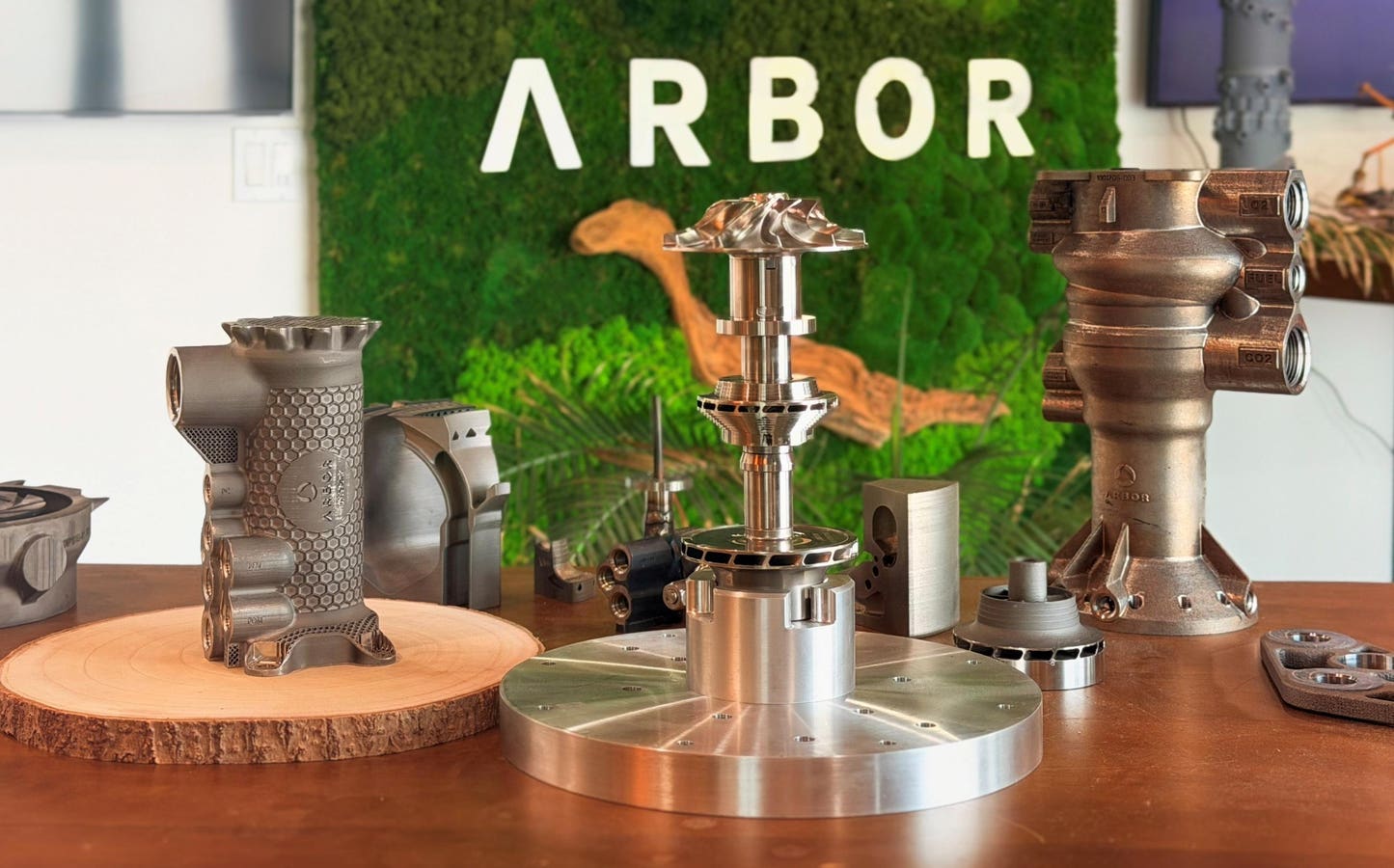
Demand for new natural gas turbines is so high that buyers wait five years or more for units from Siemens or GE Vernova. Brad Hartwig, a former SpaceX rocket engineer, thinks he can cut that wait in half with a machine that fits in a shipping container and burns fuel with pure oxygen instead of air.
His startup Arbor is testing a one-megawatt prototype in Los Angeles. The company plans to open a California factory next year with capacity to make 40 units of its 25-megawatt turbine annually. Hartwig wants the first commercial units running in 2028, about 18 months from now. That is still half the lead time for a conventional turbine.
The oxy-combustion design changes the math on emissions. Burning natural gas with pure oxygen leaves only CO2 and water as combustion products. No hot air, no nitrogen. The CO2 comes out as a high-pressure stream that can be injected directly into geologic formations for permanent storage. The water byproduct runs about one million gallons per year for every megawatt deployed.
"Instead of burning fuel with air like a traditional gas turbine, we're burning it with oxygen as you do in a rocket engine," Hartwig told Forbes. "When you burn your fuel with pure oxygen, you end up with just CO2 and water."
The company's first deal is to deliver up to five gigawatts to GridMarket starting in 2029. Arbor raised $55 million last year from Lowercarbon Capital, Voyager Ventures, Gigascale Capital, and Marathon Petroleum Corporation. A further funding round is likely this year to pay for the factory.
Cost targets are aggressive. Hartwig's goal is to sell the turbines at less than $2,000 per kilowatt, roughly halfway between the cost of a simple-cycle gas turbine and a highly efficient combined-cycle unit. The smaller footprint and faster delivery time are meant to bypass the supply bottleneck that has stalled new power projects across the U.S.
Marathon Petroleum Corporation (Alpha Score 56/100, Moderate) is one of the backers. For Marathon, the investment is a hedge against the refining industry's long-term emissions profile. Oxy-combined turbines that produce sequester-ready CO2 could eventually power refinery operations with lower compliance costs.
The immediate constraint is not technology but manufacturing. Arbor's prototype is one megawatt. Scaling to 25-megawatt units and building a factory to produce 40 of them a year is a capital-intensive bet. Hartwig is betting that utilities and data-center developers, who are running out of options for new baseload capacity, will pay a premium for speed and zero emissions.
"Optimizing for a product that is zero emission and outside of the current supply chain is huge," Hartwig said. "It's really going to be kind of a game changer for the power industry."