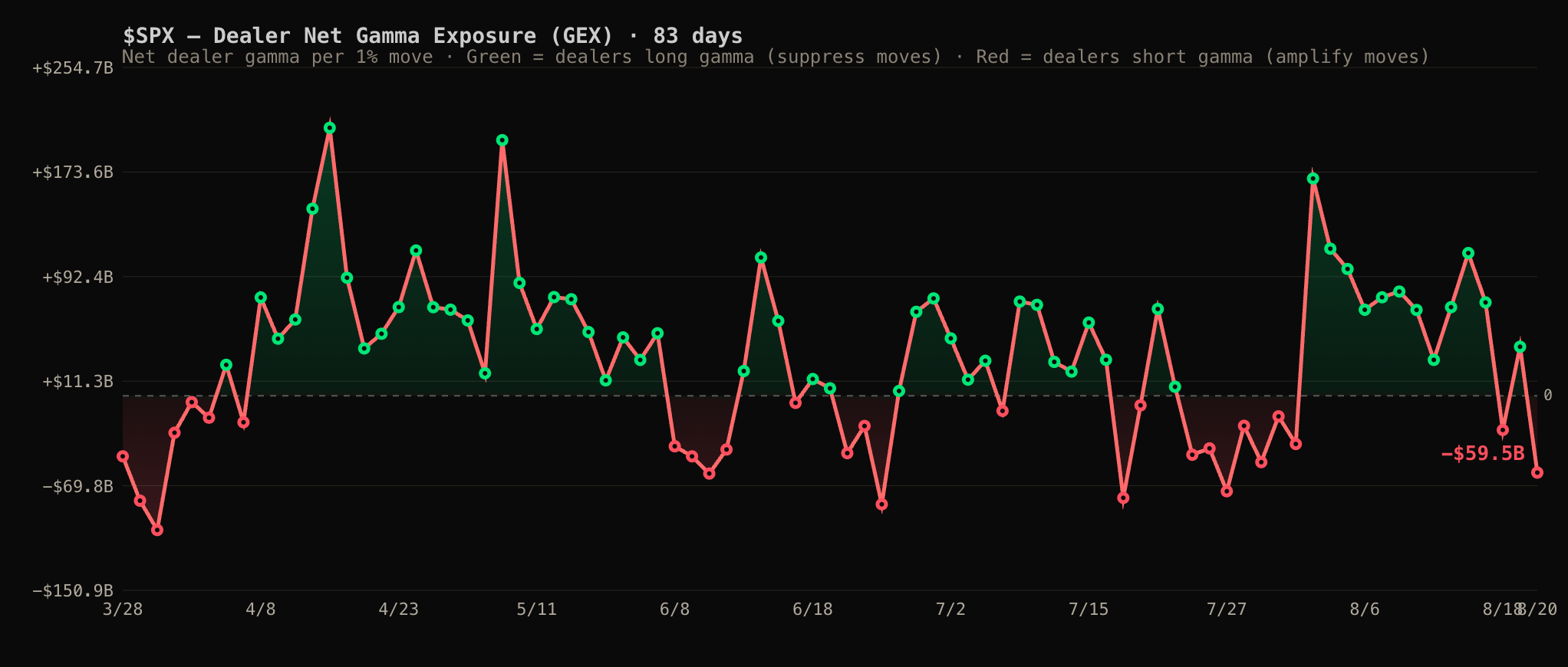
The S&P 500 dropped nearly 90 basis points and closed below its 10-day exponential moving average for the first time since July 31. That moving average can at times mark a trend shift. The index also flipped back into negative gamma, a positioning regime where dealer hedging can reinforce market moves and push volatility higher, according to independent macro and options analyst Michael Kramer.
Correlations rose across the board, with semiconductors leading the climb. The semiconductor ETF's implied volatility is no longer rising faster than the index. That shift matters because index volatility had been suppressed, Kramer said, adding that the dynamic changed after Tuesday's VIX options expiration.
The next signal to track is whether the VIX keeps rising faster than the VXSMH in percentage terms. If it does, implied correlations should steadily rise, a pattern that tends to precede S&P 500 declines, Kramer noted. When implied correlations fall, the index generally rises.
The 30-year Treasury yield rose 6 basis points, reversing most of the prior session's decline. Treasury Secretary Janet Yellen confirmed that liquidity in the 30-year bond has been thin recently, Kramer wrote, though he added that buybacks may not help much since the move in rates is global, not just a US problem.
Credit default swap spreads have been widening across the semiconductor sector. That may now have a catalyst. Broadcom is looking to raise up to $60 billion in debt to fund its AI buildout, Kramer said. He expects spreads to widen further, and not just for Broadcom.
Broadcom's stock had been supported by a put wall at $360, but that strike rolls off after expiration tomorrow. If $360 breaks, the chart shows room for a bigger drop, Kramer said.
The SMH delta chart shows a large amount of call exposure above the current spot price that is due to decay. Net delta exposure remains positive. But if the SMH breaks its put wall at $560, the decay of the calls combined with puts becoming energized could drive the sector lower, Kramer said.