Macro● Neutral
South Korea's EV Industry Faces Three-Front Trade Risk
China's 70% EV share, US tariffs, and EU content rules force Seoul to act. Hyundai, Kia, LG Energy Solution face structural headwinds. Policy response likely in H2.
Continue with
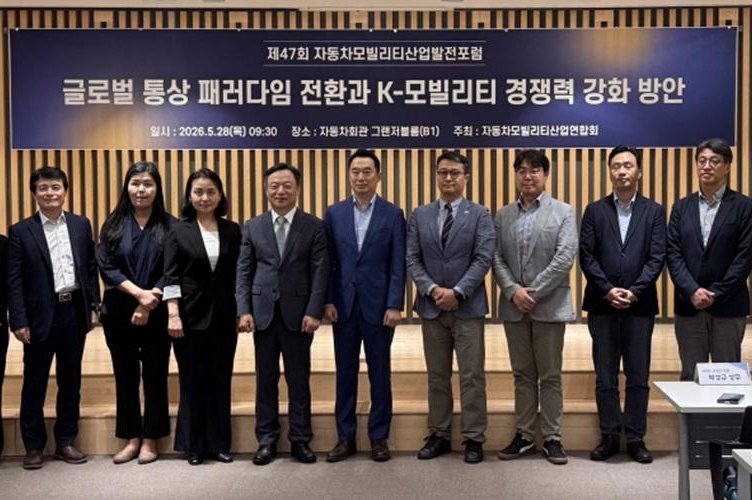
South Korea auto industry officials and experts issued a coordinated warning this week: the country's domestic manufacturing base is slipping behind as US tariffs, EU protectionism, and China's electric vehicle dominance reshape global trade. The message from the Korea Automotive Industry Alliance's 47th forum in Seoul carries direct investment implications for Hyundai Motor (KRX: 005380), Kia (KRX: 000270), and the nation's battery ecosystem.
US Tariffs and the Economic Security Argument
Chung Dae-jin, chairman of the industry association, told the forum that major export markets including the United States and the European Union are actively strengthening protection for their domestic industries through tariffs, import and export controls, and industrial support policies.
"South Korea is also expanding investment in future vehicles and improving its systems. There are areas where it is not keeping pace with the speed of change in the global trade environment," Chung said.
Park Sung-kyu, an executive director at Hyundai Motor Group's business research institute, connected the tariff escalation directly to a fundamental reordering of global trade.
Park argued that core industries such as automobiles must improve competitiveness by integrating artificial intelligence. The call aligns with a broader macro shift: trade policy is increasingly treated as a national security tool, not a commercial negotiation.
The US Tariff Ramp-up
Park said high US tariffs and import restrictions reflect a judgment that the existing free trade order no longer works in the country's favor. South Korean automakers have already felt the pressure. Hyundai and Kia export hundreds of thousands of vehicles annually to the US market. The Inflation Reduction Act tax credits exclude many foreign-assembled electric vehicles.
EU Import Controls
The European Union has similarly tightened rules of origin for battery content and is investigating Chinese subsidised EVs. The move indirectly pressures Korean exporters by reshaping the competitive landscape.
China's 70% EV Share and Supply Chain Architecture
Cho Soo-jung, a professor at Korea University School of Law, delivered a specific numeric alarm: China's electric vehicle production now accounts for more than 70% of global output.
This level of concentration raises concerns about China's growing control of the global market, Cho said. She recommended South Korea actively consider trade measures, stronger foreign investment security reviews, and tax incentives to promote domestic electric vehicle production.
Supply Chain Network Strategy
Jung Ji-hyun, a research fellow at the Korea Institute for International Economic Policy, noted that China's overseas production strategy has evolved beyond simple geographic diversification into the construction of supply chain networks. The implication for South Korean policymakers: overseas production by Korean companies could end up weakening the domestic manufacturing base rather than complementing it.
Jung said South Korea needs to strengthen its domestic production base for electric vehicles and future mobility while also reinforcing its battery and parts ecosystem.
The Competitive Gap
South Korean battery makers – LG Energy Solution (KRX: 373220), Samsung SDI (KRX: 006400), and SK On (KRX: 096770) – hold significant market share globally. They face intense pressure from CATL and BYD, which benefit from China's scale and domestic policy support. The forum's call for a stronger domestic parts ecosystem directly addresses this vulnerability.